


News center
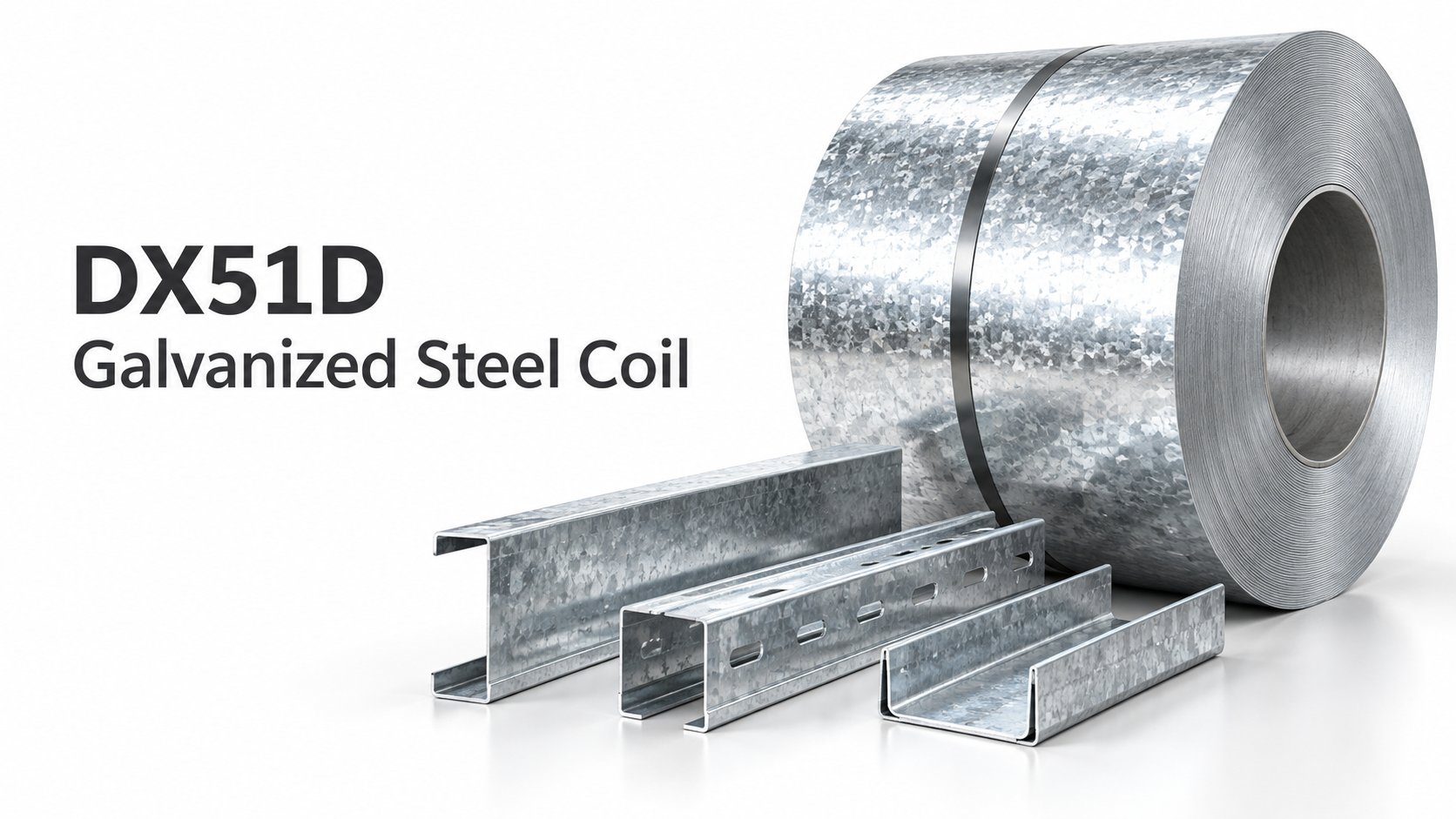
When planning light steel keel projects, project managers must carefully evaluate material durability and cost-effectiveness. Is the dx51d galvanized steel coil the optimal choice for your structural frameworks? Renowned for its superior corrosion resistance and excellent formability, this specific steel grade provides a highly reliable foundation for modern construction. This comprehensive guide explores the technical advantages, practical applications, and procurement insights of using dx51d galvanized steel coil, helping engineering leaders make informed decisions for their next building project.
Understanding DX51D: Beyond the Basic Specifications
In the steel industry, material grades are not just arbitrary labels; they dictate how a product will behave under stress, during fabrication, and over its lifespan. DX51D is widely recognized as a commercial quality galvanized steel, but the "D" at the end of the designation is particularly important for light steel keel applications. It indicates deep drawing quality, meaning the base metal possesses high ductility.
For project managers, this ductility translates directly to manufacturing ease. Light steel keels—typically formed into C-shaped studs and U-shaped tracks—require the steel to undergo continuous bending and shaping. If the base metal is too brittle, micro-cracks can form along the bends, compromising the structural integrity of the keel. DX51D offers a balanced yield strength and elongation, ensuring that the steel can be roll-formed smoothly without tearing or losing its load-bearing capacity.
It is also worth noting the galvanization process. For light steel keels, hot-dip galvanized dx51d galvanized steel coil is the industry standard. Unlike electro-galvanized coatings, the hot-dip process creates a metallurgical bond between the zinc and the steel substrate, resulting in a thicker, more durable coating that can withstand the rigors of roll-forming and long-term environmental exposure.
Formability and the Roll-Forming Process
The production of light steel keels relies heavily on roll-forming machines. As the steel coil passes through a series of rollers, it is gradually shaped into the final profile. This process puts significant stress on both the base metal and the zinc coating.
One common issue with lower-quality galvanized coils is zinc flaking. When the zinc layer detaches from the steel substrate during bending, it exposes the bare metal to moisture, leading to premature rust. The metallurgical bond in a high-quality dx51d galvanized steel coil prevents this. The zinc coating moves with the steel rather than cracking off. This ensures that the protective layer remains intact even at the tightest corners of the keel profile, maintaining both the aesthetic finish and the anti-corrosion properties.
Furthermore, light steel keels require extensive punching for utility routing and screw fastening. The material must be clean and free of inclusions that could cause tearing around the punched holes. The consistent surface quality of a properly manufactured DX51D coil ensures that self-drilling screws can be driven smoothly without stripping or damaging the surrounding zinc layer, which is critical for maintaining rust resistance at connection points.
Corrosion Resistance: Matching the Environment
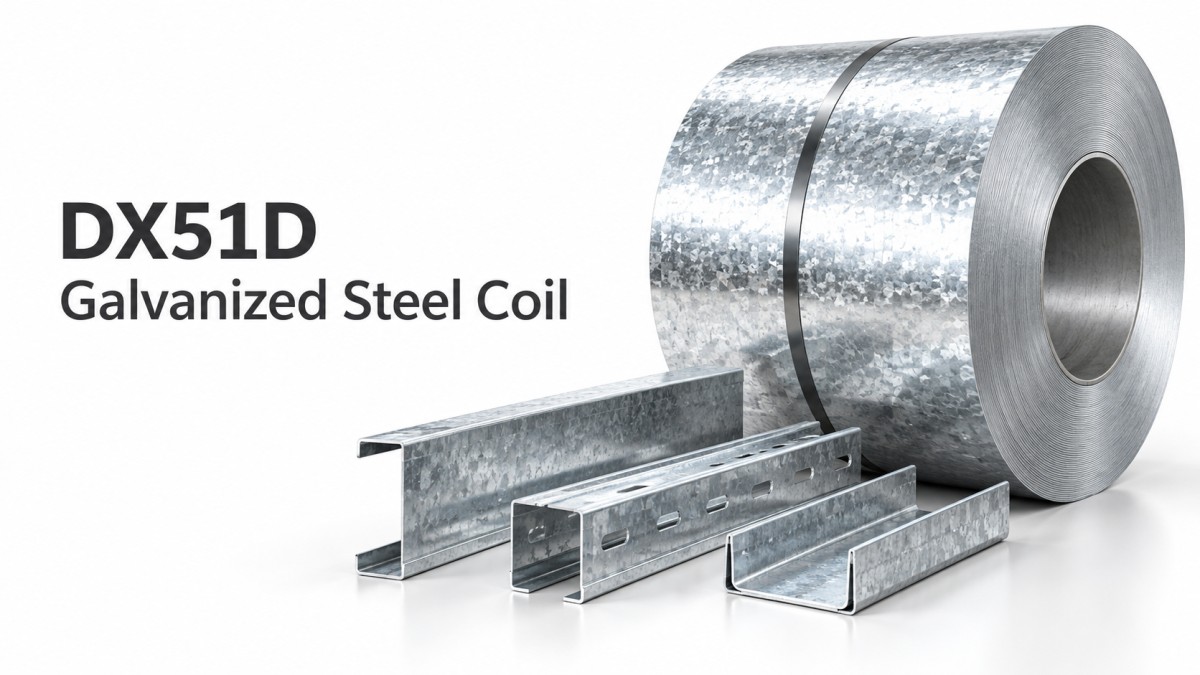
Corrosion resistance is arguably the most critical factor when selecting materials for light steel keels, especially since these frameworks are often hidden behind drywall or insulation, making future maintenance or replacement highly disruptive. The zinc coating on a dx51d galvanized steel coil acts as a sacrificial anode, protecting the underlying steel from oxidation.
The level of protection depends on the zinc coating weight, often measured in grams per square meter (g/m²). For standard interior partition walls in dry, climate-controlled environments, a standard coating (such as Z40 to Z80) is usually sufficient and cost-effective. However, if the light steel keel is being used in high-humidity areas, bathrooms, or as exterior wall backing, a heavier coating (Z120 to Z275 or higher) is necessary.
When specifying the material, project managers must align the zinc coating weight with the specific environmental exposure of the project. Over-specifying the coating leads to unnecessary material costs, while under-specifying it risks long-term structural degradation. It is always advisable to consult local building codes, as some regions mandate minimum zinc coating weights for specific types of construction.
Cost-Effectiveness vs. Performance Trade-offs
Budget constraints are a reality for almost every construction project. DX51D sits in a sweet spot for many light steel keel applications because it offers excellent formability at a lower cost compared to higher drawing grades (like DX52D or DX53D) or structural grades (like S280GD or S350GD).
But is it always the most economical choice? It depends on the structural requirements. If the light steel keel system is designed to support heavy loads, such as multiple layers of dense fire-rated drywall, exterior cladding, or insulation, the yield strength of DX51D might be marginal. In such cases, stepping up to a structural grade like S350GD provides higher load-bearing capacity, potentially allowing for thinner steel gauges or wider spacing between studs, which can offset the higher material cost per ton.
Additionally, procurement strategy plays a role in cost-effectiveness. Steel prices fluctuate based on raw material costs and market demand. Working with a supplier capable of bulk stock preparation allows project managers to lock in favorable prices during market dips, ensuring budget stability throughout the project lifecycle. Therefore, the decision to use dx51d galvanized steel coil should be based on a holistic calculation of material cost, fabrication efficiency, and structural design, rather than just the price per ton of the raw coil.
Procurement and Processing Considerations
Selecting the right steel grade is only half the equation; how the material is procured and processed significantly impacts the final project outcome. Light steel keel manufacturing involves slitting the master coil into narrower strips, followed by roll-forming and punching. Any inconsistency in the coil's width, edge condition, or surface quality can cause machine downtime and increase waste.
This is where the capabilities of the metal supplier become crucial. A comprehensive supplier like Jiangsu Zhongersheng Metal Products Co., Ltd. goes beyond merely supplying raw materials. As a modern enterprise specialized in the R&D, production, sales, and export of metal materials, they focus on core product systems including carbon steel, galvanized steel, and stainless steel. They are committed to providing reliable metal material solutions for industries including construction engineering, steel structures, and hardware processing.
More importantly, they provide custom processing services such as cutting, bending, punching, welding, and surface treatment. For project managers, partnering with a supplier that offers these customized processing services means the dx51d galvanized steel coil can be pre-slit to exact widths, reducing on-site slitting waste. Their standardized production workshops, warehouse storage areas, and professional processing equipment ensure that the material meets precise dimensional tolerances. With complete product specifications and stable quality, they can meet the procurement, bulk stock preparation, and custom processing needs of different customers, helping engineering leaders maintain tight project schedules.
Final Decision-Making Factors for Your Project
To determine if dx51d galvanized steel coil is the optimal choice for your light steel keel project, project managers should evaluate the following criteria:
First, review the structural load requirements. If the keels are primarily for non-load-bearing interior partitions, DX51D is highly suitable. For load-bearing exterior walls, verify if the yield strength meets the engineering specifications or if a structural grade is required.
Second, assess the environmental conditions. Determine the necessary zinc coating weight based on the humidity and exposure levels of the building environment. Ensure the supplier can provide the specific coating class required.
Third, evaluate the fabrication process. Confirm that the coil's formability aligns with your roll-forming machine's capabilities and the complexity of the keel profiles you need to produce.
Finally, consider the supplier's processing capabilities. Opting for a supplier that offers custom slitting, cutting, and punching can streamline your manufacturing process and reduce overall project costs.
Making the right material selection requires balancing technical specifications with practical project constraints. By thoroughly understanding the properties of dx51d galvanized steel coil and aligning them with your specific project needs, you can ensure a durable, cost-effective, and high-quality light steel keel framework. When in doubt, requesting mill test certificates and physical samples from your supplier remains the most reliable way to verify material performance before committing to a bulk order.
Please give us a message