


News center
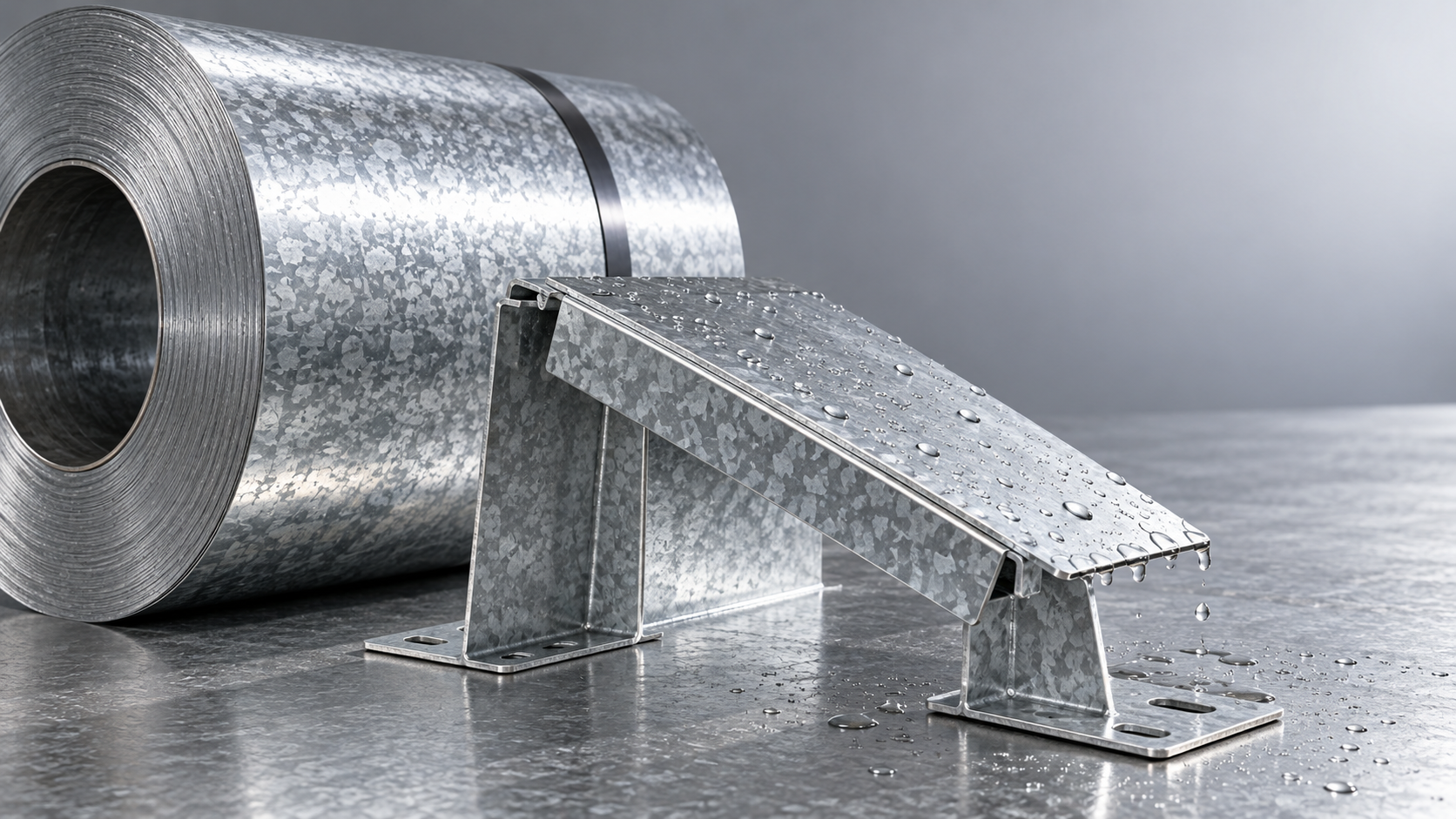
Z275 is generally the stronger choice for outdoor steelwork exposed to repeated wetting; Z180 can be adequate in mild, well-drained environments where the required service life supports a lighter coating. For an outdoor enclosure, roof accessory or formed support, choosing the lighter option without checking exposure can lead to premature corrosion at seams and edges. Choosing Z275 automatically, however, does not solve trapped water, salt accumulation or poor fabrication detailing.
Selecting galvanized steel coil therefore starts with the installation conditions, not just the coating label. Z180 and Z275 typically designate minimum total zinc coating masses of 180 and 275 g/m² across both surfaces under the relevant product standard. Z275 provides about 53% more nominal zinc reserve, but that does not establish a fixed service-life increase. The decision depends on how quickly the environment consumes zinc and whether the finished component preserves that protection.
Read the coating designation before comparing performance
For continuously hot-dip galvanized sheet specified under standards such as EN 10346, the “Z” designation identifies a zinc coating, while the number identifies its coating-mass class. The stated mass covers both sides combined, not each side individually. Minimum values also depend on the prescribed sampling method; a coating-class designation should not be interpreted as an identical local thickness everywhere.
The thickness estimates use zinc density and assume an even split between faces. They are useful for understanding scale, not for replacing acceptance criteria. Where one face is especially critical, request the applicable coating-distribution requirements and inspection results rather than assuming that half the total mass is guaranteed on that face.
Also keep coating class separate from steel grade. Moving from Z180 to Z275 does not inherently increase yield strength, improve dimensional tolerances or make a substrate suitable for deeper drawing. Compare quotations using the same base grade, thickness definition, surface condition and delivery requirements.
Judge the exposure at the component, not the site boundary
A site described as “outdoors” may contain several different corrosion environments. A rain-washed vertical panel can dry quickly, while its sheltered lower return stays damp and collects debris. The return may determine replacement timing even though most of the visible surface remains sound.
Before selecting a coating, establish these exposure conditions:
- Wetting and drying: Assess rain, dew, condensation and whether surfaces dry between wetting events. Undersides and enclosed cavities can remain wet without direct rainfall.
- Salt deposition: Consider coastal aerosols, road-salt spray and saline process contamination. Distance from the coast alone is not a reliable exposure classification.
- Pollutants and chemicals: Identify industrial deposits, cleaning solutions and acidic or strongly alkaline contact conditions that may accelerate zinc attack.
- Drainage and access: Locate horizontal shelves, overlapping seams, blocked drain paths and areas that cannot be inspected or cleaned.
Use a recognized atmospheric-corrosivity assessment where the consequences justify it. ISO 9223 provides a framework for atmospheric classification, but a broad site category still needs checking against local details. Sheltered salt accumulation and persistent condensation can make an individual joint more aggressive than the surrounding open atmosphere.
Where Z180 is a defensible choice
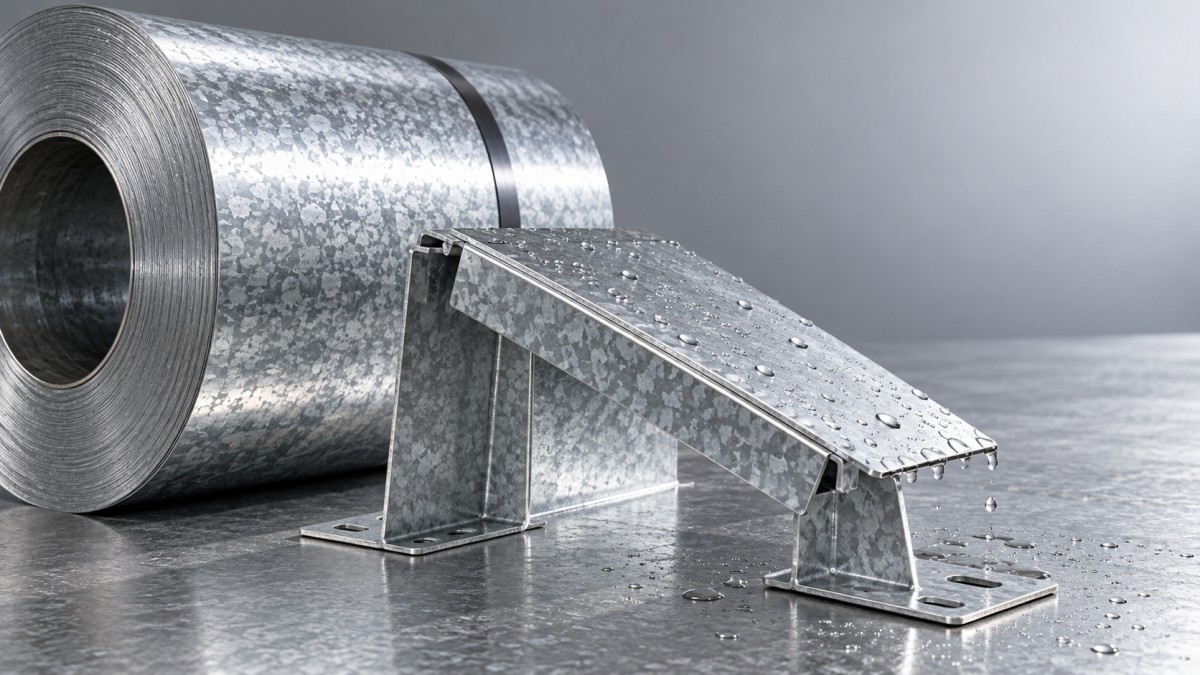
Z180 can be reasonable for a component in a mild inland atmosphere, with rapid drainage, little contamination and straightforward maintenance access. A freely ventilated vertical cover is a different proposition from a folded tray that holds dirty water. The lighter coating should be selected because the exposure and maintenance plan support it, not simply because the item is called an outdoor accessory.
Shorter required service periods or replaceable parts may also support Z180. State what counts as acceptable performance: freedom from red rust, retention of appearance and continued structural function are different requirements. A material can remain functional after its appearance becomes unacceptable.
When Z275 earns the extra coating allowance
Z275 is usually easier to justify where surfaces experience regular rainfall or condensation, maintenance is difficult, or premature corrosion would require costly dismantling. Its additional zinc offers more allowance for progressive coating consumption under otherwise comparable conditions.
For many ordinary outdoor applications, this makes Z275 a sensible starting point for evaluation. It is not a blanket approval for coastal structures, chemically aggressive environments or permanent dampness. In those conditions, investigate a suitably specified paint-over-galvanizing system, a different metallic coating or another material rather than assuming that Z275 alone supplies enough protection.
Why 53% more zinc does not guarantee 53% longer life
Under comparable exposure, increasing zinc thickness generally increases the time before the coating is consumed. A simple thickness-to-corrosion-rate calculation can help screen options when a defensible zinc-loss rate is available. It cannot establish a warranty, particularly when the rate is inferred from an unrelated site.
Atmospheric corrosion changes with wetness, deposits and the development of protective corrosion products. Local damage can also bypass the average coating reserve. A component may first show red rust at a cut edge or weld while broad faces still retain zinc, so whole-surface coating mass is only part of the service-life assessment.
Define the failure criterion before calculating life. First visible red rust, a specified rusted area, loss of appearance and unacceptable section loss produce different answers. Salt-spray test hours should not be converted directly into outdoor years; accelerated testing is more useful for controlled comparisons when its relevance and acceptance criteria are agreed.
Fabrication can outweigh the difference between the two classes
Continuous galvanizing protects the strip before it is cut, punched or formed. Subsequent fabrication creates conditions that are not represented by an intact flat sample. Review the finished part drawing alongside the coil specification.
Cut edges, punched holes and tight bends
Zinc can provide sacrificial protection to nearby exposed steel, but the extent depends on edge geometry, steel thickness and the electrolyte present. Do not assume every cut edge is fully protected. Wide exposed sections, burrs, damaged punched edges and water-retaining joints deserve specific treatment decisions.
Tight bends can damage a coating, especially when tooling or forming severity is unsuitable. Check substrate ductility, bend radius and coating adhesion with the actual forming process. A heavier coating is not automatically a better forming surface; confirm Z275 performance on demanding shapes instead of treating the substitution as purely a purchasing change.
Welds, overlaps and mixed metals
Welding locally disrupts zinc protection. Specify surface preparation and a compatible repair system for welded areas, including the required repair thickness and inspection method. Apply the same discipline to installation damage; an unspecified touch-up paint does not establish equivalent protection.
Overlaps need particular attention because capillary water can remain between sheets after exposed surfaces have dried. Improve drainage, seal joints where appropriate and avoid pockets that retain dirt. Additional coating helps less when the geometry continually renews an aggressive wet environment.
Mixed-metal assemblies introduce another risk. Where equipment includes C12200/TP2 Copper Pipe, prevent direct wet contact with galvanized steel and avoid copper-bearing runoff onto zinc surfaces. Isolation, routing and drainage address this risk more effectively than changing from Z180 to Z275 alone.
Compare installed risk rather than coil price alone
Request comparable quotations before judging the premium. Keep substrate grade, thickness, width, order quantity, surface treatment, tolerances and testing requirements consistent. Otherwise, a price difference attributed to zinc mass may partly reflect a different material or delivery condition.
The relevant economic comparison includes finishing, fabrication, inspection, maintenance access and replacement disruption. On an accessible, replaceable cover in mild exposure, the lower initial cost of Z180 may be defensible. On concealed supports that require dismantling an assembly for repair, extra coating allowance may have greater value.
Separate appearance requirements from corrosion requirements. Spangle and surface finish do not demonstrate coating mass. Likewise, passivation or oiling can support handling and storage performance, but they do not replace the long-term zinc reserve. Where painting is planned, confirm compatibility between the supplied surface treatment, pretreatment process and paint system.
Turn the selection into an inspectable purchase specification
A purchase description containing only “galvanized coil, Z275” leaves important questions unanswered. Once exposure and fabrication have been reviewed, record the requirements that allow the delivered material and finished component to be evaluated consistently.
- Identify the product standard and substrate grade. Include mechanical-property requirements relevant to forming and service.
- State the coating class and acceptance basis. Confirm the applicable coating-mass test method, sampling requirements and any necessary face-specific conditions.
- Define dimensions clearly. Specify thickness, width, tolerances and whether the thickness requirement refers to base metal or coated product under the agreed standard.
- Specify surface condition. Include finish, treatment, oiling restrictions and paint-compatibility requirements where relevant.
- Document fabrication protection. Address exposed edges, weld repairs, compatible fasteners, drainage and dissimilar-metal isolation.
- Request traceable documentation. Match inspection information and coil identification to the supplied material rather than relying on a generic product description.
Receiving and storage also affect the result. Wet, closely packed sheets or coils can develop white corrosion products before installation. Keep material dry and ventilated, prevent condensation, and investigate wet packaging promptly. White staining does not by itself establish structural failure, but substantial attack may consume coating and compromise appearance or subsequent finishing.
Approve Z180 when mild exposure, sound detailing and the required performance period make the lighter coating defensible. Prefer Z275 when repeated wetting and limited maintenance access justify more zinc reserve. Where salt accumulation, persistent dampness or aggressive chemicals dominate, place the coating decision on hold until the protection system and joint design have been assessed; the choice may no longer be between these two classes alone.
Please give us a message