


News center
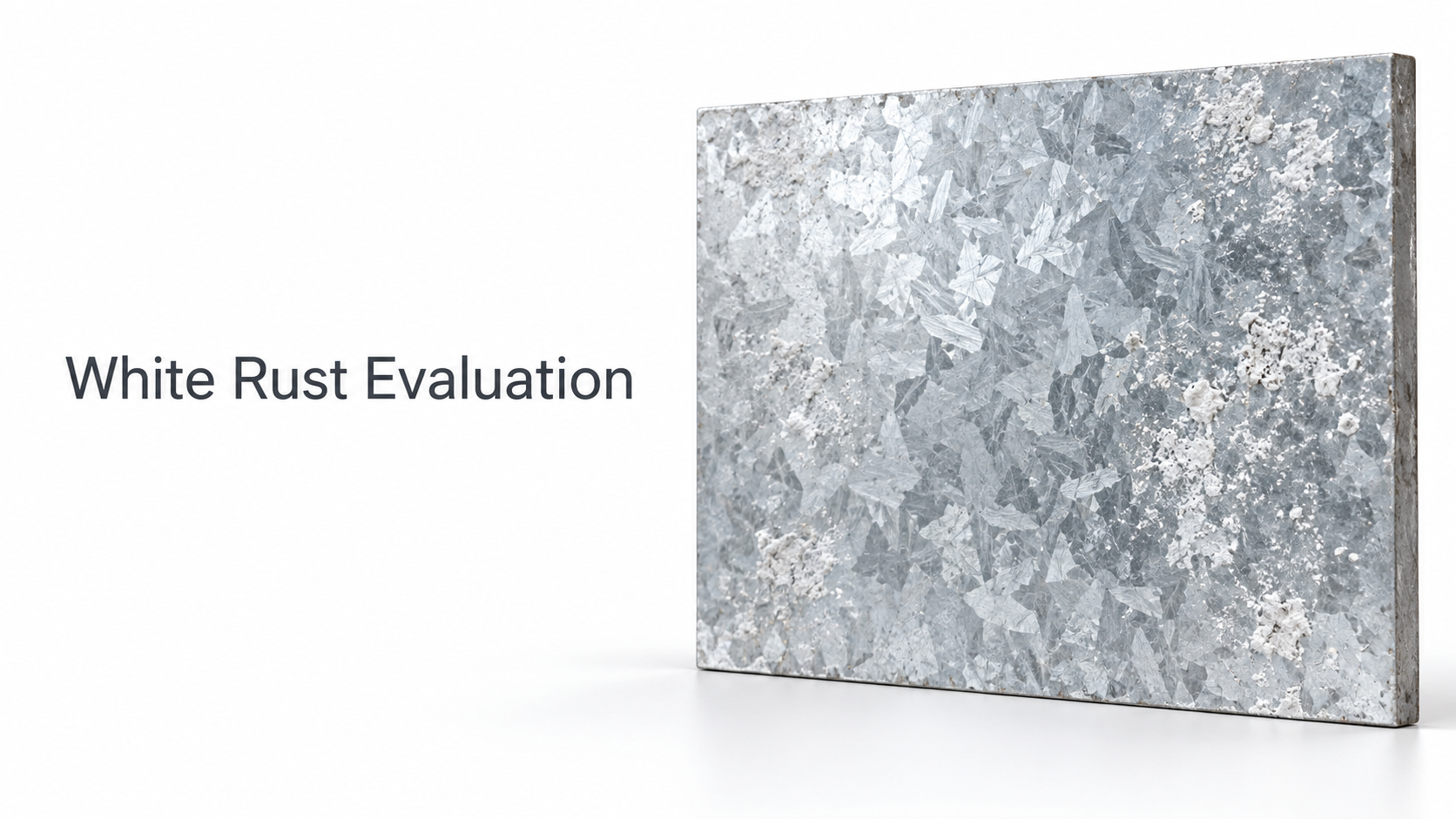
It is that familiar moment of hesitation in the warehouse or at the receiving dock. You slice open the protective packaging of a newly arrived batch of steel, and there it is—a dull, chalky white powder dusting the surface of the metal. For quality control and safety management personnel, this sight instantly triggers a cascade of questions. Is this batch compromised? Will it fail inspection? More importantly, does it violate the standard limits for white rust on a galvanized sheet, or is it just a superficial cosmetic issue that can be safely accepted?
Understanding the precise boundaries of white rust is not just about ticking boxes on a compliance form; it is about protecting the structural integrity of your projects and avoiding unnecessary financial losses from rejected shipments. White rust, a common zinc corrosion issue, can indeed compromise the protective layer if left unchecked during storage or transit. This comprehensive guide outlines the precise industry-standard thresholds, practical evaluation methods, and effective prevention strategies to help you maintain optimal material quality, ensuring your galvanized sheet meets the highest durability and safety requirements.
The Chemistry Behind the Chalk: What Exactly is White Rust?
Before diving into the acceptable limits, it is crucial to understand what you are actually looking at. Unlike red rust, which indicates that the base steel has begun to corrode and lose its structural strength, white rust is strictly a surface phenomenon. It occurs when the zinc coating on the galvanized sheet reacts with moisture and oxygen in the air, forming zinc oxide and zinc hydroxide.
This reaction typically happens when the steel is trapped in a confined, poorly ventilated space with fluctuating temperatures, leading to condensation. The zinc is essentially sacrificing itself to protect the underlying steel, but in doing so, it forms that unsightly white, powdery deposit. The critical question for any QC professional is not whether the zinc is reacting, but whether the reaction has consumed enough of the coating to leave the base metal vulnerable.
Decoding the Standard Limits: What Do the Specifications Actually Say?
One of the most common frustrations in quality control is that international standards rarely provide a simple, universal percentage for "acceptable white rust." Standards like ASTM A653 (for steel sheet, zinc-coated) or ISO 1461 (for hot-dip galvanized coatings) focus heavily on coating mass, thickness, and adhesion. However, they do contain specific clauses regarding surface quality and storage staining.
When evaluating the standard limits for white rust on a galvanized sheet, industry consensus and general practices divide the severity into three distinct categories. Understanding these tiers will help you make informed, defensible decisions on the receiving dock.
Grade 1: Minor Storage Staining (Generally Acceptable)
In this stage, the white rust appears as a light, dusty film or minor darkening of the spangle pattern. If you take a clean, dry cloth and wipe the surface, the white residue comes off easily, revealing a relatively intact and shiny zinc layer underneath. According to most general industry practices, this level of oxidation is considered acceptable for many applications, provided the minimum coating mass requirements are still met and the material is intended for unexposed or indoor structural use. It does not significantly impair the corrosion resistance of the galvanized sheet.
Grade 2: Moderate Oxidation (Requires Assessment)
Here, the white rust becomes more pronounced, forming a thicker, crusty layer that may not wipe away completely. The underlying zinc might appear dull, grey, or slightly pitted. At this threshold, the standard limits become highly dependent on the end-use application. If the galvanized sheet is scheduled for further processing, such as painting, powder coating, or chemical passivation, moderate white rust is usually a rejection trigger. The porous nature of the heavy zinc hydroxide layer will severely compromise paint adhesion, leading to premature peeling. However, if the sheet is to be used as-is in a non-critical, non-visual structural application, it might be accepted after a thorough engineering review.
Grade 3: Severe Corrosion (Unacceptable)
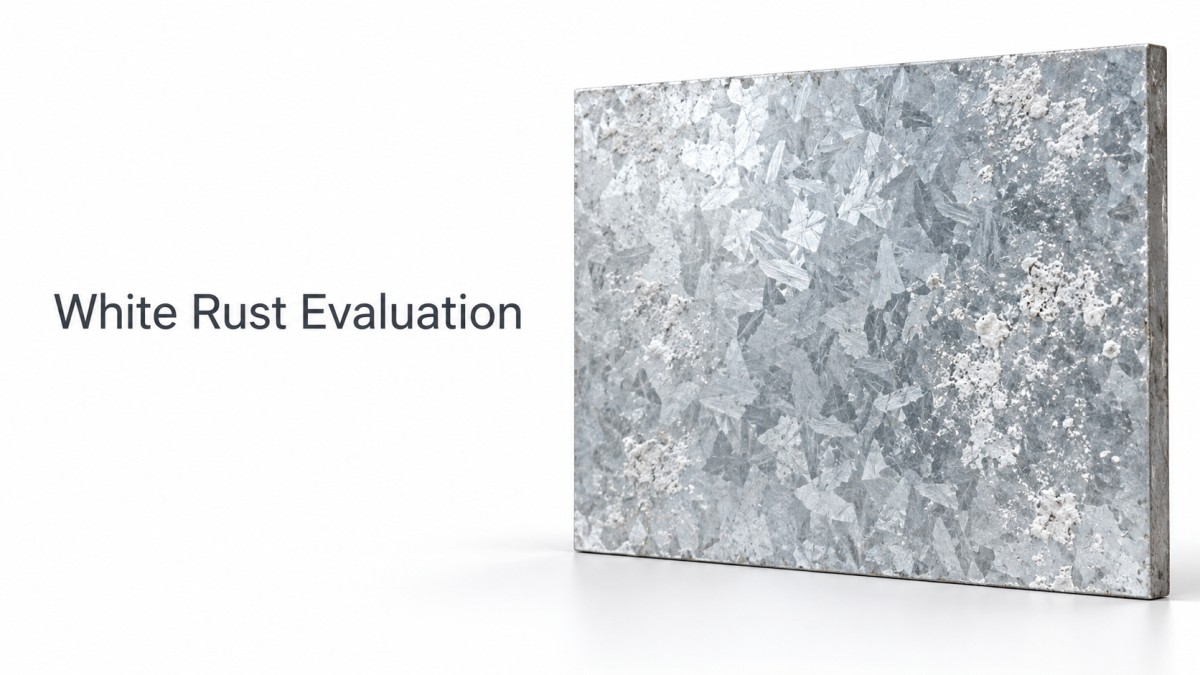
Severe white rust is characterized by heavy, caked deposits, deep pitting, or the presence of "black spots" (which indicate that the zinc has been entirely consumed and the base steel is beginning to corrode). This unequivocally violates any standard limits for surface quality. The protective zinc layer is compromised, and the structural lifespan of the material is drastically reduced. Material in this condition must be rejected.
Practical Field Evaluation: Beyond the Visual Inspection
Relying solely on the naked eye can be misleading, especially under poor warehouse lighting. Experienced safety and quality managers employ a few practical techniques to accurately assess if the white rust has breached the acceptable limits.
The most reliable field method is the "wipe and inspect" test. Using a dark, lint-free cloth, apply moderate pressure to the affected area. If the cloth picks up the white powder and the metal beneath remains smooth and largely reflective, the zinc layer is intact. If the cloth struggles to remove the deposit, or if the underlying surface feels rough, gritty, or pitted to the touch, the zinc has been heavily consumed. Additionally, performing a standard tape test for adhesion in the affected areas can reveal if the coating's bond to the substrate has been weakened by the underlying corrosion.
The Downstream Impact: Why Context Matters in Quality Control
A frequent mistake in quality management is applying a blanket rule to all incoming materials. The standard limits for white rust on a galvanized sheet must always be contextualized by the material's final destination.
If the galvanized sheet is destined for architectural cladding or visible exterior facades, even Grade 1 minor staining might be rejected simply for aesthetic reasons. Conversely, if the material is going into the internal framing of a commercial building where it will be completely enclosed by drywall, a slightly higher tolerance for surface oxidation is perfectly reasonable from a safety and structural standpoint.
Furthermore, if the sheets are going to undergo further fabrication like bending or punching, heavy white rust can act as an abrasive, accelerating wear on your tooling and dies. Safety management personnel must also consider the handling aspect; severe white rust can create fine particulate dust that, while not highly toxic, is a respiratory irritant and requires proper handling protocols and PPE for warehouse staff.
Prevention and Supply Chain Synergy
The most effective way to manage white rust is to prevent it from forming in the first place. This requires a collaborative approach between the manufacturing source, the logistics provider, and your own storage facilities.
At the manufacturing level, the application of proper surface treatments is the primary defense. Modern production facilities utilize chromate passivation, silicate treatments, or organic sealers to create a barrier that prevents moisture from reacting with the zinc. For instance, at Jiangsu Zhongersheng Metal Products Co., Ltd., maintaining the integrity of the zinc coating is a core priority. Through standardized production workshops and specialized surface treatment processes, the galvanized sheets and coils are equipped with robust passivation layers designed to withstand the rigors of transit and storage. Furthermore, proper packaging—using moisture-resistant wraps, wooden pallets to prevent ground condensation, and desiccants—is just as critical as the chemical treatment.
Once the material reaches your facility, the responsibility shifts to your warehouse management. Ensure that the storage area is dry, well-ventilated, and maintains a stable temperature to prevent condensation. Never store galvanized sheet directly on the floor, and if outdoor storage is unavoidable, ensure the bundles are elevated, covered with breathable tarpaulins, and positioned to allow air circulation. Trapping moisture under a non-breathable plastic sheet is a guaranteed way to accelerate white rust formation.
Making the Final Call
Navigating the standard limits for white rust on a galvanized sheet requires a balance of technical knowledge, practical field testing, and an understanding of the material's end-use. It is rarely a simple black-and-white decision. By moving beyond superficial visual checks and evaluating the actual consumption of the zinc layer, quality control and safety management personnel can make objective, risk-based decisions.
Remember that the goal of quality management is not to reject material out of an abundance of caution, but to ensure that every piece of steel that enters your production line or construction site performs exactly as engineered. When in doubt, consult the specific project specifications, perform a physical adhesion test, and maintain open communication with your metal materials supplier to establish clear, mutually understood acceptance criteria before the shipment ever leaves the factory.
Please give us a message