


News center
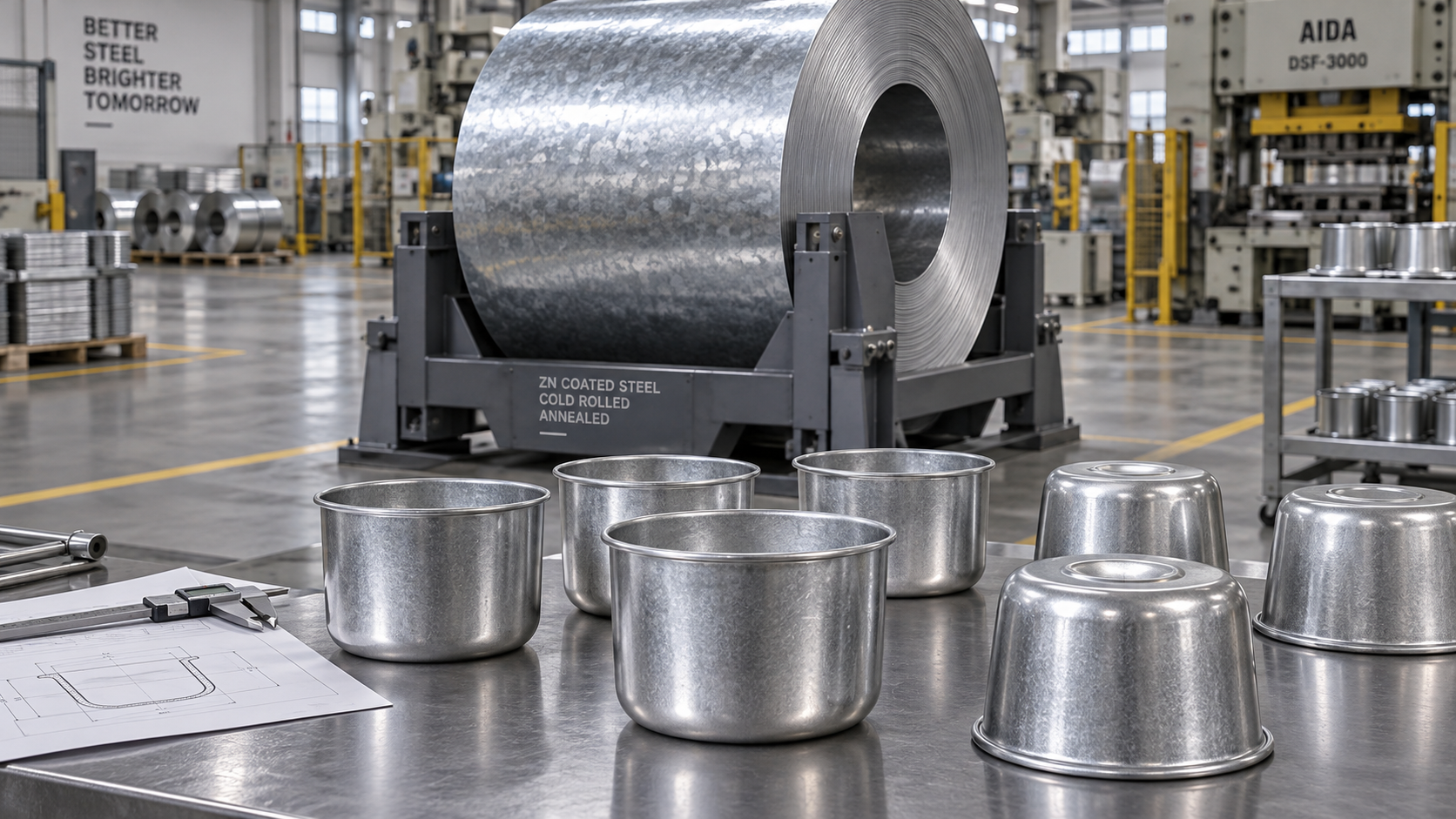
Annealing generally improves the formability of cold rolled galvanized steel coil by reducing the work hardening introduced during cold rolling and developing a microstructure suited to the intended forming operation. For conventional low-carbon drawing steels, a properly controlled cycle lowers resistance to deformation and restores ductility. An incomplete or unsuitable cycle can leave the strip difficult to draw, inconsistent in springback, or vulnerable to splitting.
However, a hotter or longer anneal does not automatically produce a better forming material. The result depends on steel chemistry, previous cold reduction, recrystallization, cooling conditions, and subsequent processing. Technical evaluation should therefore connect the thermal cycle to the delivered coil’s mechanical properties and the actual strain conditions in the component. A grade suitable for a simple bracket may still perform poorly in a deep-drawn housing, even when both materials have acceptable tensile elongation.
How annealing changes the steel beneath the zinc
Cold rolling increases dislocation density in the steel substrate. These defects impede further deformation, increasing strength and hardness while reducing the material’s capacity to accommodate additional plastic strain. The strip also develops a directional microstructure and crystallographic texture. Annealing changes these features through recovery, recrystallization, and, with sufficient thermal exposure, grain growth.
During recovery, dislocations rearrange and some internal stresses decrease. This can reduce stored strain energy without replacing the cold-worked grain structure. Recovery alone generally does not restore the ductility needed for demanding drawing operations. A strip that has softened somewhat may still retain substantial work hardening and limited ability to distribute strain.
Recrystallization creates new grains with much lower dislocation density. For conventional low-carbon forming grades, achieving the intended degree of recrystallization is central to obtaining useful ductility and consistent deformation. If the cycle leaves a mixture of recrystallized and heavily cold-worked regions, local differences in resistance to deformation can promote strain concentration. Average tensile properties may not fully describe that variation.
After recrystallization, additional thermal exposure can enlarge the grains. Some grain growth may support the intended property balance, but excessive coarsening can reduce surface quality during forming. Thin sheet with coarse grains is particularly susceptible to visible surface roughening, often described as orange peel. Increasing annealing severity to obtain lower strength can therefore create a different rejection risk on exposed components.
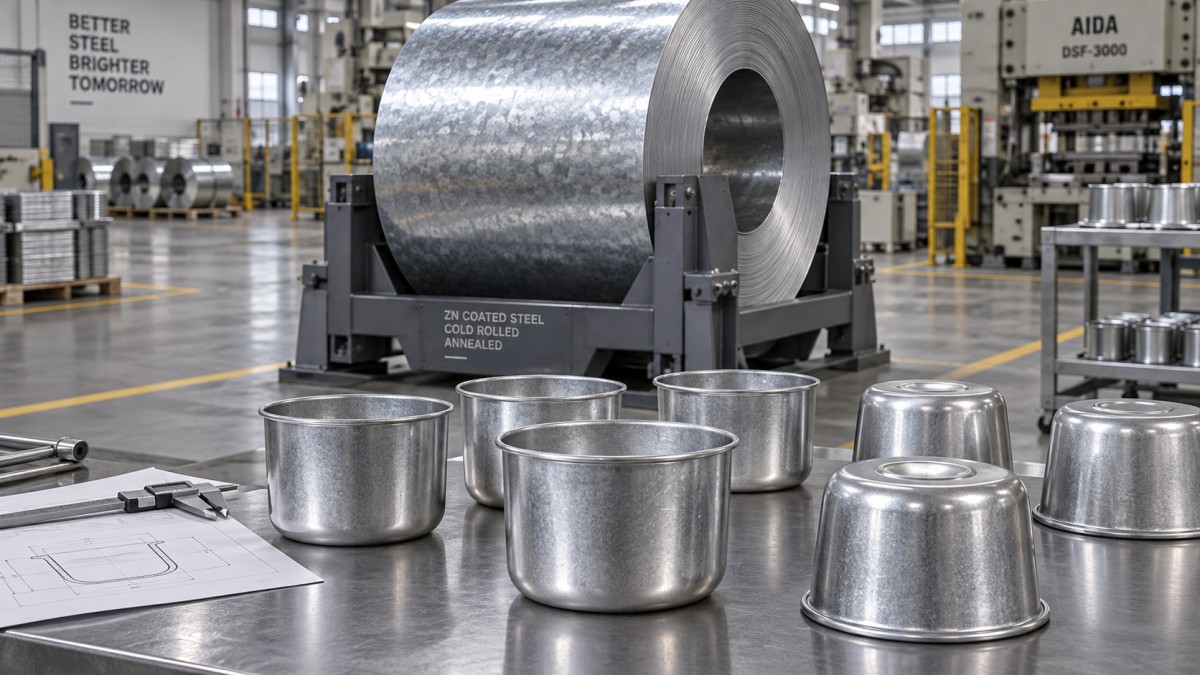
Annealing also influences crystallographic texture: the distribution of grain orientations within the sheet. In ferritic drawing steels, an appropriate texture can improve resistance to thinning during deep drawing. Two coils with similar yield strength and total elongation may consequently behave differently in a cup or housing. Grain size and softness alone cannot explain their drawing performance.
Why the same annealing cycle can produce different results
The starting steel determines what an annealing cycle can achieve. Carbon and nitrogen in solid solution influence strain aging, while alloying and microalloying affect recrystallization, grain development, and phase transformations. Interstitial-free steels use stabilizing additions to control interstitial elements and support demanding forming applications. Their processing requirements and response should not be assumed to match those of ordinary low-carbon commercial-quality steel.
Previous cold reduction also matters. It changes the stored energy available for recrystallization and influences the texture that develops during annealing. Applying the same furnace settings to strip with a different rolling history does not guarantee the same final properties. Thickness, line speed, heating rate, and temperature uniformity further affect whether the strip receives the intended thermal exposure throughout its width and length.
The relevant temperature is the steel’s thermal history, including heating, soaking, and cooling. A furnace setpoint by itself gives an incomplete picture. Insufficient time at the required strip temperature can leave recrystallization incomplete; excessive exposure can encourage unwanted grain growth. Cooling then affects the final microstructure and the amount of interstitial material remaining in solution.
For advanced high-strength steels, annealing may deliberately involve phase transformations to produce a specified balance of phases. Applying the simple rule “more annealing produces softer, more formable steel” to these grades can be misleading. Their forming response must be assessed against the particular grade and its strengthening mechanism. Higher tensile elongation also does not necessarily deliver better edge stretchability.
The galvanizing route changes how annealing should be interpreted
On a continuous hot-dip galvanizing line, the cold-rolled substrate can undergo annealing before entering the zinc bath as part of the same line sequence. Heating, soaking, cooling toward coating conditions, immersion, and final cooling form a connected process. Property control must accommodate both the desired steel microstructure and the conditions needed to produce an acceptable coating.
Electrogalvanized sheet follows a different coating route. The substrate obtains its required properties through upstream processing, while zinc is deposited electrolytically. The electroplating operation does not provide the recrystallization anneal needed to restore a heavily cold-worked substrate. A technical comparison should therefore establish how the base steel was processed rather than treating all galvanized coils as thermally equivalent.
Galvannealed sheet adds another distinction. Heating after hot-dip coating promotes iron-zinc alloy formation in the coating. This changes coating behavior during forming, including its susceptibility to powdering under demanding deformation and contact conditions. A statement that material is “annealed galvanized steel” is insufficient for qualification unless the substrate grade and coating condition are clearly identified.
Post-annealing skin passing can also alter the delivered response. It helps control shape, surface texture, and yield-point behavior, while introducing a small amount of plastic deformation. Tension leveling and other finishing operations may contribute further changes. Consequently, properties measured before finishing cannot automatically represent the coil supplied to the press shop.
Which properties predict bending, stretching, and deep drawing?
Yield strength indicates the stress required to initiate plastic deformation and helps assess forming loads and springback. Annealing that reduces yield strength in a conventional low-carbon grade generally reduces forming resistance. Springback nevertheless depends on the stress distribution, geometry, thickness, tooling, and work hardening. A softer coil can still miss dimensional tolerances if the process was established around a different material response.
Tensile elongation is useful for screening ductility, but its value depends on the test method, gauge length, specimen orientation, and specimen geometry. Uniform elongation describes deformation before localized necking and is especially relevant to stretching. Total elongation includes deformation after necking. Values obtained under different test conditions should not be compared as though they were interchangeable.
The strain-hardening exponent, or n-value, describes how the material strengthens with plastic strain over a specified strain interval. A favorable work-hardening response helps distribute strain during stretch forming and delays localization. Annealing influences this response through the final microstructure and solute condition, but n-values must be compared using consistent measurement conditions.
The plastic strain ratio, or r-value, describes the relationship between width strain and thickness strain during tensile deformation. A higher average r-value generally supports deep drawing by improving resistance to thinning. Differences between measurements taken along, across, and diagonally to the rolling direction reveal planar anisotropy, which contributes to earing. Annealing texture therefore affects both drawing capability and trimming requirements.
The relative importance of these measurements changes with the operation:
- Simple bending: Assess yield strength, ductility, thickness, bend radius, and bend direction relative to rolling. Verify coating condition at the outside bend surface.
- Stretch-dominated stamping: Examine uniform elongation and work-hardening behavior, supported by forming-limit information where appropriate.
- Deep drawing: Give greater weight to average r-value, directional variation, controlled blank flow, and resistance to wall thinning.
- Flanging punched edges: Evaluate edge quality and local formability directly. General tensile elongation cannot establish whether a sheared edge will expand without cracking.
Strain aging deserves separate attention when appearance or stable forming loads matter. Depending on chemistry and processing, interstitial carbon or nitrogen can contribute to a return of yield-point behavior after storage or thermal exposure. Stretcher-strain markings may then appear during forming. A satisfactory tensile test shortly after production does not, by itself, establish performance throughout the intended storage and processing period.
Separate substrate failure from coating and process problems
Annealing principally controls the substrate’s microstructure, but the press interacts with the galvanized surface. Zinc coating condition, surface roughness, lubrication, and tool condition influence friction and material flow. A coil with adequate substrate ductility can split if excessive restraint prevents material from feeding into a die. Conversely, reducing restraint may cause wrinkling even though the steel itself has sufficient drawing capability.
Coating damage must also be distinguished from steel fracture. Fine cracks in a coating, coating powdering, material pickup on tools, and a split through the substrate represent different failure mechanisms. Improving substrate ductility will not necessarily resolve an adhesion problem or coating damage caused by severe contact pressure. Inspection should establish where damage begins and whether it penetrates the base steel.
Failure location provides a useful starting point. Cracking at an outside bend surface calls for checking bend severity, direction, and local condition. Splitting near a punch radius requires examination of local thinning, friction, and restraint. Cracking initiated at a punched edge points toward edge preparation and local fracture resistance. These observations help determine whether annealing-related properties are a credible cause.
For qualification, request the specified substrate grade, coating designation, delivery condition, and mechanical test results using an agreed standard and specimen orientation. ASTM A653/A653M and EN 10346 provide relevant frameworks for specified hot-dip coated products, but their grade designations should not be treated as automatic equivalents. The applicable requirements and test conventions must match the ordered product.
A useful approval package links those documents to the part: yield and tensile strength for forming loads, elongation for ductility screening, r- and n-values where drawing or stretching justifies them, and a coating assessment under representative deformation. Forming-limit data can support evaluation of complex strain paths, although it does not replace checks for edge cracking, coating damage, or production variability.
Representative trials should use the intended rolling direction, lubrication, blank condition, and tooling settings. Where a component operates close to its forming limit, checking material variation across relevant coil positions helps establish a usable process window. A single successful part demonstrates feasibility under those conditions; it provides less evidence of tolerance to normal material and process variation.
The decisive question is whether annealing has produced the property balance required by the component after coating and finishing. For a deep-drawn housing, that may mean favorable texture and resistance to thinning. For a tight bend, local ductility and coating integrity may dominate. Approval becomes more reliable when the specified properties, observed failure mode, and production trial all support the same material choice.
Please give us a message