


News center
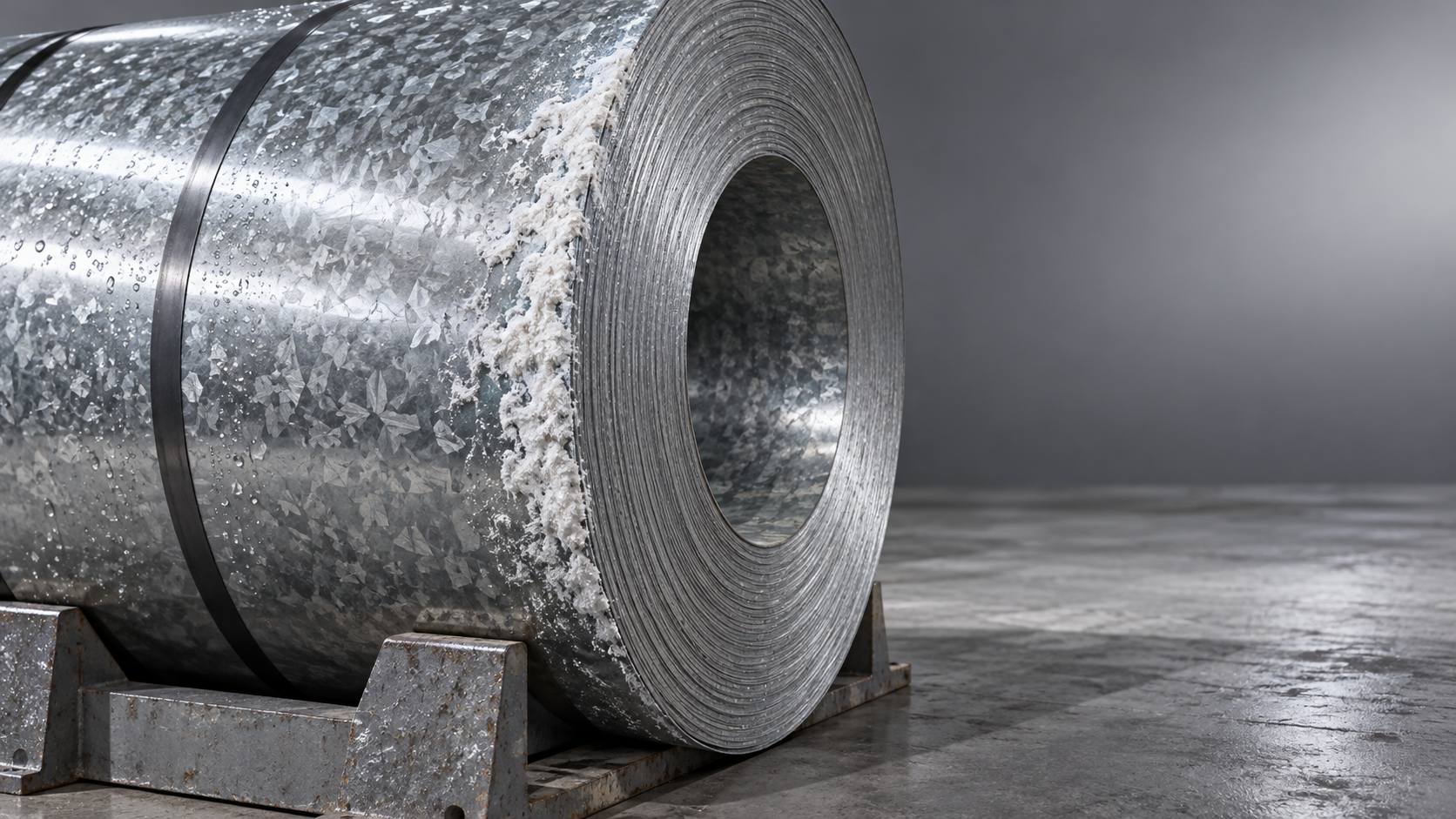
White Rust on Galvanized Steel Coil: Storage Causes and Prevention Measures
White rust on galvanized steel coil can raise immediate concerns during warehouse inspections and incoming quality checks. Trapped moisture, condensation and restricted airflow between tightly wound layers promote zinc corrosion, affecting surface appearance and potentially consuming protective coating. Yet white deposits alone do not tell you whether a coil is usable, needs controlled rework or should be rejected.
The practical task is to stop further wetting, establish how far the damage extends and assess the remaining coating against the intended application. For steel coil galvanized for corrosion protection, storage conditions are part of quality control—not merely a logistics detail.
Why a protective zinc coating develops white rust
Galvanizing protects steel through a zinc barrier and sacrificial action. Under normal atmospheric exposure, zinc gradually develops a relatively stable protective surface film. That process depends on the surrounding environment, including access to air and carbon dioxide.
Conditions inside a wet coil are different. Water can remain between adjacent wraps, where ventilation and drying are limited. Zinc reacts with moisture and oxygen, producing deposits commonly described as white rust or wet storage stain. These deposits can include zinc oxides, hydroxides and basic salts; their composition varies with exposure.
A bulky white deposit can look worse than the underlying metal loss. Conversely, a relatively small visible area at the coil edge may conceal corrosion farther between wraps. Appearance is therefore a screening tool, not a reliable measurement of coating condition. Red-brown corrosion is more concerning because it may indicate exposed steel, although transferred rust contamination must also be ruled out.
Where moisture enters—and why it stays
Rain is an obvious source, but condensation often causes the more confusing incidents. A cold coil moved into warm, humid air may remain below the local dew point long after the warehouse feels comfortable. Moisture can then form on the steel or within packaging. Air temperature alone does not establish whether the coil is safe to expose.
Other sources include leaking roofs, damp transport decks, wet timber supports and water entering damaged wrapping. Once water reaches the coil edges, capillary action can draw it between wraps. Tight winding then makes drying difficult. A fan directed at the outside may dry the visible surface without removing internal moisture.
Packaging can either interrupt or prolong this process. A suitable moisture-barrier system protects dry material when correctly sealed. The same enclosure can retain water if the coil was packed wet or the barrier was punctured during handling. Desiccant has limited capacity and cannot compensate for continuing water ingress.
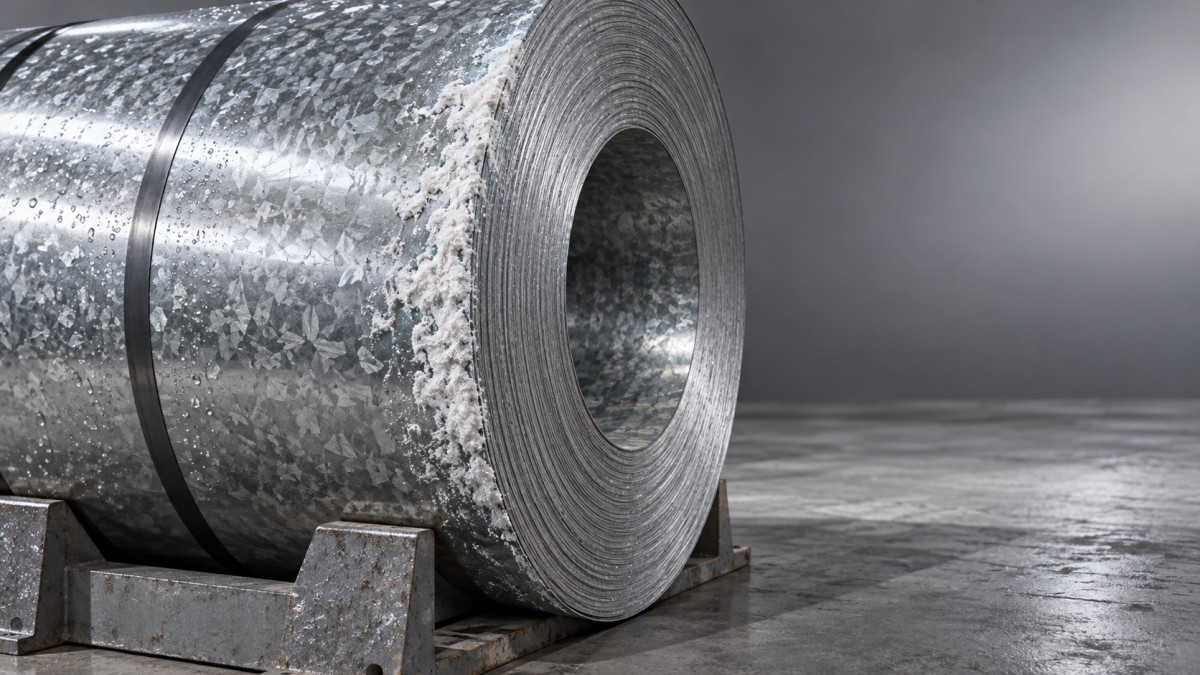
Coil edges, torn wrapping, wet support points and staining beneath packaging seams deserve particular attention during receiving inspections.
Receiving inspection: preserve evidence before disturbing the coil
When a shipment arrives wet or stained, document its condition before cleaning or repacking. Record coil identification, delivery time, packaging damage, visible water and the location of deposits. Photographs should show both the overall package and close views of affected areas. This supports traceability and helps distinguish transit exposure from later warehouse conditions.
Check nearby coils from the same shipment rather than treating the first affected coil as an isolated event. Review available transport and storage records. For condensation concerns, compare the measured steel surface temperature with the dew point calculated from local air temperature and relative humidity. Allow for measurement uncertainty and differences across a large coil.
- Place suspect stock on quality hold. Prevent accidental release into slitting, forming or painting.
- Separate observations from conclusions. “White deposits at both edges” is evidence; “complete coating failure” requires further assessment.
- Record the supplied surface condition. Passivation, oiling and other treatments affect handling and downstream compatibility.
- Agree on controlled access. Opening packaging or unwinding should follow a safe plan and any applicable claim-inspection requirements.
Do not cut bands simply to inspect deeper layers. Stored energy, unstable positioning and sharp strip edges create hazards unrelated to corrosion. Use trained personnel, suitable restraints and designated coil-handling equipment.
Make the storage environment do most of the prevention
A roofed warehouse is not automatically a dry warehouse. Keep coils away from open doors exposed to rain, roof leaks, washdown areas and persistent condensation zones. Use dry, load-rated saddles or supports that keep the material clear of floor moisture and prevent movement. Coil orientation and stacking must follow an engineered storage arrangement, not an improvised drainage strategy.
Temperature transitions need their own procedure. Before opening a cold package in humid conditions, allow sufficient time for temperature equalization and verify conditions by measurement. There is no universal waiting period: coil mass, packaging, starting temperature and warehouse humidity all matter. Where condensation recurs, controlled humidity is more dependable than simply increasing airflow.
Ventilation helps exposed surfaces dry, but it cannot reliably ventilate tightly wound interfaces. If water has entered the wraps, external drying alone should not be treated as evidence that the coil is dry. A controlled processing or inspection route may be necessary, subject to safe handling and agreement with the supplier.
Use stock rotation and location records to limit forgotten inventory, especially near vulnerable building areas. Inspection frequency should increase after leaks, severe weather or abrupt temperature changes. A fixed monthly check may miss a short wetting event that leaves moisture trapped for much longer.
Specify protection for the actual route
Packaging should reflect transit duration, handling transfers, climate changes and expected storage—not just the appearance of the finished bundle. Confirm the moisture-barrier arrangement, edge protection, closure method and any desiccant or corrosion-inhibiting materials with the supplier. These materials must be compatible with the zinc surface and subsequent processing.
Temporary passivation or oiling can reduce storage risk, but neither makes a wet coil immune to corrosion. Customers planning painting, adhesive bonding or welding should establish acceptable surface treatments before ordering. A storage protection choice that complicates downstream cleaning is not necessarily the right solution.
Can an affected coil still be used?
Sometimes, but release should depend on condition and application rather than a blanket rule. Light staining on material intended for a concealed component presents a different decision from deposits on an exposed architectural surface or strip entering a coating line. Cosmetic acceptance does not prove adequate corrosion protection, and adequate coating may still fail a specified appearance requirement.
Assess representative material after an approved cleaning trial, where necessary. Consider deposit coverage, pitting, evidence of substrate corrosion and remaining coating. A reading taken over corrosion products should not automatically be interpreted as intact zinc thickness. The measurement method, surface preparation and sampling locations require competent review, particularly when damage varies across the width or length.
Check the purchase specification and applicable product standard for coating designation, appearance requirements and permitted testing methods. Do not treat a total coating-mass designation covering both faces as a guaranteed minimum at every individual spot. Where conformity remains uncertain, agree on testing and disposition with the supplier or a qualified laboratory.
Possible outcomes include release for the original use, agreed use in a less appearance-sensitive application, controlled rework or rejection. None should be decided solely from photographs.
Cleaning without creating another defect
Cleaning removes deposits; it does not restore zinc already consumed. Start with the least aggressive supplier-approved method and test a small area. Avoid uncontrolled acid cleaning, harsh abrasives and carbon-steel wire brushes, which can remove sound coating or introduce contamination. Any wet cleaning process needs a verified drying step before material is recoiled or enclosed.
For tightly wound coils, improvised manual cleaning between wraps is neither a safe nor a reliable remedy. If controlled unwinding is required, plan strip restraint, machinery guarding, suitable handling protection and segregation of affected lengths. Cleaning chemicals also need an appropriate safety assessment and waste-handling procedure.
After treatment, check the surface against its next operation. Residual deposits, cleaners or altered surface treatments may affect paint adhesion, appearance or forming. Repack only when dryness has been established; a clean-looking outer wrap is not sufficient evidence.
Close the gap between purchasing, storage and processing
For Jiangsu Zhongersheng Metal Products Co., Ltd., whose business covers carbon steel, galvanized steel and stainless steel alongside cutting, bending, punching, welding and surface treatment, the useful handover information extends beyond dimensions and grade. Packaging condition, surface treatment, storage exposure and intended processing should remain connected to the material identification.
Mixed-material purchasing also needs separate handling instructions. An item such as 1050 Aluminum Bar should not automatically inherit the cleaning method or acceptance criteria used for galvanized coil. Shared warehouse space does not mean shared corrosion behavior or treatment compatibility.
Before the next shipment, confirm the coil’s surface protection, packaging arrangement, anticipated temperature transitions and procedure for reporting wet deliveries. For affected stock, the release record should answer three questions: has the moisture source been removed, has the remaining coating been assessed, and is the surface acceptable for its actual use? If any answer is uncertain, keep the coil on hold rather than passing the problem downstream.
Please give us a message