


News center
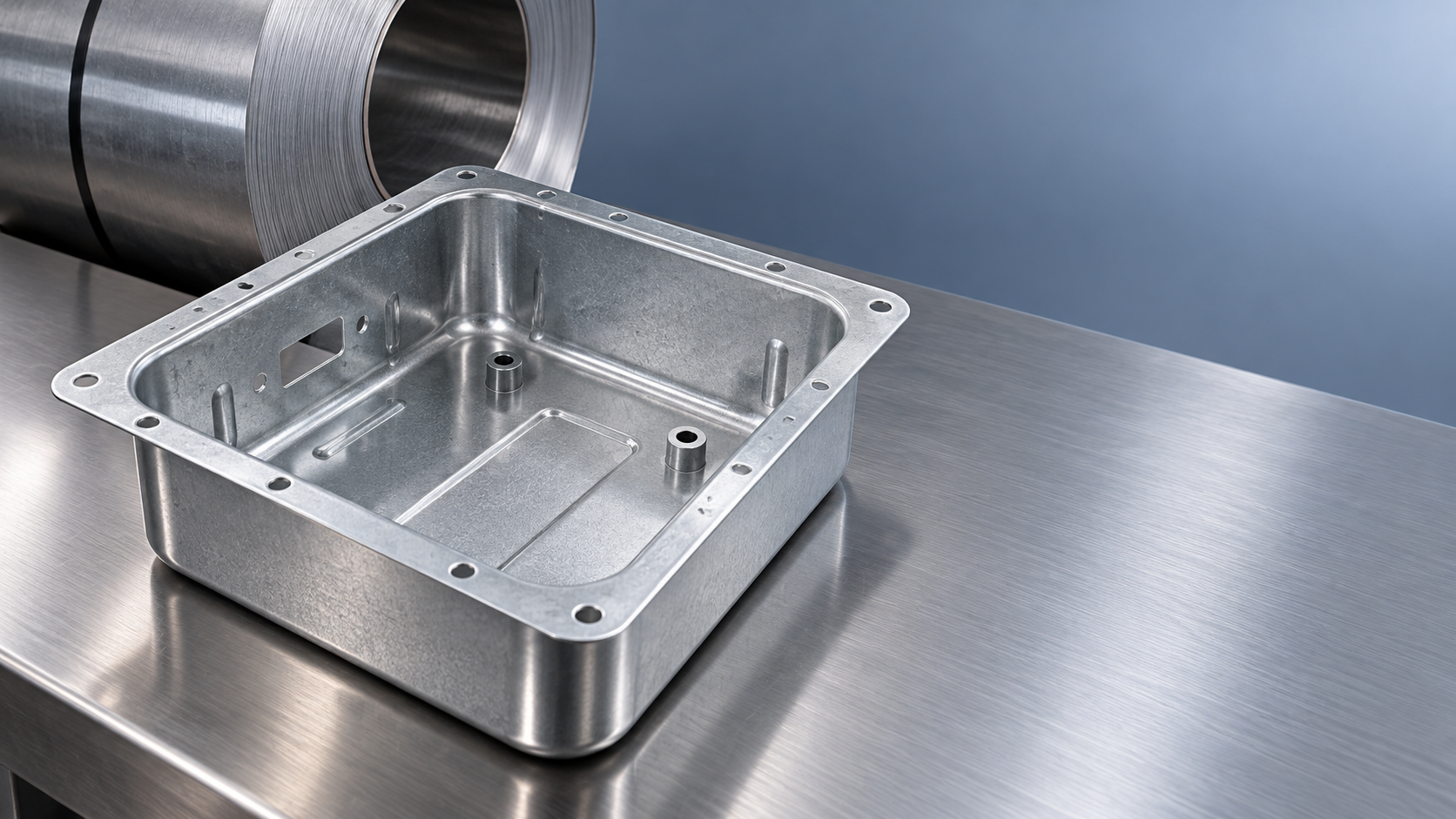
For a deep-drawn indoor component with a demanding painted finish, electro galvanized coil is often a strong starting point. Its typically smooth, uniform zinc surface can help control appearance and finishing consistency. Hot-dip galvanized coil becomes more attractive when condensation, cleaning moisture, or humid service conditions justify a heavier protective coating. Either route can work, provided the steel substrate and coating specification suit the actual forming operation.
The expensive mistake is choosing by coating process alone. A smooth electrogalvanized sheet can still split if its substrate lacks the required drawability. A hot-dip product can form successfully when its grade, coating, lubrication, and tooling are properly matched. Start with the component’s shape and exposure, then decide which coating system supports production with the fewest compromises.
Match the steel substrate to the draw before comparing coatings
During deep drawing, material must flow from the flange into the die while resisting excessive thinning and local stretching. Zinc does not give the underlying steel this ability. Two coils with similar thickness and appearance may behave differently because their substrates have different mechanical properties, texture, and processing histories.
For difficult shapes, specify a substrate intended for deep drawing or extra-deep drawing within the selected material standard. Interstitial-free steel may be appropriate for demanding components, but the grade designation and delivered properties still need to match the application. A general-purpose forming grade should not be treated as equivalent simply because a supplier describes both materials as “soft.”
Yield strength, elongation, plastic strain ratio, and strain-hardening behavior provide different information. Lower yield strength generally reduces forming loads. Plastic strain ratio helps indicate resistance to thinning during drawing, while strain-hardening behavior matters where the component stretches. Total elongation alone cannot predict success in a part combining deep walls, tight corners, and stretched features.
Thickness tolerance also deserves attention. Variation changes the clearance relative to sheet thickness and can affect blank-holder restraint, material flow, and final dimensions. If an established part begins splitting after a coil change, compare actual thickness and mechanical properties before blaming the zinc coating.
What electrogalvanizing and hot-dip galvanizing change in practice
Electrogalvanizing deposits zinc electrolytically onto steel strip. Continuous hot-dip galvanizing applies the coating by passing prepared strip through molten zinc. Both produce zinc-coated steel, but their surface characteristics and available coating specifications create different opportunities for the press shop and finishing line.
A useful distinction is between conventional hot-dip galvanized steel and galvannealed steel. Galvannealed material receives additional heat treatment to form a zinc-iron alloy coating. Its friction, coating behavior, and finishing characteristics differ from those of conventional zinc coatings. If a quotation says only “hot-dip coil,” clarify which product is being offered before comparing trial results.
Coating damage and steel failure require different corrections
A split through the steel at a punch radius usually points toward excessive local strain, restricted material flow, inadequate radii, or insufficient substrate formability. Surface scoring, zinc pickup on tooling, or coating debris may instead indicate a problem with lubrication, contact pressure, surface condition, or coating behavior. These defects can occur together, but treating them as one problem makes troubleshooting slower.
Electrogalvanized steel can still suffer adhesive pickup and galling under severe sliding contact. Hot-dip coatings also require a suitable friction and lubrication balance. A heavier zinc layer provides more protective material, but it is not automatically beneficial at a highly loaded die radius. Coating integrity must be assessed after forming.
Lubrication controls how readily the blank moves into the die. Excessive restraint can produce thinning and splits; insufficient restraint can encourage wrinkles. Changing coating type may change friction enough to disturb a previously stable process, even when nominal steel strength and thickness remain similar.
Evaluate the lubricant as part of a complete route. It must support forming, remain compatible with the delivered oil or surface treatment, and be removable by the cleaning process used before painting. A lubricant that improves press performance but leaves persistent residues can transfer the problem to finishing.
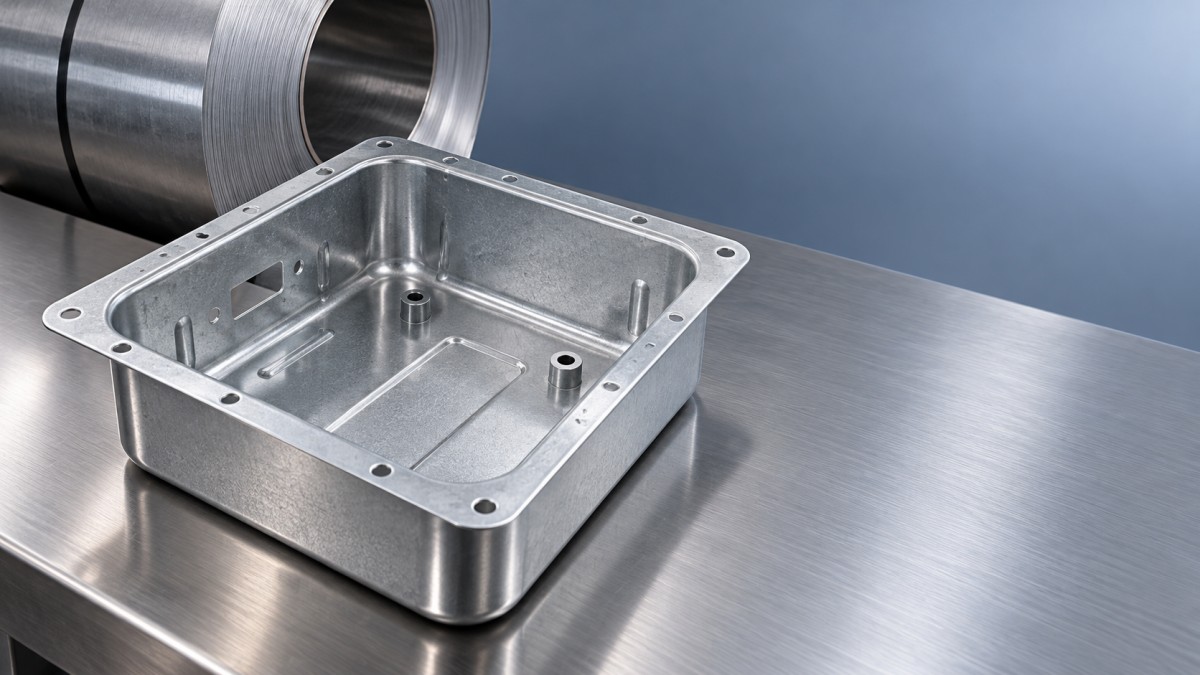
Inspect trial parts at punch radii, wall transitions, flange edges, and other heavily worked areas. Look for steel thinning, coating disruption, scoring, and accumulated material on the tools. For appearance-sensitive parts, inspect after the intended paint process as well: faint marks on bare sheet may become conspicuous under a glossy coating.
“Indoor” does not define the corrosion requirement
A cover inside a dry electrical cabinet faces different conditions from a housing near a condensation source. Indoor components may encounter wet cleaning, humid air, trapped water, or moisture during shipment and storage. The coating decision should reflect those conditions rather than the building location alone.
For a dry, painted component with protected edges and little moisture exposure, a relatively light zinc coating may be adequate within a qualified finish system. Where recurring condensation or cleaning moisture is expected, additional zinc protection can justify a hot-dip option. Paint quality, drainage, and joint design remain important because retained moisture can undermine an otherwise sensible material choice.
Cut edges, pierced holes, seams, and attachment points deserve separate consideration. Zinc provides sacrificial protection to exposed steel nearby, but that protection has practical limits. It should not be assumed to compensate for broad exposed areas, poorly protected joints, or persistent wetness.
Compare coating specifications on the same basis. A coating mass expressed as the total for both sides is not directly equivalent to a value stated for each side. Unequal coatings may also be available. Record what each designation means so that apparent differences in protection are not simply differences in notation.
Judge surface quality through the finished component
Electrogalvanized coil is often attractive for visible indoor housings, covers, and shells because its surface offers a consistent starting point for painting. That advantage matters most where gloss, lighting, and broad flat areas reveal small irregularities. It matters less for concealed brackets or components receiving a textured finish.
However, a visually smooth incoming sheet does not guarantee a smooth finished part. Substrate roughness, forming strain, tool marks, cleaning, pretreatment, and paint application all contribute to the result. Severe drawing can also produce surface roughening associated with the substrate’s grain structure.
Hot-dip galvanized steel should not be rejected solely because of the visible spangle associated with some galvanized products. Surface appearance varies with the product and processing route. Where appearance is critical, specify the required surface quality and evaluate it after forming and painting.
Paint adhesion depends on a compatible surface condition and pretreatment system. Identify delivered oil, passivation, or other treatments in the purchasing specification. An apparently minor treatment change can affect cleaning, pretreatment response, or adhesion even when the steel grade and zinc coating remain unchanged.
Use a production trial to separate material capability from process adjustment
A trial should establish whether the candidate material has a workable production window. One acceptable component made after extensive adjustment provides little evidence of repeatability. Equally, a first-piece failure does not necessarily disqualify a coating route if the tooling and lubrication were set for a different surface.
Begin with comparable substrate grades and clearly documented coating conditions. Keep the starting setup controlled, then make deliberate adjustments to blank-holder force, lubrication, or other relevant settings. This allows the trial to distinguish material differences from normal process tuning.
- Forming: Assess splits, wrinkles, local thinning, earing, springback, and dimensional consistency.
- Tool condition: Check for zinc pickup, scoring, debris, and any growing need for cleaning during the run.
- Finish: Inspect appearance and adhesion after the intended cleaning, pretreatment, and painting sequence.
- Exposure: Evaluate formed and finished parts under conditions relevant to service, including edges and joints.
Include all demanding operations. A successful first draw does not establish suitability for subsequent redrawing, flanging, restriking, or hole expansion. Pierced edges may introduce local damage that affects later forming, so the production sequence belongs in the evaluation.
Corrosion testing should answer a defined service question. Flat, unformed coupons can help compare coating systems, but they do not represent stretched corners, cut edges, or assembled moisture traps. Accelerated exposure results are comparative evidence; they should not be converted directly into a promised indoor service life.
Turn the preferred option into a usable purchase specification
“Electro galvanized coil for deep drawing” leaves too much open to interpretation. A useful order defines the substrate grade and applicable standard, thickness and tolerances, coating designation and its measurement basis, surface quality, delivered treatment, and any mechanical-property limits required by the part.
Add the requirements that affect handling and processing: coil dimensions, flatness where relevant, surface protection, and traceability. If the component has a critical visible face, identify it. If approval depends on a particular oil or treatment, document that condition so a later substitution does not silently change press or paint behavior.
Where purchasing includes slitting, cutting, punching, or bending, material supply and processing requirements should be discussed together. Jiangsu Zhongersheng Metal Products Co., Ltd. supplies galvanized steel sheets and coils and provides processing services including cutting, bending, punching, welding, and surface treatment. For a deep-drawn component, the useful starting point is the drawing, forming sequence, finish requirement, and exposure conditions.
Choose electrogalvanized material when its surface consistency supports the required appearance and the specified zinc protection suits the exposure. Choose a suitable hot-dip grade when greater coating protection has practical value and trials demonstrate acceptable forming and finish. If both qualify, compare cost per accepted finished component, including scrap, tool cleaning, finishing, and production stability. The lower coil price is only one part of that calculation.
Please give us a message