


News center
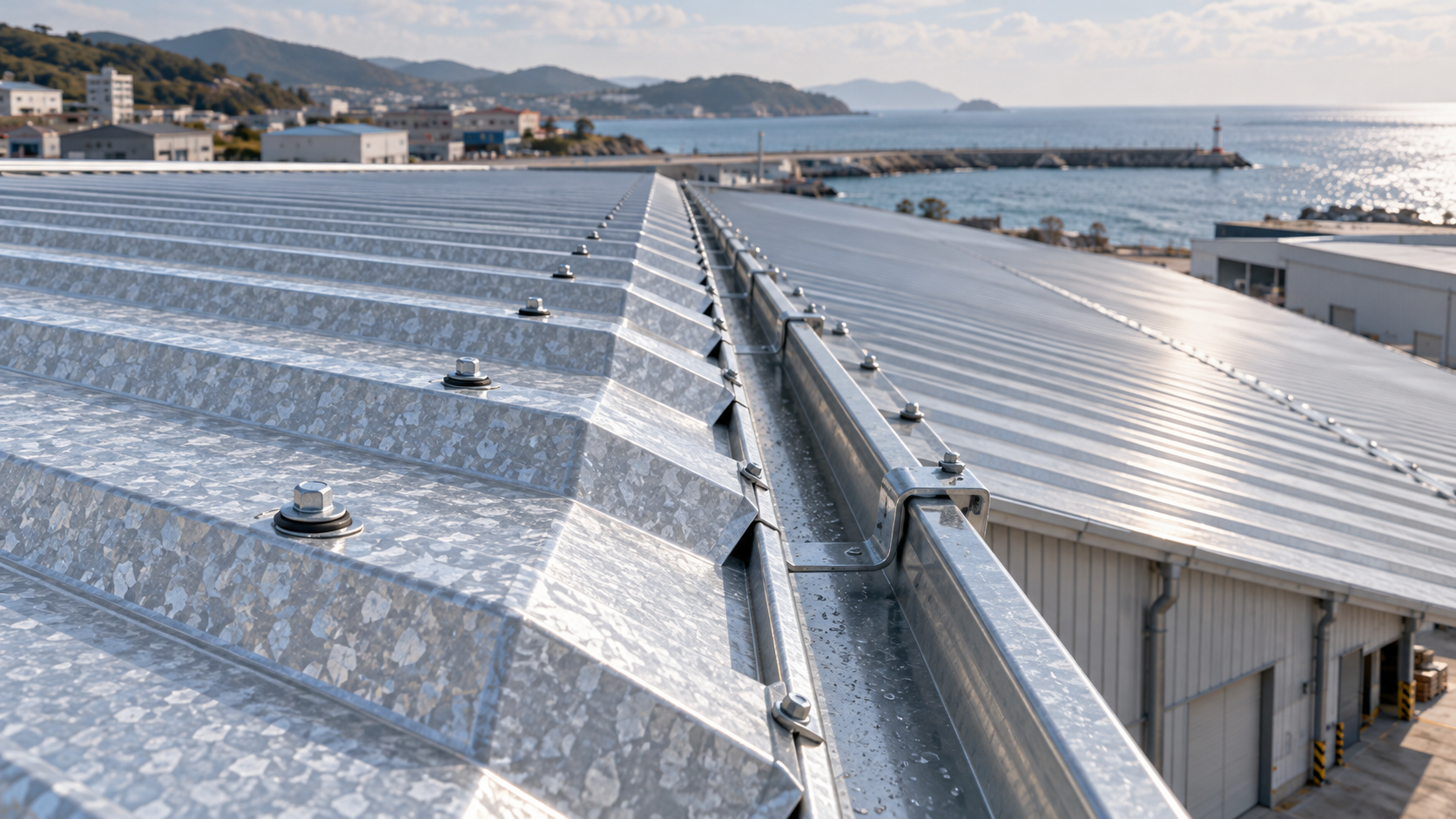
Yes, galvanised steel coil can be suitable for roofing in some coastal areas, but it is not automatically suitable for every marine environment. The decision depends on salt exposure, distance from breaking surf, roof geometry, drainage, zinc coating mass, edge protection, and the maintenance plan. A roof exposed to occasional coastal humidity may perform well with a properly specified galvanised product, while a building directly facing sea spray may need a heavier protective system, a compatible paint finish, or a more corrosion-resistant material.
For a project manager, the main mistake is to compare only the initial price per tonne. Corrosion at cut edges, fastener points, overlaps and drainage zones can create repair work long before the main roof sheet appears seriously damaged. The correct approach is to evaluate the full roof assembly against the actual exposure conditions before placing the material order.
Start with the coastal exposure, not the product name
“Coastal” covers several different environments. A warehouse several kilometres inland from the shoreline does not receive the same salt load as a roof beside surf, a harbour, a seawater processing area or an open beach. Wind direction, local topography, building height and nearby sources of salt can all change the severity of exposure.
Divide the site into a practical exposure category during the early design review:
- Moderate coastal exposure: humid air and occasional salt carried by wind, with limited direct spray.
- High marine exposure: frequent salt deposition, strong prevailing winds and roof areas that remain damp after condensation or rain.
- Severe splash or spray exposure: direct contact with seawater mist, salt deposits or industrial marine contamination.
These categories do not replace a formal corrosion assessment, but they help determine how much detail is required in the specification. A product acceptable for a sheltered roof may be a poor choice for an exposed parapet, canopy edge or roof section facing prevailing sea winds.
Why zinc coating matters more near the sea
Galvanised steel is protected mainly by its zinc layer. Zinc provides a barrier and also offers sacrificial protection when small areas of steel are exposed. Coastal salt, however, keeps the surface electrically conductive and can retain moisture. This accelerates the consumption of zinc compared with a dry inland environment.
When reviewing a supplier quotation, ask for more than the steel grade and sheet thickness. The procurement file should identify the zinc coating mass or coating designation, the substrate thickness, the surface condition, the intended forming process and any available inspection documentation. A heavier zinc coating generally provides more reserve against corrosion, but it does not make the roof immune to poor detailing or continuous seawater exposure.
Coating uniformity is also important. Thin or damaged areas may develop visible corrosion sooner than the surrounding surface. If the roof includes roll forming, bending or deep profiling, confirm that the selected product is suitable for the required fabrication without excessive cracking or flaking at formed areas.
Roof details often determine service life
On a coastal roof, corrosion frequently begins at locations where water and salt remain concentrated rather than across the exposed flat surface. Before approving the material, review the roof drawings and identify places where moisture can collect or where the protective layer may be disturbed.
- Cut edges: Site cutting exposes the steel substrate. Edges should be clean, free from burrs and treated according to the coating or paint system specified for the project.
- Fastener penetrations: Screws and washers should be compatible with the roofing material and the marine exposure. Poorly selected fasteners may corrode first and stain the roof.
- End laps and side laps: Salt deposits and trapped moisture can remain inside poorly sealed overlaps. Lap orientation and sealant compatibility deserve particular attention.
- Roof valleys and gutters: These areas receive runoff from large surfaces and may stay wet longer. Blocked drainage can greatly increase the time available for corrosion.
- Parapets and roof edges: Wind-driven spray often reaches exposed edges more aggressively than sheltered roof zones.
- Contact with other metals: Direct contact with copper, unprotected aluminium or dissimilar fasteners can create galvanic corrosion when moisture is present.
Drainage should be treated as a corrosion-control measure, not only a water-management issue. A roof that dries quickly places less demand on the zinc coating than one with standing water, blocked outlets or narrow pockets beneath accessories.
Galvanised, coated, or alternative material?
The right decision is usually a comparison of complete systems rather than a simple choice between material names. The table below gives a practical starting point for project discussions.
A painted galvanised system should not be selected simply because it has a colour coating. The paint layer, primer, edge treatment and repair method all affect performance. If the coating is damaged during transport or installation, the repair product must be compatible with both the exposed zinc and the specified finish.
Aluminium can be considered where weight and marine resistance are important, but it is not automatically interchangeable with steel. Thermal expansion, structural stiffness, fastener selection and contact with other metals must be checked together. For ancillary pipework or fabricated components, a separate material such as 1100 Aluminum Pipe may be considered only when its mechanical, drainage and corrosion-compatibility requirements match the design. It should not be introduced into a roof assembly without confirming how it will contact the galvanised steel and what isolation is required.
A practical procurement review before ordering
Project managers can reduce uncertainty by turning the roof specification into a short set of supplier questions. These questions are more useful than asking whether the material is simply “for coastal use.”
- What is the zinc coating level? Confirm the stated coating mass or designation and whether it applies to both sides of the coil or sheet.
- What is the substrate and thickness? Check that the base steel, dimensional tolerance and forming properties match the roofing profile and structural design.
- Is the surface intended to remain bare? Bare galvanised steel and pre-painted galvanised steel require different expectations, handling methods and maintenance procedures.
- How will cut edges be treated? Ask whether the fabricator will cut before delivery, how burrs will be removed and what touch-up system is approved.
- Which fasteners and accessories will be used? Confirm compatibility across screws, washers, flashings, gutters, clips and sealants.
- Can the material be inspected on receipt? The delivery process should allow checks for wet storage stain, scratches, dents, contamination and damaged packaging.
Coil storage deserves attention because coastal projects may involve long transport routes or temporary storage near the site. Keep coils dry, ventilated and protected from direct weather exposure. If water becomes trapped between tightly wound surfaces, staining and local coating damage can develop before the roofing is installed. The storage method should follow the supplier’s handling guidance rather than relying on outdoor covering alone.
Installation decisions that prevent early failure
Even a well-specified coil can perform poorly when installation creates avoidable damage. Cutting debris should be removed from the roof promptly, since steel particles can rust and leave marks that are mistaken for failure of the galvanised coating. Tools and lifting equipment should be used in a way that avoids deep scratches, crushed profiles and sharp contact points.
Fasteners should be driven firmly enough to seal the connection without deforming the washer or over-compressing the sheet. Excessive force can damage the coating around the penetration and create a path for moisture. Flashings need to shed water rather than direct it into laps or unprotected edges.
Sealants are not a substitute for correct geometry. They can support lap and penetration detailing, but they may age, detach or become contaminated. Where a roof relies on sealant for weather resistance, the project specification should identify the product type, application surface, curing conditions and replacement method.
During handover, record the material identification, coating information, installation date, repair products and locations of any site cuts or replaced components. This record helps maintenance personnel distinguish normal surface change from active corrosion and makes future repair work more controlled.
Maintenance should match the exposure
Coastal roofing benefits from planned inspection rather than waiting for red rust or leaks. Inspection frequency should reflect the site’s salt exposure, roof accessibility, drainage performance and the consequences of failure. Areas that deserve early attention include gutters, valleys, fasteners, laps, roof penetrations, parapet edges and places where dirt or bird deposits remain wet.
Look for white corrosion products, dark staining, bubbling paint, exposed cut edges, loose washers, blocked outlets and scratches that reach the steel. White deposits do not always indicate structural failure, but they show that the zinc surface is reacting and should be assessed with the surrounding moisture conditions. Remove loose contamination using a method that will not abrade the coating, then repair damaged areas with a compatible system.
Do not use aggressive cleaning chemicals without checking their effect on zinc and any paint finish. Chloride-containing residues, trapped leaves and construction dust should not be allowed to remain in drainage zones. If corrosion has penetrated deeply, if fasteners are failing across a large area or if the roof has lost weather tightness, the repair decision should be based on a qualified inspection rather than isolated patching.
When galvanised steel is a reasonable choice
Galvanised steel coil is a defensible roofing choice when the site exposure is understood, the zinc coating is specified rather than assumed, the roof drains well and the installation team can protect cut edges and fastener points. It is especially practical where steel stiffness, fabrication flexibility and controlled material cost are important.
A different system becomes more appropriate when the roof receives direct salt spray, remains damp for long periods, has inaccessible drainage zones or carries a high consequence of corrosion-related failure. In those situations, compare a heavier protective system, a suitable pre-painted assembly, aluminium or stainless steel as complete roof systems—not as isolated material samples. The final selection should be based on exposure, detailing, installation control and the expected maintenance capability over the building’s service period.
Please give us a message