


News center
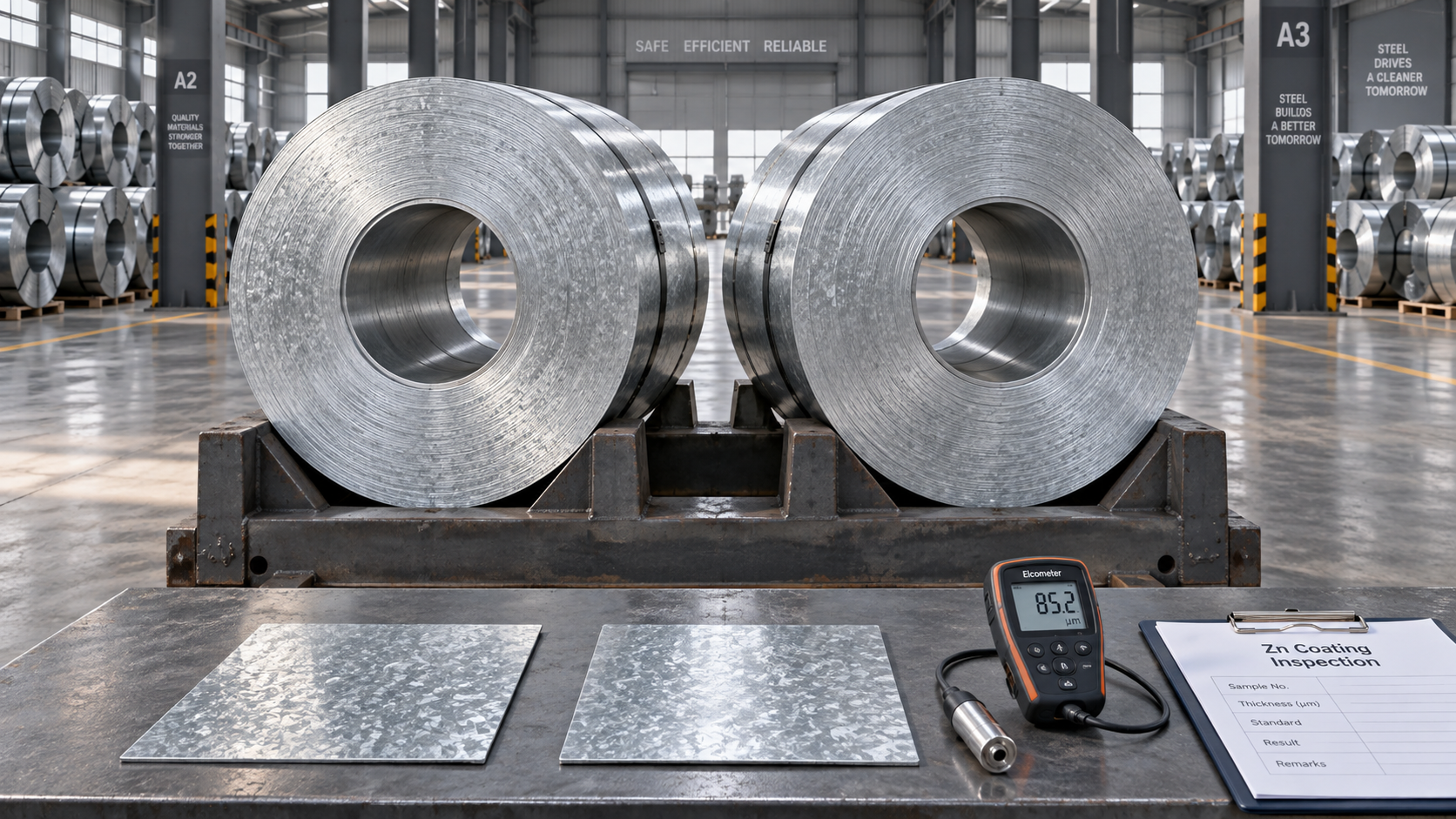
Two quotations for galvanized sheet coil can show the same steel grade and thickness but different prices because their zinc coating weights differ. A heavier coating generally increases the cost of zinc applied per square meter and may also affect production charges. Under comparable exposure conditions, it provides a larger zinc reserve against corrosion—but that extra protection is not automatically necessary for every application.
When one supplier quotes Z100 and another quotes Z275, comparing only the price per tonne can lead to the wrong purchasing decision. First confirm what those coating designations mean under the specified standard, then align the steel thickness, coating requirement and quotation basis. The useful comparison is the cost of meeting the required service conditions, not simply the lowest invoice price or the heaviest available coating.
Read the coating designation before comparing prices
Zinc coating weight is normally expressed as mass per unit area, commonly in grams per square meter. For continuously hot-dip galvanized sheet, designations such as Z100 or Z275 generally refer to the total coating mass on both surfaces under the applicable product standard. They do not normally mean that the stated mass is present on each face.
However, a designation alone does not describe every acceptance requirement. Standards can distinguish between multi-spot average results and individual spot minimums. The distribution between the two faces may also matter. Ask suppliers to identify the governing standard, coating designation and inspection criteria rather than accepting an unqualified description such as “heavy zinc coating.”
Do not compare a conventional zinc coating with a zinc-aluminum or zinc-aluminum-magnesium coating solely by the mass number. Their corrosion behavior, processing requirements and designation systems differ. A lower coating mass in another system is not automatically a cheaper equivalent.
Where the extra coating cost comes from
The clearest cost driver is the additional zinc deposited on the strip. Increasing the specified coating mass increases zinc consumption per unit of coated area. The commercial premium also depends on zinc prices when the offer is made, the mill’s coating extras and the quantity ordered.
A useful physical relationship is:
Additional coating mass per square meter = difference in specified coating weight ÷ 1,000, when coating weight is expressed in g/m² and the result is required in kg/m².
For illustration, changing from a nominal total coating mass of 100 g/m² to 275 g/m² represents an additional 0.175 kg of coating per square meter. This is a specification-based calculation, not a quotation, a guarantee of actual deposited mass or a prediction of corrosion life. Actual production must meet the relevant acceptance rules and can run above the specified minimum.
Multiplying that mass difference by an assumed zinc input cost gives only an initial material-cost estimate. It does not reproduce a mill’s selling premium. Coating control, production scheduling, order size and availability can also affect the price. A less commonly stocked coating specification may carry a different premium from a standard production item, even when the theoretical zinc difference is straightforward.
This is why doubling the coating weight does not double the coil price. The substrate steel, rolling, annealing, handling and other costs remain substantial parts of the finished product price. Equally, a coating upgrade may cost more than the theoretical value of the additional zinc alone.
Convert the quotation to the unit your project consumes
A fabricator making panels consumes sheet area, while steel purchasing is often priced by weight. That difference matters when coating specifications change. At the same base steel thickness, a heavier coating increases finished mass per square meter, so one tonne of finished material covers slightly less area.
For a preliminary calculation using base metal thickness:
Finished mass, kg/m² ≈ 7.85 × base steel thickness in mm + total coating mass in g/m² ÷ 1,000.
The steel term uses an approximate density of 7,850 kg/m³. The expression excludes packaging, processing losses and other adjustments. It should not be applied unchanged when the quoted thickness is an overall coated thickness rather than a base metal thickness.
Material cost per square meter ≈ price per metric tonne × finished mass per square meter ÷ 1,000.
Use this calculation to compare aligned offers, then add freight, slitting or cutting charges and expected production yield. Confirm whether invoicing uses actual net weight, theoretical weight or another contractual basis. Gross shipping weight that includes packaging is not the same as usable coil weight.
The coating contribution is proportionally more significant on thin sheet because the substrate mass per square meter is lower. Consequently, a coating premium expressed per tonne can look different across thicknesses. Ask for the coating extra at the thickness being purchased rather than transferring a premium from an unrelated coil specification.
Select the coating around exposure, not a blanket rule
A higher zinc mass generally offers more sacrificial protection under otherwise comparable conditions. It does not provide a universal service-life multiplier. Moisture, chlorides, industrial contaminants, drainage, protective paint systems and detailing can change the rate at which the coating is consumed.
Dry interior components
For components kept in genuinely dry, controlled indoor conditions, a heavier coating may add cost without solving a meaningful exposure problem. Check storage, transport and installation conditions as well as the final location. An indoor part can still experience condensation during shipment or in an unventilated enclosure.
Exterior panels and general construction use
Outdoor exposure usually makes coating selection more consequential. Establish whether the sheet is bare galvanized or part of a painted system, whether water drains freely, and whether cut edges or overlaps remain wet. Where a project specification already sets a minimum coating mass, treat that as the purchasing baseline unless a substitution is formally approved.
Persistently wet, coastal or chemically aggressive conditions
Do not assume that the heaviest readily available zinc coating is sufficient. These environments may require a different coating system, additional protection or a material review. The proper decision depends on the exposure and design, not just a larger Z designation.
Coating weight also cannot compensate for every fabrication issue. Cut edges, weld areas, damaged surfaces and water-trapping joints need separate attention. Protective measures after processing should be specified where required rather than left implicit in the coil order.
A material substitution belongs in a separate technical comparison. If a bill of materials also considers 6061 Aluminum Plate, assess its structural, dimensional and fabrication requirements independently; it is not a direct replacement justified solely by a galvanized coating premium.
Separate the zinc premium from other quotation differences
When a heavier-coated offer is more expensive, ask the supplier to quote both coating options against an otherwise identical specification. Without this paired comparison, the apparent zinc premium may include a different substrate grade, tighter thickness tolerance, smaller order quantity or additional surface treatment.
Thickness deserves particular scrutiny. Two offers with the same nominal thickness can have different tolerance commitments and actual thickness distributions. This affects material use, forming behavior and the number of finished parts obtained from a purchased weight. A lower price is not equivalent value if it depends on a substrate that does not satisfy the required dimensions.
Also keep these commercial items aligned:
- Steel grade and mechanical properties: forming or strength requirements must remain unchanged between options.
- Dimensions and delivery form: match width, coil weight limits, internal diameter and any slitting requirements.
- Surface condition: agree finish, oiling and passivation, particularly where painting or bonding follows.
- Delivery terms: compare freight, packing, payment terms and quotation validity on the same basis.
- Inspection documents: establish which coating and substrate results must be reported with the shipment.
Availability can change the decision, too. A stocked heavier-coated coil might have a lower delivered cost than a specially produced lighter-coated order after minimum quantities, lead time and processing are included. That does not reverse the underlying zinc consumption relationship; it reflects a different commercial supply situation.
Use an RFQ that makes the coating premium visible
A practical request for quotation should identify one compliant baseline and, where technically acceptable, one alternative coating level. Avoid requesting several vaguely defined “quality levels,” which encourages suppliers to change multiple variables at once.
- Fix the substrate. State the product standard, steel grade, base metal or overall thickness basis, dimensional tolerances and width.
- Define each coating option. Give the coating type, mass designation and required acceptance criteria. State any specific per-side requirement.
- Keep the finish unchanged. Specify the same surface treatment and downstream processing requirements for both options.
- Request a consistent commercial basis. Use the same quantity, delivery destination, weight basis and quotation validity period.
- Ask for the difference to be identified. A separate coating extra, or paired unit prices with all other conditions unchanged, makes the premium easier to evaluate.
Before awarding the order, convert both offers to cost per usable square meter or finished component. Include yield only where it is supported by the cutting plan or production requirements; do not assume that either coating option will automatically reduce scrap.
Confirm the purchased coating at delivery
The purchasing benefit disappears if the ordered coating requirement cannot be verified. Require inspection documentation that identifies the coil and states the applicable coating results or conformity basis. Keep coil identification traceable through slitting and cutting when the project requires that evidence.
Surface appearance is not a reliable measure of zinc mass. Spangle size and brightness do not demonstrate compliance with a coating designation. Where incoming measurement is required, use an agreed method and sampling plan. A suitably calibrated coating-thickness instrument can support screening, but local thickness readings should not be treated as automatically equivalent to the standard’s coating-mass acceptance test.
The final buying decision should distinguish mandatory protection from optional extra protection. Purchase the specified minimum where it is adequate and verifiable; pay for a heavier coating when exposure requirements, project specifications or a documented maintenance-cost assessment justify it. If the premium appears unexpectedly high, first isolate the coating extra and the area-based cost before changing the specification.
Please give us a message