


News center
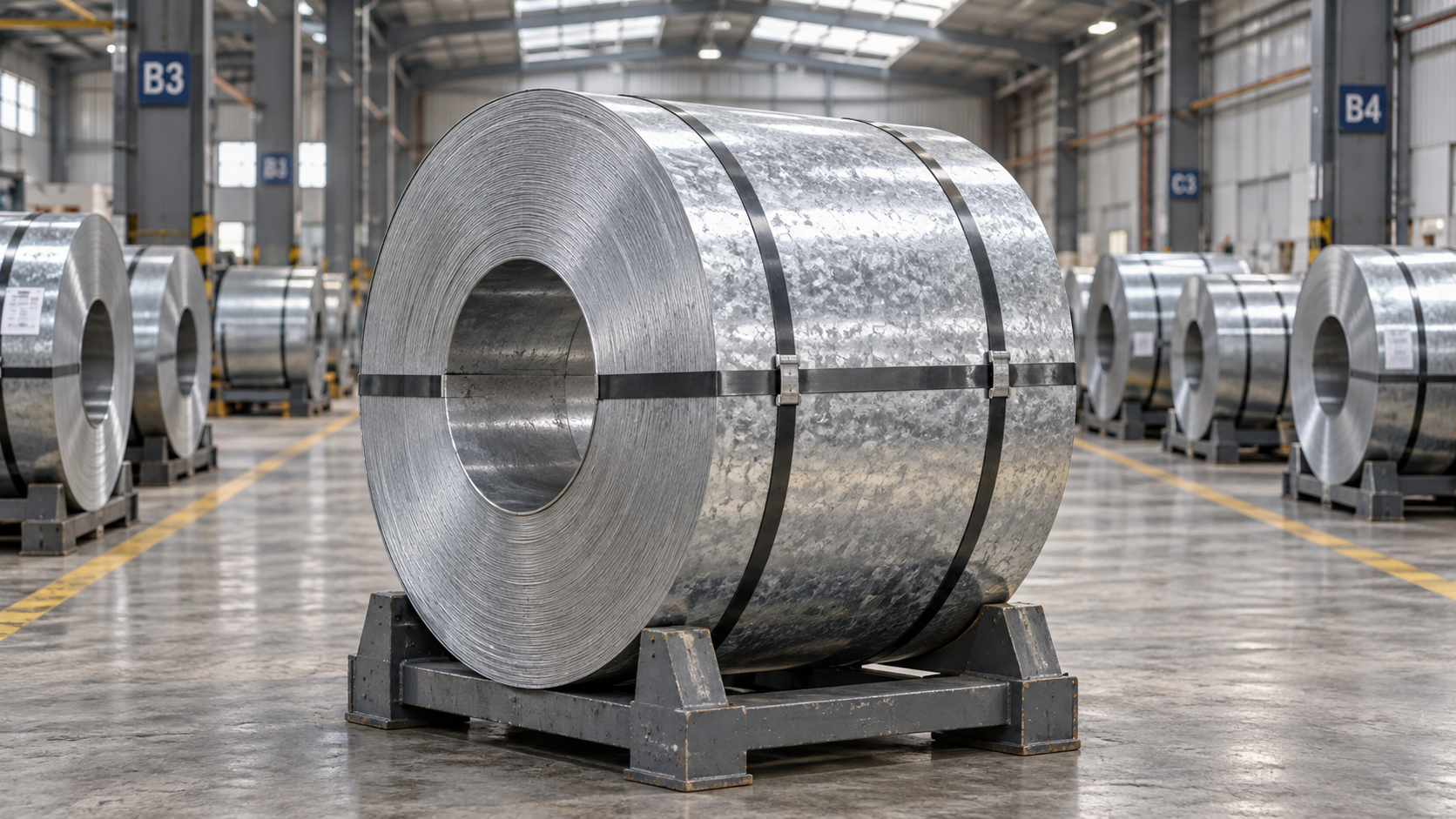
To prevent white rust on hot dipped galvanized coil, keep moisture out of the windings and deal with wet deliveries before they enter normal storage. A roof alone is not enough: rainwater can enter through damaged packaging, and condensation can form when cold steel meets warm, humid air. Once water becomes trapped between tightly wound layers, drying becomes difficult.
The most effective storage routine combines incoming inspection, dry supports, controlled exposure to humid air, and packaging suited to the storage conditions. If a coil is already wet, wrapping it again and leaving it in the warehouse can make the damage worse.
Why tightly wound coils are vulnerable to white rust
White rust, also called wet storage stain, is a white or grayish deposit of zinc corrosion products. It develops when moisture remains against the galvanized surface, particularly where air circulation is restricted. The zinc coating is being consumed as those deposits form.
Under suitable exposure conditions, zinc develops a protective surface patina. Between wet coil layers, restricted drying and limited access to atmospheric carbon dioxide interfere with that process. This explains why a coil can develop staining inside its windings even when the exposed outer surface looks acceptable.
A light white deposit does not automatically mean the steel is unusable. Heavy deposits, persistent dampness, or red rust require closer assessment because coating loss may be more serious. Appearance alone cannot establish how much usable zinc remains.
Inspect deliveries before putting them into stock
Receiving inspection is the best opportunity to catch moisture before it becomes a hidden storage problem. Check the condition of the load and packaging before unloading where practical, then inspect accessible coil surfaces after the coil is safely supported.
- Look for water entry: torn wrapping, crushed edge protection, wet seams, pooled water, and water marks around the coil eye.
- Check for condensation: droplets on steel, bands, or the inside of accessible packaging can indicate that the delivery has crossed into warmer, more humid conditions.
- Examine exposed edges: white deposits, dark damp patches, or staining concentrated between wraps deserve attention.
- Record the condition: photograph affected areas and retain the coil identification so later findings can be traced to the delivery.
Separate suspect coils from dry stock and flag them for assessment. Do not assume that dry outer wrapping proves the steel underneath is dry. Equally, wet external packaging does not prove that water has reached every layer; it is a reason to investigate promptly.
Keep retaining bands in place during routine inspection. Removing bands or loosening windings without suitable equipment creates a serious handling hazard. Any inspection requiring access between layers belongs in a controlled processing area.
Set up storage around moisture control
Store galvanized coils inside a weatherproof building, away from doors where wind-driven rain can reach them, leaking roofs, washing areas, and cooling equipment that produces drips. Choose a location where temperature and humidity change gradually. A position beside a frequently opened loading door may remain problematic even when the rest of the warehouse is dry.
Use dry, load-rated saddles or supports that keep the coil clear of the floor and prevent movement. Follow the approved storage orientation and stacking arrangement for the coil and its packaging. Changing orientation to encourage drainage is unsuitable unless the handling system and supplier’s instructions permit it.
Supports need attention as well as the floor. Wet timber, waterlogged packing, and contaminated contact materials can hold moisture against the steel. Keep supports clean and dry, and replace damaged packing before placing a coil into storage.
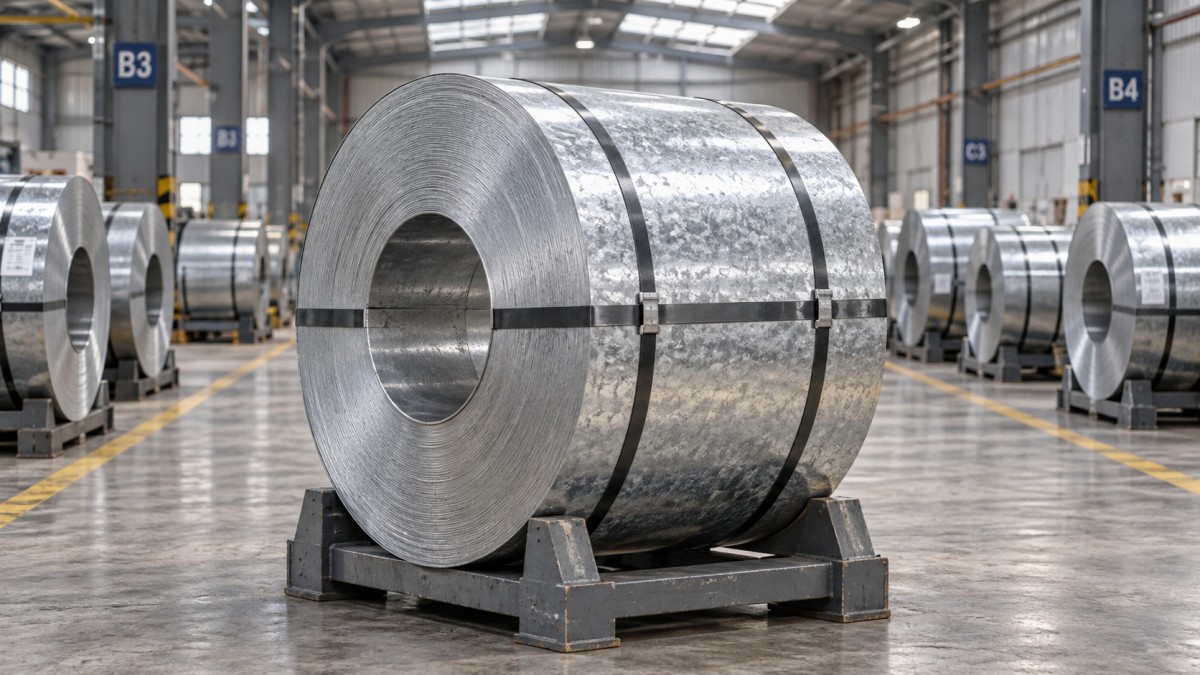
Leave enough space around stored coils for inspection and room air movement. Avoid crowding them against walls where leaks or condensation can go unnoticed. Airflow around a coil helps exposed surfaces dry, but it cannot reliably remove water trapped deep between tight windings.
In a mixed-metal warehouse, give galvanized stock its own clean storage positions. Products such as C27400/H63 Brass Pipe should not rest directly against galvanized surfaces where moisture could bridge the metals. Separate supports also help prevent scratches and make each product’s condition easier to inspect.
Control condensation when cold coils arrive
Condensation occurs when the steel surface is colder than the dew point of the surrounding air. Dew point is the temperature at which moisture in that air begins to condense. A warehouse can feel comfortable while a newly delivered coil is cold enough to collect water.
This commonly matters when coils arrive from cold transport into a warm, humid building. Opening doors widely or blowing humid air across the load may increase condensation rather than help it dry.
Measure conditions near the receiving area and storage positions, including air temperature, relative humidity, and coil surface temperature. Compare the surface temperature with the local dew point. An air humidity reading alone cannot show whether a cold coil is at risk.
For a dry coil with intact moisture-resistant packaging, allowing it to warm gradually before opening can reduce exposure to humid air. The package must actually be dry inside for this approach to work. Suspected water ingress calls for inspection and controlled drying instead of a routine waiting period.
Use dehumidification when outside air would add moisture. Ventilation is useful when the incoming air has suitable drying capacity; fans simply moving humid warehouse air do not remove moisture. Avoid direct-fired heating that adds water vapor to the storage space, and avoid aggressive local heating that creates uneven temperatures or damages packaging.
Keep useful packaging, remove moisture traps
Protective packaging can keep rain, dirt, and humid air away from steel, but damaged or incorrectly managed packaging can hold water against it. Whether to leave a coil wrapped depends on its condition, the packaging design, and the storage environment.
Do not add plastic sheeting over a damp coil and treat it as protected stock. Covers should prevent water entry without creating a pocket that collects water or traps existing moisture. Outdoor storage increases exposure to weather and temperature cycling and should be avoided where suitable indoor storage is available.
Desiccants can help control moisture inside an appropriately designed, sealed package. Their capacity is finite, and they cannot compensate for leaking wrapping or a wet coil. Loose desiccant bags placed around an open storage area provide little control over moisture between the windings.
Choose surface protection with the next process in mind
Passivation and protective oil can reduce the likelihood of wet storage staining, but neither makes hot dipped galvanized coil immune to prolonged wet storage. Specify the supplied surface treatment when ordering, especially if coils will pass through humid transport routes or remain in stock before processing.
The treatment must also suit what happens next. Painting, adhesive bonding, welding, and forming may place different requirements on surface cleanliness and preparation. A treatment selected only for storage protection can create extra cleaning work or affect later processing if compatibility has not been considered.
Check the order documentation for the actual treatment supplied. Do not assume that every galvanized coil has the same passivation or oil level. Applying additional oil at the warehouse is appropriate only when the product, application method, and downstream cleaning requirements have been agreed.
If a coil gets wet, act before returning it to stock
A wet delivery needs an assigned response, not just a different storage location. Start by stopping further water entry and moving the coil to a dry, controlled area using approved handling equipment.
- Document and isolate it. Record the coil number, wet areas, packaging damage, and visible deposits. Keep its status clear so it is not issued without assessment.
- Expose accessible wet surfaces safely. Remove affected outer packaging where this can be done without disturbing the coil’s restraint or stability.
- Dry with suitable air. Use dry, clean airflow and humidity control. Check accessible surfaces and packing for remaining moisture.
- Assess likely internal wetting. If water has entered the wraps, arrange evaluation at a properly equipped uncoiling or processing line. Dry outer surfaces do not establish that the interior is dry.
- Decide its disposition. Release, prioritize processing, clean, or reject the material according to its condition and intended use.
Do not pry apart wraps, loosen the coil manually, or remove retaining bands to improve ventilation. If uncoiling is necessary, it requires suitable line equipment and a controlled plan for inspecting and drying the strip.
Judge early white rust by coating condition and end use
If light staining appears, first eliminate the moisture source. Cleaning without correcting the storage conditions allows the same problem to return. Record the original appearance before removing deposits, particularly when the delivery condition may need to be discussed with the supplier.
Light, loose deposits may be removable with an appropriate gentle cleaning method, but the method must suit the coating and intended finish. Aggressive wire brushing, grinding, or unapproved acidic cleaners can remove sound zinc along with the stain. Trial any agreed cleaning method on a limited area before treating more material.
Acceptance depends on more than color. Consider the extent of staining, evidence of coating loss, the condition of both strip surfaces, and the requirements of the finished component. Visible architectural surfaces and material intended for painting may need stricter surface assessment than concealed components.
Heavy deposits, suspected pitting, or red rust warrant a more detailed coating assessment before processing. Where remaining zinc thickness affects acceptance, use an appropriate measurement method rather than judging it from the amount of white powder.
Make storage checks part of stock control
Use the oldest suitable stock first and keep delivery dates visible. Where order scheduling allows, prioritize coils that have experienced moisture exposure after they have been assessed and released. Shorter storage reduces exposure opportunities, although it does not replace dry conditions.
Increase inspections after roof leaks, heavy rain, major temperature changes, or prolonged door opening. Check coil edges, packaging seams, supports, and nearby floors. These locations often reveal a developing moisture problem before staining becomes widespread.
For each coil, maintain a clear record of receipt condition, surface treatment, storage position, and any drying or cleaning action. Before releasing suspect material to production, establish whether moisture reached the windings and whether the surface remains suitable for the intended process. Those two decisions are more useful than simply recording that the outside now looks dry.
Please give us a message