


News center
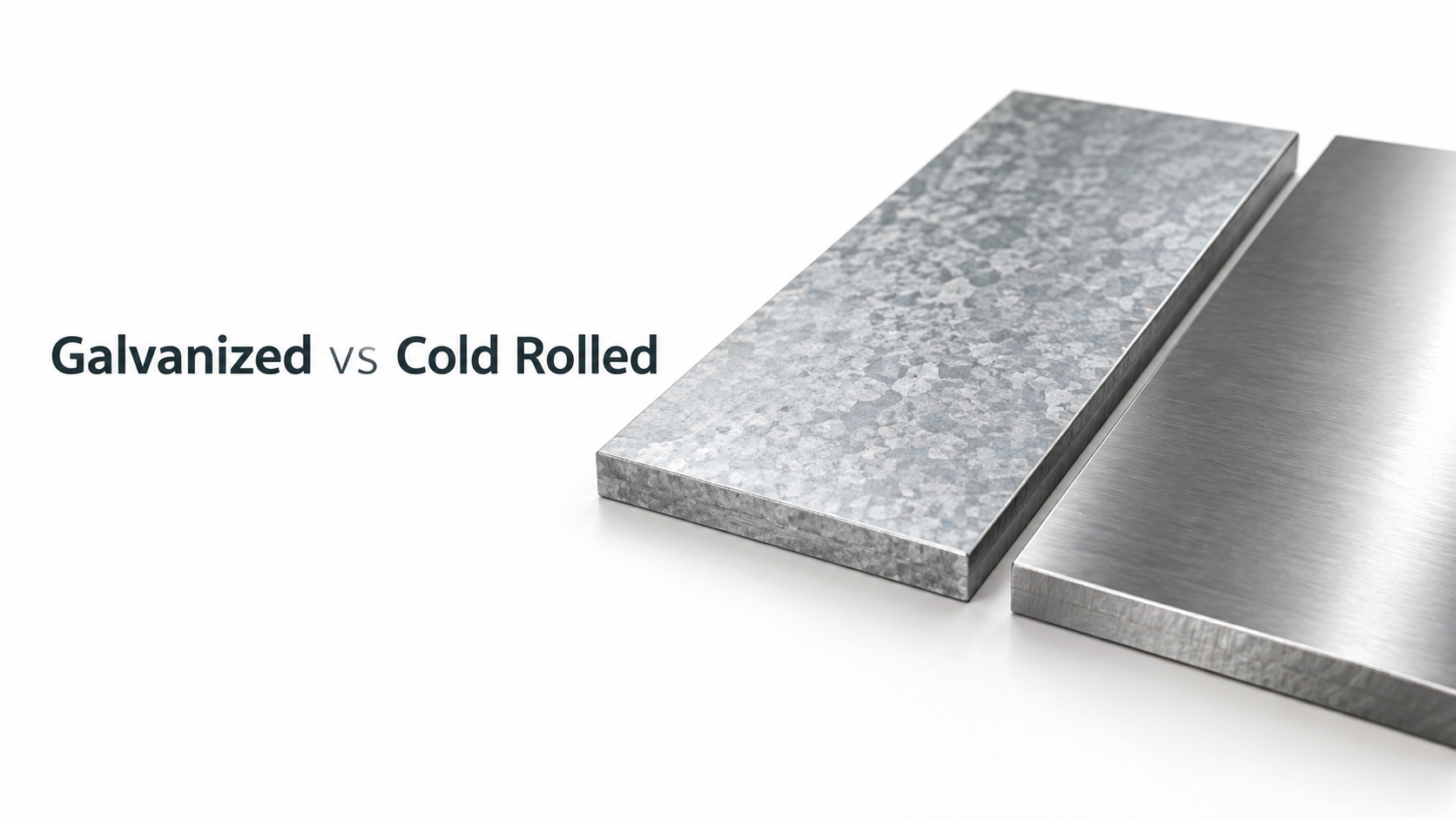
When evaluating materials for demanding construction and manufacturing projects, understanding the structural differences between steel plate galvanized and cold rolled steel is crucial for ensuring long-term durability and performance. While cold rolled steel offers excellent dimensional accuracy and a smooth finish, a steel plate galvanized provides superior corrosion resistance without compromising its core structural integrity. This comprehensive guide delves into the mechanical properties, load-bearing capacities, and environmental resilience of both materials, helping you make an informed decision for your next engineering application.
The Core Structural Baseline: Base Metal vs. Surface Treatment
To accurately compare the structural capabilities of these two materials, we must first separate the base metal from the surface treatment. Cold rolled steel (CRS) is a base material produced by passing hot rolled steel through rollers at room temperature. This process increases the steel's yield strength through strain hardening and provides a highly precise, smooth surface. When engineers specify cold rolled steel, they are relying on the inherent mechanical properties of the iron-carbon alloy itself.
On the other hand, a steel plate galvanized is essentially a composite material. It consists of a base metal—which is very often cold rolled steel or hot rolled steel—coated with a layer of zinc. The zinc layer does not significantly alter the fundamental metallurgical structure of the base steel. Therefore, when discussing the load-bearing capacity or structural rigidity of galvanized steel, we are primarily discussing the properties of the underlying base metal. The zinc coating acts as a protective shield rather than a structural reinforcement.
Yield Strength and Tensile Properties
A common concern in structural engineering is whether the galvanizing process alters the mechanical strength of the steel. For electro-galvanized steel, the process occurs at relatively low temperatures, meaning the yield strength and tensile strength of the cold rolled base metal remain virtually unchanged. The steel retains its strain-hardened characteristics.
However, hot-dip galvanizing involves submerging the steel in a bath of molten zinc at temperatures around 450°C (840°F). This thermal cycle can have a slight annealing effect on cold rolled steel, potentially reducing some of the yield strength gained during the cold rolling process. In many standard structural applications, this minor reduction is negligible and well within the acceptable safety margins defined by structural codes. If maximum yield strength is the absolute priority, engineers might specify a higher grade of base steel before galvanizing, or opt for electro-galvanized cold rolled steel, depending on the environmental requirements of the project.
Dimensional Stability and Section Properties
Cold rolled steel is highly prized in manufacturing for its tight dimensional tolerances. When designing precision machinery or complex structural joints, the exact thickness and flatness of the material are critical. The cold rolling process ensures that the steel plate maintains a highly uniform thickness, which directly translates to predictable section modulus and moment of inertia calculations.
When you transition to a steel plate galvanized, you are introducing a variable: the zinc coating. The thickness of the zinc layer can vary slightly depending on the galvanizing process and the steel's chemistry. While this added thickness technically increases the overall cross-sectional area of the plate, the zinc is much softer and less stiff than the steel core. Therefore, structural engineers typically do not count the zinc layer toward the load-bearing section modulus. Instead, they must account for the slight increase in overall thickness when designing tight-fitting joints, bolted connections, or overlapping seams. Failing to accommodate this extra thickness can lead to assembly issues or unintended stress concentrations in the final structure.
Load-Bearing Capacity in Real-World Environments
Structural integrity is not just about initial laboratory load tests; it is about maintaining that capacity over the lifespan of the structure in real-world conditions. This is where the fundamental difference between the two materials becomes most apparent.
Cold rolled steel, lacking a protective coating, is highly susceptible to oxidation. In humid or corrosive environments, rust will form on the surface and progressively eat into the base metal. As the cross-sectional area of the steel decreases due to corrosion, its load-bearing capacity drops proportionally. A structural beam that is perfectly sized on day one may become critically under-dimensioned a few years later if exposed to the elements without continuous maintenance.
A steel plate galvanized solves this vulnerability through cathodic protection. The zinc coating acts as a sacrificial anode, corroding preferentially to protect the underlying steel. Even if the coating is scratched or damaged, the surrounding zinc will continue to protect the exposed base metal. By preventing the loss of the steel's cross-sectional area, galvanized steel maintains its original structural load-bearing capacity for decades, significantly reducing the need for structural recalculations or premature replacements in outdoor or high-moisture applications.
Fabrication and Welding Considerations
The way a material behaves during fabrication directly impacts the final structural integrity of the assembly. Cold rolled steel is highly formable and welds cleanly. The absence of a coating means that welders can achieve deep penetration and high-strength joints without worrying about coating volatilization. The heat-affected zone (HAZ) around the weld remains predictable, ensuring that the localized structural strength meets design specifications.
Welding a steel plate galvanized introduces complexities. When the intense heat of the welding arc hits the zinc coating, the zinc vaporizes. This vaporization can trap gas bubbles in the molten weld pool, leading to porosity. Weld porosity reduces the effective cross-sectional area of the weld, creating weak points that can compromise the structural joint under dynamic or heavy loads. To mitigate this, welders often need to grind away the zinc coating in the immediate weld zone, which requires additional labor and necessitates touch-up painting or cold galvanizing after the weld is complete to restore corrosion protection. Proper ventilation is also critical, as zinc fumes pose health risks.
Navigating Material Selection and Processing
Choosing between cold rolled steel and galvanized steel ultimately requires balancing immediate mechanical requirements, fabrication methods, and long-term environmental exposure. There is no universally superior material; the right choice depends entirely on the specific parameters of your engineering application.
When sourcing these materials, the consistency of the base metal and the precision of the processing are just as critical as the material grade itself. At Jiangsu Zhongersheng Metal Products Co., Ltd., we understand that material selection is only the first step in delivering a reliable structural solution. As a modern enterprise specialized in the R&D, production, sales, and export of metal materials, we focus on providing stable and predictable material properties across our carbon steel, galvanized steel, and stainless steel product systems.
Our standardized production workshops and professional processing equipment allow us to go beyond simple material supply. We provide comprehensive custom processing services, including cutting, bending, punching, welding, and surface treatment. Whether you require high-precision cold rolled carbon steel sheets for indoor machinery manufacturing, or heavily galvanized profiles and structural parts for outdoor construction and steel structures, our team ensures that the material is processed to your exact specifications. By controlling the processing environment and utilizing complete product specifications, we help engineers mitigate the fabrication risks associated with galvanized welding and ensure that the final structural components perform exactly as designed.
Ultimately, understanding the structural nuances between these steels allows you to optimize both the safety and the lifecycle cost of your project. Before finalizing your material specifications, it is always advisable to review the specific environmental conditions, load requirements, and fabrication capabilities with your material supplier to ensure the chosen steel aligns perfectly with your structural goals.
Please give us a message