


News center
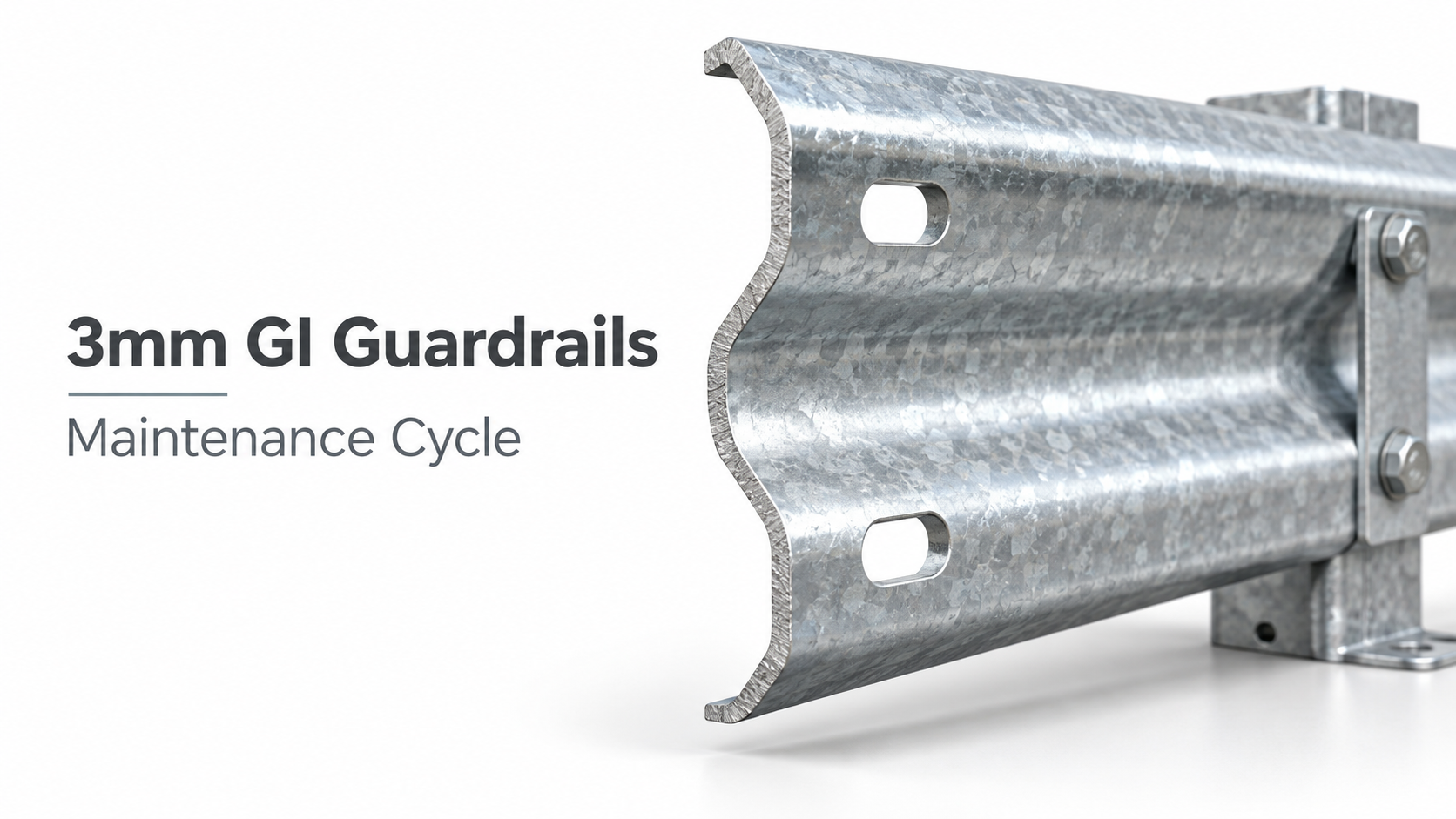
For maintenance personnel managing outdoor infrastructure, establishing a precise upkeep schedule for galvanized steel structures is critical for long-term safety and cost control. When dealing with guardrails constructed from a 3mm gi sheet, the maintenance cycle is not a single, universally fixed interval. Instead, it is a dynamic schedule dictated by the surrounding environmental conditions and the specific micro-climates the structure faces.
Generally, for standard rural or inland urban environments, a routine visual inspection should be conducted every 6 to 12 months, with a comprehensive structural and coating assessment every 2 to 3 years. However, in coastal areas, heavy industrial zones, or regions with high de-icing salt usage, this cycle must be compressed to visual checks every 3 to 6 months and deep assessments annually. The 3mm thickness of the base steel provides excellent structural rigidity and impact resistance, but the lifespan of the guardrail before major intervention is required depends entirely on the consumption rate of the protective zinc coating.
Environmental Classification and Specific Cycles
To determine the exact maintenance frequency, it is necessary to categorize the installation site based on its corrosivity. The degradation of the zinc layer on a galvanized sheet follows a predictable pattern, but the speed of this pattern varies drastically depending on atmospheric pollutants and moisture levels.
In C2 and C3 environments (low to medium corrosivity, typical of inland areas with low pollution), the zinc coating on a standard hot-dip or continuous galvanized sheet degrades at a rate of roughly 1 to 3 microns per year. Here, the 12-month visual inspection is primarily to check for mechanical damage, such as scratches from falling branches or impact from maintenance vehicles. The 3-year comprehensive check allows personnel to measure the remaining zinc thickness and assess the overall weathering pattern.
In C4 environments (high corrosivity, industrial areas, or coastal regions with moderate salinity), the degradation rate increases to 3 to 15 microns per year. In these conditions, the 6-month visual check becomes mandatory. Maintenance teams must pay closer attention to the accumulation of corrosive salts on the surface and the potential for localized pitting. The comprehensive assessment should be brought forward to every 18 to 24 months.
In C5 and CX environments (very high to extreme corrosivity, heavy industrial zones with high humidity, or direct coastal splash zones), the zinc consumption can exceed 15 microns annually. Guardrails in these locations require visual inspections every 3 months. The comprehensive assessment must occur annually. In such aggressive environments, the initial galvanizing specification plays a massive role, and maintenance personnel must be prepared for frequent touch-ups or earlier panel replacements.
Critical Inspection Points for 3mm Galvanized Guardrails
During any scheduled maintenance visit, simply looking at the overall appearance of the guardrail is insufficient. The 3mm gi sheet has specific vulnerabilities that require targeted inspection to catch degradation before it compromises the structural base.
Cut Edges and Punch Holes
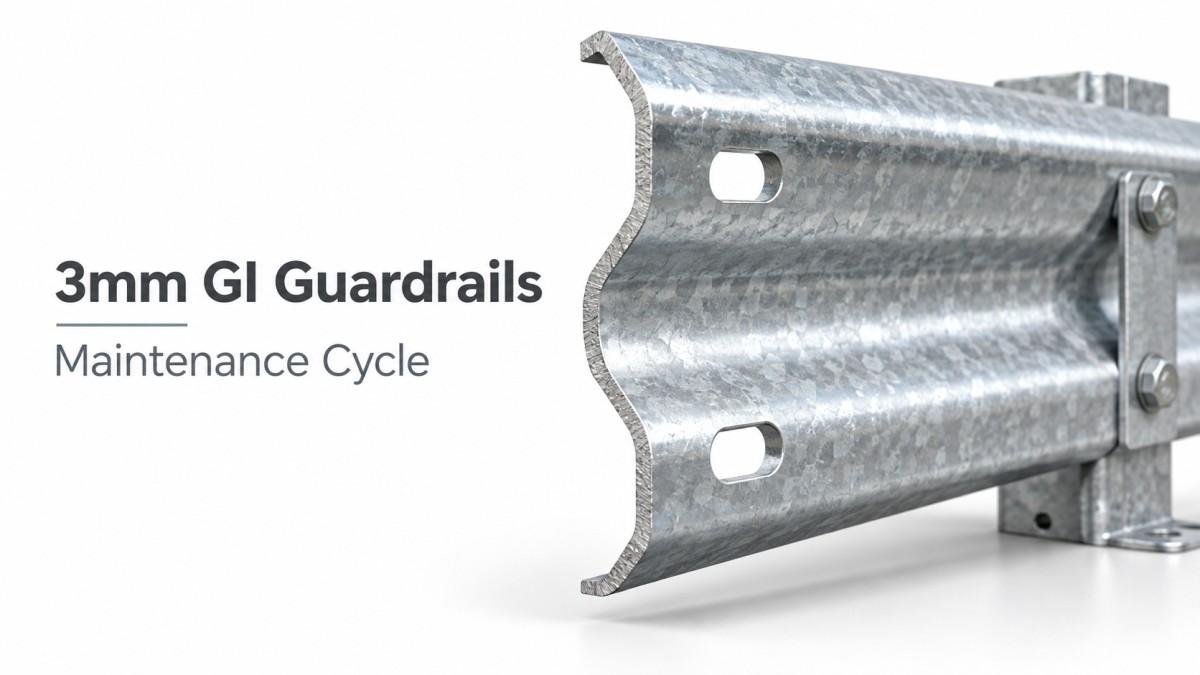
The most vulnerable points on any galvanized guardrail are the areas where the 3mm sheet was sheared, cut, or punched during fabrication. Unlike the flat surfaces, which are fully protected by the continuous zinc coating, the cross-sections at the edges expose the bare carbon steel core. While the zinc layer adjacent to the cut edge provides some sacrificial protection, this protection has a limited reach. Maintenance personnel must closely examine all horizontal edges, especially those facing upward where water can pool, and all mounting holes. Look for the first signs of orange or brown rust, which indicates that the sacrificial zinc in that localized area has been depleted.
Joints, Welds, and Fasteners
Guardrails are assemblies. The connections between the 3mm gi sheet panels and the supporting posts, as well as the bolts and screws used, create crevices. These micro-environments trap moisture and debris, leading to crevice corrosion. Check the tightness of all fasteners; a loose bolt not only compromises structural integrity but also allows movement that can fracture the brittle zinc-iron alloy layers at the contact points. If the guardrails were assembled using welding, inspect the weld seams. Welding burns off the zinc coating, and if the post-weld treatment was inadequate or has worn away, rapid corrosion will occur at these joints.
Surface Coating Integrity and Thickness
Inspect the flat surfaces of the 3mm sheet for white rust (zinc oxide) and red rust (iron oxide). White rust appears as a white, powdery, or crusty deposit and forms when the galvanized surface is exposed to continuous condensation or trapped water without adequate airflow. Red rust indicates that the zinc layer has been completely breached and the 3mm carbon steel base is actively corroding. During comprehensive assessments, use a magnetic thickness gauge to measure the remaining coating. Since the 3mm substrate is highly magnetic, ensure the gauge is calibrated specifically for this base metal thickness to avoid inaccurate readings.
Mechanical Damage and Debris Accumulation
Outdoor guardrails are subject to physical abuse. Inspect for deep scratches, gouges, or dents that have penetrated the zinc coating down to the steel. Additionally, check the base of the guardrail posts and the lower sections of the panels for the accumulation of soil, leaves, or road grime. This debris holds moisture against the metal and creates an acidic environment that rapidly accelerates zinc consumption.
Remediation Procedures Based on Findings
Identifying an issue is only half the task; executing the correct remediation ensures the guardrail continues to perform. The repair method depends entirely on the type and extent of the degradation found during the inspection.
Addressing White Rust
If white rust is found, and it has not progressed to red rust, the repair is relatively simple. The area must be allowed to dry completely. Use a stiff bristle brush or low-pressure water washing to remove the loose, powdery zinc oxide. Once the surface is clean and dry, the remaining zinc will naturally form a new, stable passive layer. If the white rust is severe and has etched into the coating, apply a thin coat of a compatible zinc-rich paint or a specialized passivation treatment to restore the barrier.
Treating Localized Red Rust at Edges and Scratches
When red rust appears, immediate action is required to prevent it from spreading under the adjacent zinc coating. For small areas, use a wire brush or abrasive pad to remove all rust products down to bright, clean metal, aiming for a minimum surface preparation standard equivalent to SSPC-SP 2 (Hand Tool Cleaning). It is crucial to feather the edges of the surrounding sound zinc coating to ensure good adhesion for the repair material. After cleaning, apply a high-quality, cold-galvanizing compound containing at least 90% zinc dust in the dry film. This restores the sacrificial protection. Do not use standard alkyd or epoxy paints directly over bare steel or zinc without a proper primer, as they will trap moisture and cause hidden corrosion.
Managing Joint and Fastener Corrosion
If fasteners are severely corroded, they must be replaced. Always use hot-dip galvanized or stainless steel fasteners that are compatible with the 3mm gi sheet to prevent galvanic corrosion. If the threads are damaged, re-tap the hole or use a larger fastener if the design allows. For crevice corrosion at joints, clean out the debris, treat any rust, and consider applying a flexible sealant to prevent future moisture ingress, provided the design allows for thermal expansion.
When to Replace Panels
The 3mm thickness of the base steel provides a significant advantage: it allows for a certain amount of material loss before the structural integrity of the guardrail is compromised. However, if red rust has spread across large areas, or if pitting has reduced the effective thickness of the 3mm sheet by more than 10 to 15 percent, localized repairs are no longer sufficient. At this stage, the entire panel or section must be replaced to ensure the guardrail can still withstand the required impact loads.
Factors That Accelerate Degradation
Maintenance personnel must remain observant of changes in the local environment that might necessitate shortening the standard maintenance cycle.
Poor Drainage and Water Pooling: If the installation of the guardrail allows water to pool on horizontal surfaces or inside tubular posts, the zinc coating will degrade much faster than predicted by standard atmospheric models. If pooling is observed, the maintenance cycle for those specific sections should be halved, and engineering modifications like drilling weep holes should be considered.
Chemical Exposure: Guardrails located near roads where de-icing salts are heavily used, or near agricultural areas where fertilizers are sprayed, face chemical attacks. Chlorides from road salt are particularly aggressive and can cause rapid pitting. In these scenarios, visual inspections should be conducted immediately after the winter season, followed by thorough washing with fresh water to remove salt deposits.
Shading and Lack of Airflow: Zinc requires wet-dry cycles to form its protective passive layer. Sections of the guardrail that are permanently shaded by dense vegetation or buildings remain damp for longer periods. This continuous dampness promotes the formation of thick, non-protective white rust. Maintenance in these areas should include clearing vegetation to restore airflow and inspecting the shaded zinc surfaces more frequently.
Documentation and Predictive Maintenance
A well-maintained log is as important as the physical inspection. Maintenance personnel should document the condition of the 3mm gi sheet guardrails during every visit. Photograph specific areas of concern, record the percentage of surface area affected by white or red rust, and note the exact locations of mechanical damage.
Over time, this data allows for the calculation of the actual zinc consumption rate for that specific site. By comparing the initial coating thickness with the current degradation, personnel can predict when the zinc layer will be fully consumed and the base steel will begin to corrode structurally. This transitions the maintenance strategy from a reactive schedule to a predictive one, allowing for budget allocation and panel replacement planning long before a safety failure occurs. Keeping detailed records also helps in evaluating the performance of different repair materials, allowing the maintenance team to continuously refine their remediation strategies based on empirical field data.
Please give us a message