


News center
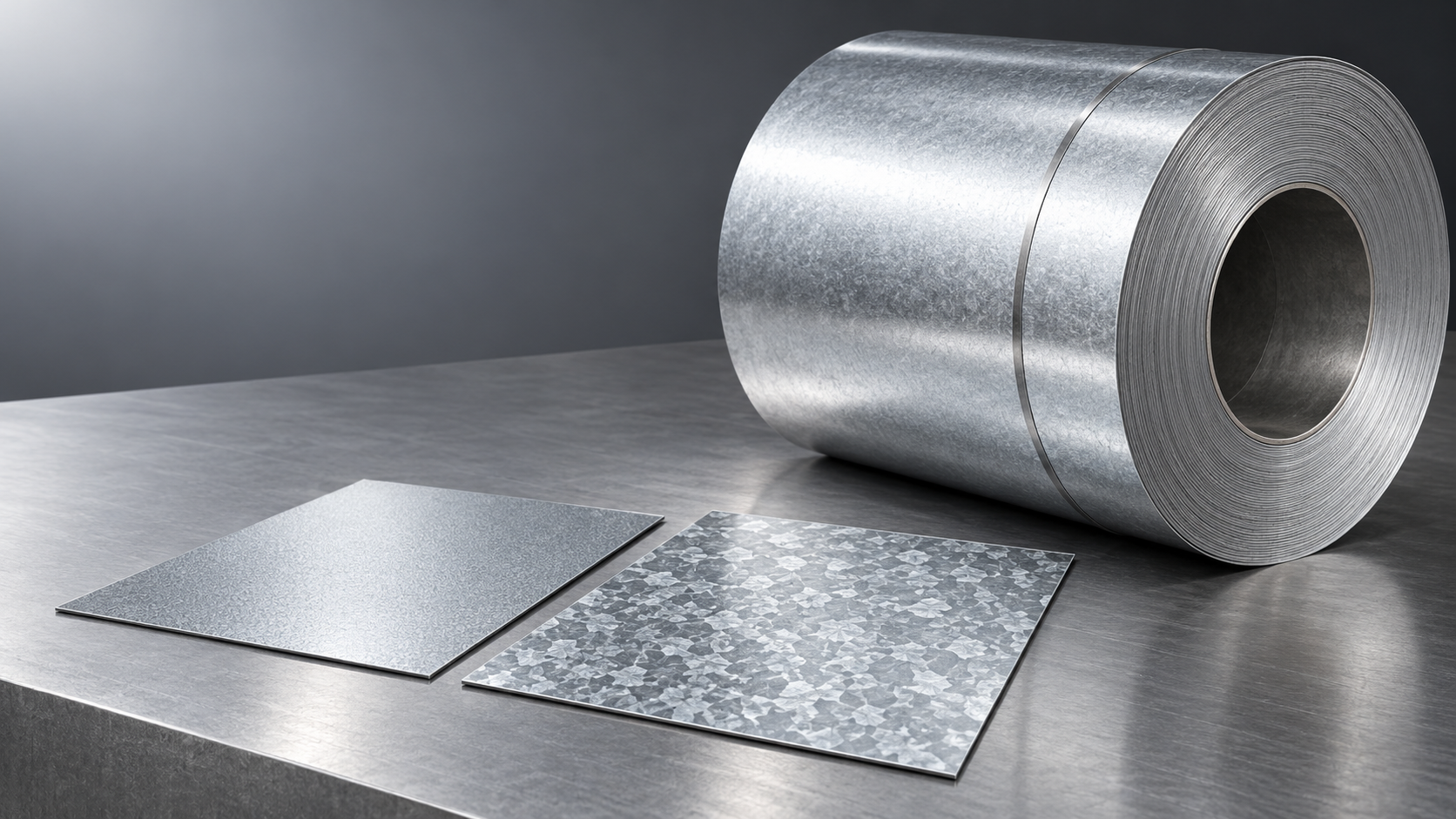
Zero spangle galvanized steel coil does not automatically resist rust better than galvanized steel with visible spangle. Its uniform appearance can be useful for painted panels and exposed surfaces, but corrosion resistance depends mainly on the zinc coating, its condition, any additional surface treatment, and the environment in which the steel is used.
A plain-looking coil with a light zinc coating may provide less protection than a visibly spangled coil with a heavier coating. If the coating specifications and exposure conditions are comparable, spangle size alone is not a reliable way to predict service life. The practical question is whether the material has enough protection for its intended application.
What zero spangle actually tells you about the steel
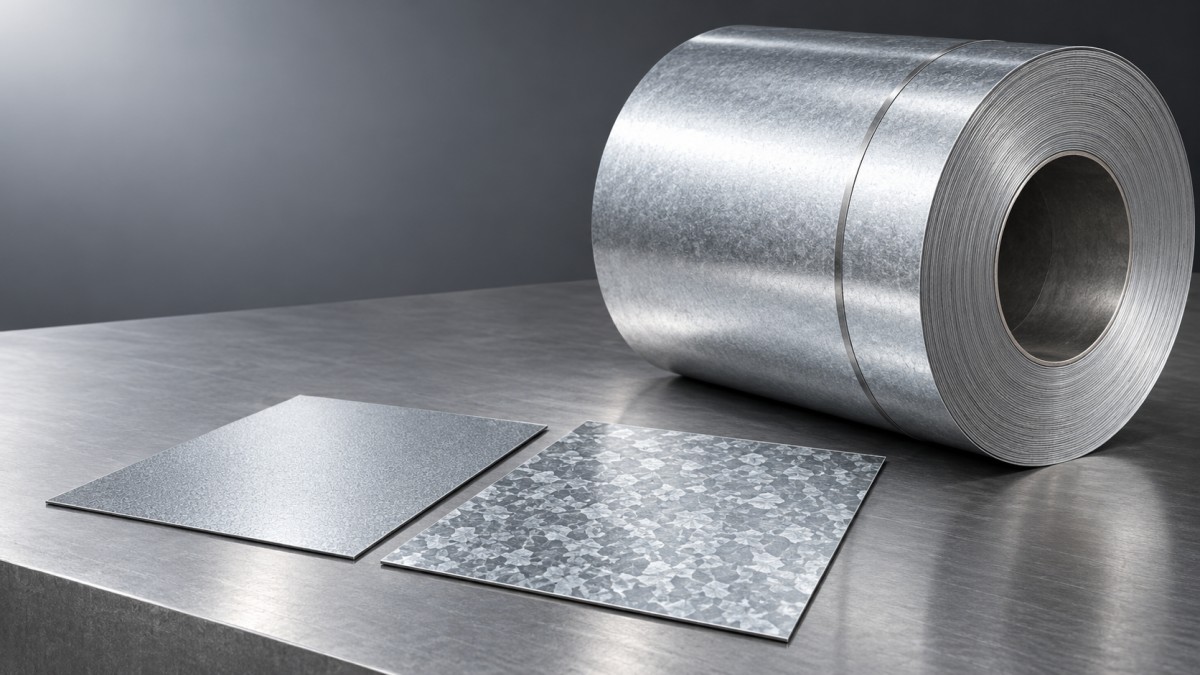
Spangle is the crystal pattern that can appear as the zinc coating solidifies during hot-dip galvanizing. On regular-spangle galvanized steel, these crystals form visible patterns across the surface. Zero-spangle production controls coating chemistry and solidification to make that pattern very fine or visually absent.
The term describes the coating’s appearance. It does not mean the steel has no zinc crystals, and it does not specify how much zinc is present. It also does not mean the coil has already been painted or given every treatment needed for outdoor service.
Zero spangle galvanized steel coil is often selected when a consistent surface is desirable, such as for appliance housings, electrical cabinets, interior panels, and components that will receive a decorative finish. A less visible crystal pattern can help reduce the appearance of that pattern through certain paint systems.
However, zero spangle does not guarantee a perfectly smooth substrate. Surface roughness, skin passing, coating uniformity, and the underlying steel condition also affect the finished appearance. A part with demanding visual requirements needs a suitable surface specification as well as the right spangle designation.
Why zinc coating matters more than the visible pattern
Zinc protects steel in two related ways. It forms a barrier between the steel and its surroundings, and it provides sacrificial protection: under suitable conditions, nearby zinc corrodes preferentially to exposed steel. This helps protect small scratches and narrow cut edges, although that protection has limits.
During normal atmospheric exposure, zinc develops corrosion products on its surface. In suitable conditions, these become a relatively protective layer that slows further attack. Persistent moisture, salts, acidic contamination, or chemicals can interfere with this behavior or consume the coating more quickly.
For otherwise comparable galvanized products, a heavier zinc coating generally provides a larger reserve of corrosion protection. It takes longer to consume that reserve under the same exposure conditions. A visually uniform finish does not substitute for it.
That does not mean coating weight alone determines the result. Poor drainage, damaged coating, unprotected welds, and unsuitable chemical exposure can cause localized problems even when the original coil has a substantial coating. Protection needs to be considered on the finished component, including its joints and processed areas.
Steel thickness and zinc coating thickness are different specifications
A thicker steel sheet may carry more load, but it does not necessarily have a thicker zinc layer. Two coils with different steel thicknesses can have the same coating mass, while two coils with the same steel thickness can have very different zinc protection.
Coating designations also need careful reading. Many common specifications state zinc coating mass as the combined total on both sides of the sheet. That should not be interpreted as the amount on each individual face. Some products have different coating requirements for each side, so comparisons need to use the same basis.
For purchasing decisions, identify the applicable product standard, coating designation, and whether the stated value applies to both sides together or to each side. These details provide a more useful comparison than surface photographs.
What changes rust performance in actual use?
Appearance is easy to compare from samples. Several less visible conditions have a much larger effect on how galvanized material performs.
Surface treatment deserves particular attention because “galvanized” does not describe every part of the supplied finish. Passivation can help reduce early surface corrosion during handling and storage. Oil may offer temporary protection, but it can also require removal before painting or bonding.
These treatments serve different purposes. A treatment that helps a coil survive transport is not automatically a complete exterior protection system. Similarly, a finish that performs well in storage may require specific cleaning or pretreatment before paint will adhere reliably.
White deposits and red rust mean different things
A galvanized surface can develop white or pale gray deposits without showing red rust from the steel beneath it. These deposits are zinc corrosion products, often associated with moisture trapped between tightly packed sheets or coil wraps. The condition is commonly called white rust or wet storage stain.
Fresh galvanized surfaces are particularly vulnerable when they remain damp with limited airflow. Rain entering packaging, condensation during transport, or wrapping wet material can create this situation. Zero-spangle material is not immune.
Light white staining does not automatically mean the steel has lost its useful protection. Heavy or prolonged wet storage corrosion, however, can consume zinc and damage the surface. The extent of the attack matters more than the color alone, especially where appearance, painting, or long service life is required.
Red rust usually indicates corrosion of exposed iron or steel, although deposited steel particles can also produce rust-colored spots on an otherwise coated surface. Inspection should establish whether the problem comes from contamination, a damaged area, a cut edge, or broader coating loss.
For stored coils and sheets, keeping the material dry and preventing condensation are essential. If moisture enters a pack, drying the exposed outside surface alone may leave water trapped inside. Storage and transport conditions can therefore undermine a suitable material specification before fabrication even begins.
When zero spangle is a sensible choice
Zero spangle is useful when visual consistency has practical value. For painted cabinet doors, equipment covers, and visible sheet-metal panels, a subdued crystal pattern can make it easier to achieve a uniform appearance. The coating mass still needs to match the exposure, and the surface treatment must suit the finishing process.
For dry indoor components, appearance and paint compatibility may carry considerable weight in material selection. Even then, condensation inside an enclosure or repeated cleaning with unsuitable chemicals can change the corrosion conditions.
For outdoor building panels and exposed equipment, the selection needs to account for rainfall, drying, sheltered joints, and contaminants. A surface exposed to rain may behave differently from a sheltered overlap where salty moisture accumulates. Describing both locations simply as “outdoors” misses an important difference.
In coastal locations, areas affected by road salt, or persistently damp installations, a smooth-looking galvanized finish provides no special exemption from corrosion. Depending on the duty, a heavier zinc coating, a suitable paint system over galvanizing, another metallic coating, or an appropriately selected stainless steel grade may be more suitable.
Paint over galvanizing can provide an additional barrier while the zinc protects the steel beneath it. That benefit depends on compatible preparation and coatings. Painting directly over an unsuitable treatment, residual oil, or corrosion deposits can lead to poor adhesion and early coating failure.
Fabrication can change the protection you bought
A coil’s original finish is only the starting point. Cutting, bending, punching, and welding create conditions that should be included in the corrosion assessment.
Narrow cut edges may receive some sacrificial protection from nearby zinc, but this is not unlimited. Sheet thickness, exposed edge width, moisture, and salts influence the result. Broad exposed areas and demanding environments may require additional edge protection.
Severe forming can crack or damage a coating, particularly if the steel grade, coating characteristics, and tooling are poorly matched. A heavier coating can add corrosion reserve, but it does not remove the need to select material suitable for the intended bend or drawing operation.
Welding locally damages or removes the zinc coating. Where continued corrosion protection is required, the affected areas need suitable cleaning and repair. Overlapping parts, fasteners, and joints also deserve attention because they can trap water or introduce contact with incompatible materials.
For fabricated parts, it is therefore useful to discuss the finished geometry and processing route with the material supplier. A coil selected only by thickness and appearance may overlook the locations most likely to corrode after assembly.
How to compare two coils before ordering
If two offers describe zero-spangle galvanized steel but differ in price, start by checking whether they represent the same material and protection level. The phrase “zero spangle” leaves several important purchasing details open.
- Define the exposure. Identify indoor or outdoor use, condensation, salt, chemical contact, and whether surfaces can drain and dry.
- Compare the zinc coating specification. Use the same standard and measurement basis, including any requirements for individual faces.
- Identify the supplied treatment. Establish its suitability for storage, painting, bonding, or the intended bare-metal use.
- Match the substrate to fabrication. Specify the steel grade, thickness, forming needs, and relevant surface quality requirements.
- Address the finished part. Include cut edges, weld repairs, water-trapping details, and any additional protective finish.
A sample helps assess visible spangle and surface appearance, but it cannot establish long-term rust resistance by sight. Product documentation and coating inspection provide a stronger basis for comparing protection. Accelerated corrosion test results also need context: they compare performance under stated test conditions and should not be converted directly into years of outdoor service.
If the application needs a consistent painted appearance, zero spangle can be a sound specification. If corrosion resistance is the deciding concern, choose the coating and protective system around the exposure first, then specify the appearance. A complete order should describe both what the surface needs to look like and what it needs to withstand.
Please give us a message