


News center
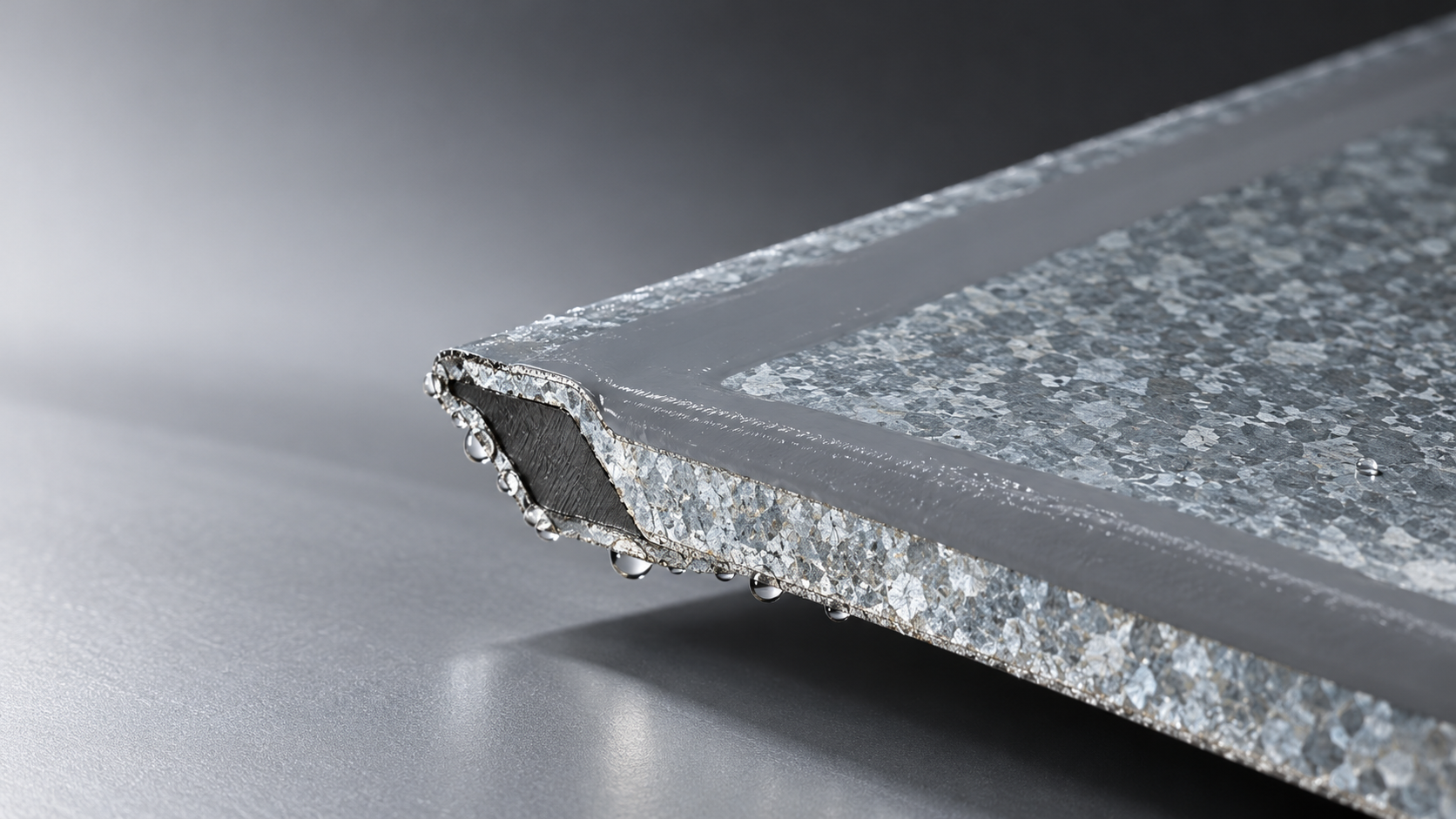
Cut edges on galvanized sheet need extra protection when the surrounding zinc cannot reliably protect the exposed steel under the actual service conditions. Persistent moisture, salt deposits, trapped water, damaged coatings and a wider exposed steel section all increase the need for treatment. A narrow, clean edge on thin sheet in a dry, sheltered installation may remain serviceable without an additional coating, provided the product specification permits it and inspections show no developing corrosion.
For maintenance teams, the decision should start with where the edge sits and how it gets wet. A downward-facing edge that dries freely behaves differently from the same material inside a damp overlap or beside a leaking seal. Sheet thickness matters, but thickness alone cannot establish whether an edge will remain protected.
Why some exposed edges remain sound
Zinc provides both a barrier over the steel surface and sacrificial protection where steel becomes exposed. When moisture creates an electrically conductive path, nearby zinc can corrode preferentially and help protect the steel at a cut edge. This explains why cutting galvanized sheet does not automatically make every edge an immediate corrosion failure.
That protection has limits. Its effectiveness depends on the amount and condition of adjacent zinc, the width of exposed steel, and the chemistry and duration of wetting. Zinc is consumed during protection; it does not permanently close the cut or regenerate the original coating.
On thin sheet, the exposed cross-section is relatively narrow. As sheet thickness increases, the exposed steel area increases for the same length of cut. This can make protection from the coated faces less dependable, particularly when the edge stays wet. However, there is no single thickness threshold that can safely cover every coating type, coating mass and environment.
Check the material specification before relying on an assumption about “galvanized” steel. Conventional zinc coatings and zinc alloy coatings can behave differently at exposed edges. Factory-painted sheet also introduces another requirement: the repair must remain compatible with the existing paint system and any manufacturer instructions for field cutting.
Conditions that justify additional edge protection
The strongest reason to treat a cut edge is sustained exposure to a corrosive environment. Several conditions deserve particular attention during an after-sales inspection.
Repeated wetting with limited drying
Outdoor exposure alone does not describe the risk adequately. Rain-washed edges that drain and dry can perform differently from edges hidden beneath flashing, inside folded returns or at the bottom of an enclosure. Condensation can also keep an apparently sheltered component wet, especially where temperature changes repeatedly bring a metal surface below the surrounding air’s dew point.
Protect edges where moisture lingers, but also address the source. A coating applied over a water-retaining detail may delay visible rust while leaving the cause in place. Clearing a drain, correcting a leaking joint or changing an edge orientation may be necessary before a repair can provide lasting value.
Salt deposits and aggressive contamination
Marine spray, road de-icing salts and contaminated wash water can make an exposed edge more demanding to protect. Deposits can remain in seams and folded sections after the visible surface appears dry, then become wet again when humidity rises.
Industrial residues require similar attention. Acidic or alkaline contamination may attack zinc or interfere with a repair coating. If the component is exposed to a cleaning chemical or process liquid, select protection for that specific exposure. A general-purpose touch-up product should not be assumed suitable for every chemical environment.
Damaged zinc beside the cut
A clean mechanical cut and a heat-damaged edge do not present the same repair area. Thermal cutting or welding can damage the coating beyond the exposed steel section. Abrasive cutting can also leave burrs, debris or local coating damage that requires attention.
Inspect both faces next to the edge. If zinc has been removed, burned or heavily abraded, the repair must cover the affected zone as well as the cut itself. A thin line of paint along the edge will leave adjacent bare areas vulnerable.
High consequences of corrosion or difficult future access
An edge above a finished façade may need protection to prevent rust staining even before material loss becomes significant. An inaccessible enclosure seam may justify preventive treatment because later repair would require dismantling equipment. Project specifications or product warranty conditions may also require treatment regardless of how mild the immediate exposure appears.
Where untreated edges are permitted, a dry interior location with intact adjacent zinc, good drainage and easy inspection offers a stronger basis for monitoring. That judgment should be revisited if service conditions change, such as after new washdown procedures, insulation work or exposure to road spray.
What to check before deciding on a repair
Inspect the edge after removing loose dirt and making the area accessible. Look along its full length, including corners, fastener holes, overlaps and the underside. The visible front face may be sound while moisture collects behind it.
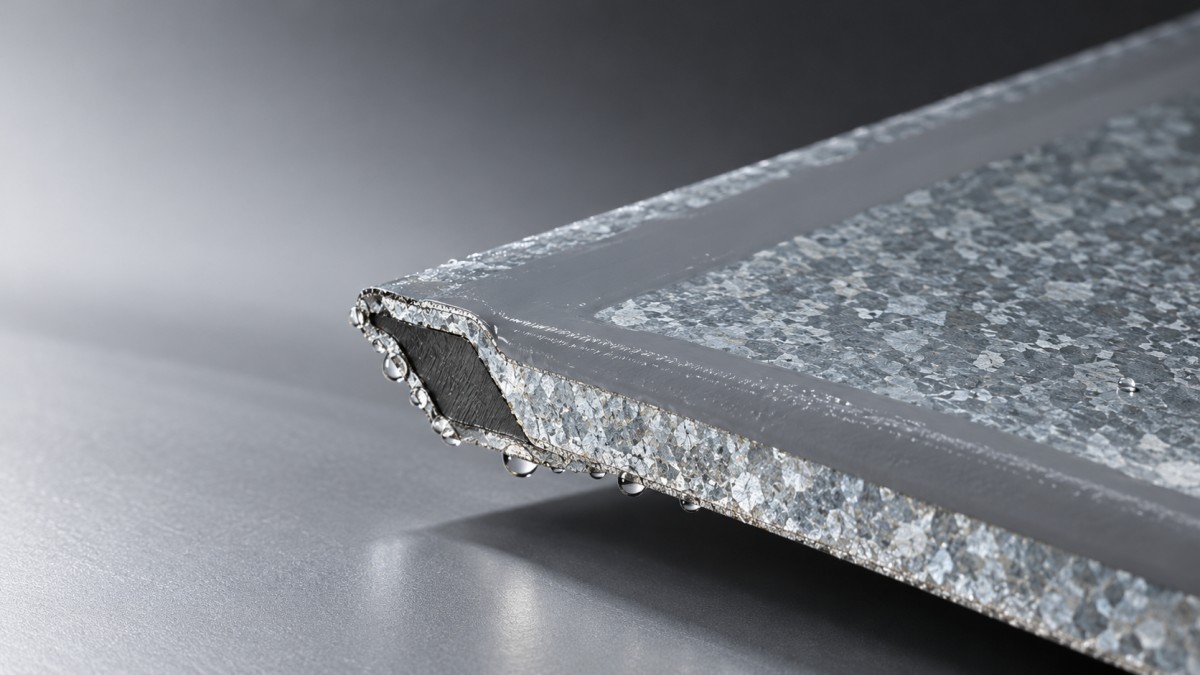
White or pale deposits can be zinc corrosion products. Their presence does not by itself prove that the steel underneath is rusting, although heavy deposits can indicate prolonged dampness and coating consumption. Red-brown corrosion emerging from the exposed steel is stronger evidence that edge protection is inadequate at that location.
Distinguish corrosion of the component from rusting cutting debris. Steel swarf left on a galvanized surface can produce orange spots and streaks. Remove the particles and inspect beneath them before assuming that the sheet coating has failed. Leaving swarf in place can continue to cause staining and localized damage.
A useful inspection record captures:
- The edge location, orientation and whether water can drain freely.
- The extent of exposed steel and the condition of the zinc on both adjacent faces.
- Rust, paint lifting, coating loss or pitting, with photographs that allow later comparison.
- Likely sources of moisture, salt or chemical contamination.
- Whether the reverse side and any overlapping surfaces can be reached for preparation and coating.
Active red rust, expanding corrosion beneath paint or recurring deterioration after touch-up calls for intervention. Visible pitting, loss of section or damage around load-carrying connections requires assessment of the component’s condition before a cosmetic repair proceeds. Coating an edge cannot restore steel that has already been lost.
Choose a repair that suits the edge and its exposure
For a localized, accessible cut edge, an approved zinc-rich repair coating may be suitable. Such coatings can provide sacrificial protection when their formulation, contact with the prepared substrate and application meet the product requirements. A silver-colored paint is not necessarily a zinc-rich repair material, and appearance provides little evidence of protective performance.
Other repairs rely primarily on barrier protection. A compatible primer and finish, or a dedicated edge protection system, may be appropriate where specified for the sheet and exposure. For prepainted galvanized sheet, use the coating manufacturer’s repair guidance: an unsuitable touch-up coating can adhere poorly, react with the existing finish or create a maintenance problem along the repair boundary.
Selection should account for adhesion to both exposed steel and neighboring zinc, resistance to the expected moisture and contaminants, and compatibility with any finish coat. Application temperature, surface dryness and curing conditions also matter. A technically suitable coating can fail if applied under conditions outside its stated limits.
Sealants have a narrower role. A compatible sealant may help exclude water from a designed joint, but smearing sealant over a rusty edge is unreliable. Poorly bonded material can admit water and restrict drying. Check that sealing will not block intended drainage or conceal a joint that needs inspection.
For a wet overlap that cannot be cleaned or reached adequately, surface touch-up may have limited value. Opening the joint, replacing the affected part or revising the detail can be the more dependable repair. The practical question is whether the chosen method can protect every surface where corrosion is developing.
Preparation determines whether the treatment lasts
Begin by correcting leaks, drainage problems and contamination sources wherever practicable. Remove swarf, burrs and sharp projections using a method that avoids unnecessary damage to sound surrounding zinc. Sharp edges can be difficult to coat consistently, so edge preparation should follow the selected coating system’s requirements.
Remove oil, salts and other contaminants using suitable cleaning methods. A surface that looks clean may still carry soluble salts, particularly after coastal exposure or contact with road spray. Where contamination is suspected, the repair procedure should address it explicitly; simply brushing away visible rust is insufficient.
Remove loose corrosion and unsound coating, then prepare the steel and adjacent galvanized surfaces to the repair product’s instructions. Avoid extending aggressive abrasion over healthy zinc without a reason. Where an existing painted finish remains sound, prepare its boundary so that the repair can bond securely.
Apply the specified coverage and film thickness, including any required edge stripe coat. Both underapplication and excessive buildup can cause problems, so follow the product’s stated limits rather than judging by color alone. Continue protection over all prepared damage and onto sound surrounding coating as directed by the repair system.
Allow the required curing time before exposing the repair to rain, condensation, handling or washdown. If the edge is concealed during reassembly, inspect the completed coating first. Once an overlap is closed, missed areas can become difficult to identify and expensive to reach.
Use follow-up inspections to test the decision
After treatment, inspect for continuous coverage, missed corners, pinholes and damage caused during reassembly. Record the repair material and application date so that later maintenance teams can select compatible products and judge whether deterioration is recurring.
Set follow-up timing around the exposure. A repaired edge beside a recurring condensation point deserves attention after conditions likely to produce wetting. A component affected by de-icing spray should be checked with that seasonal exposure in mind. A dry interior edge may be suitable for the normal equipment inspection schedule.
Returning rust, lifting paint or staining from behind an overlap suggests that the original cause remains active or that the repair did not reach the affected surfaces. Repeatedly adding paint over the same symptom increases maintenance effort without establishing reliable protection.
For each cut edge, the maintenance decision should be explainable: either the exposure and coating condition support leaving it under observation, or identified conditions justify a defined repair. When the same edge keeps failing, reopen the assessment of moisture, contamination and access before choosing another coating.
Please give us a message