


News center
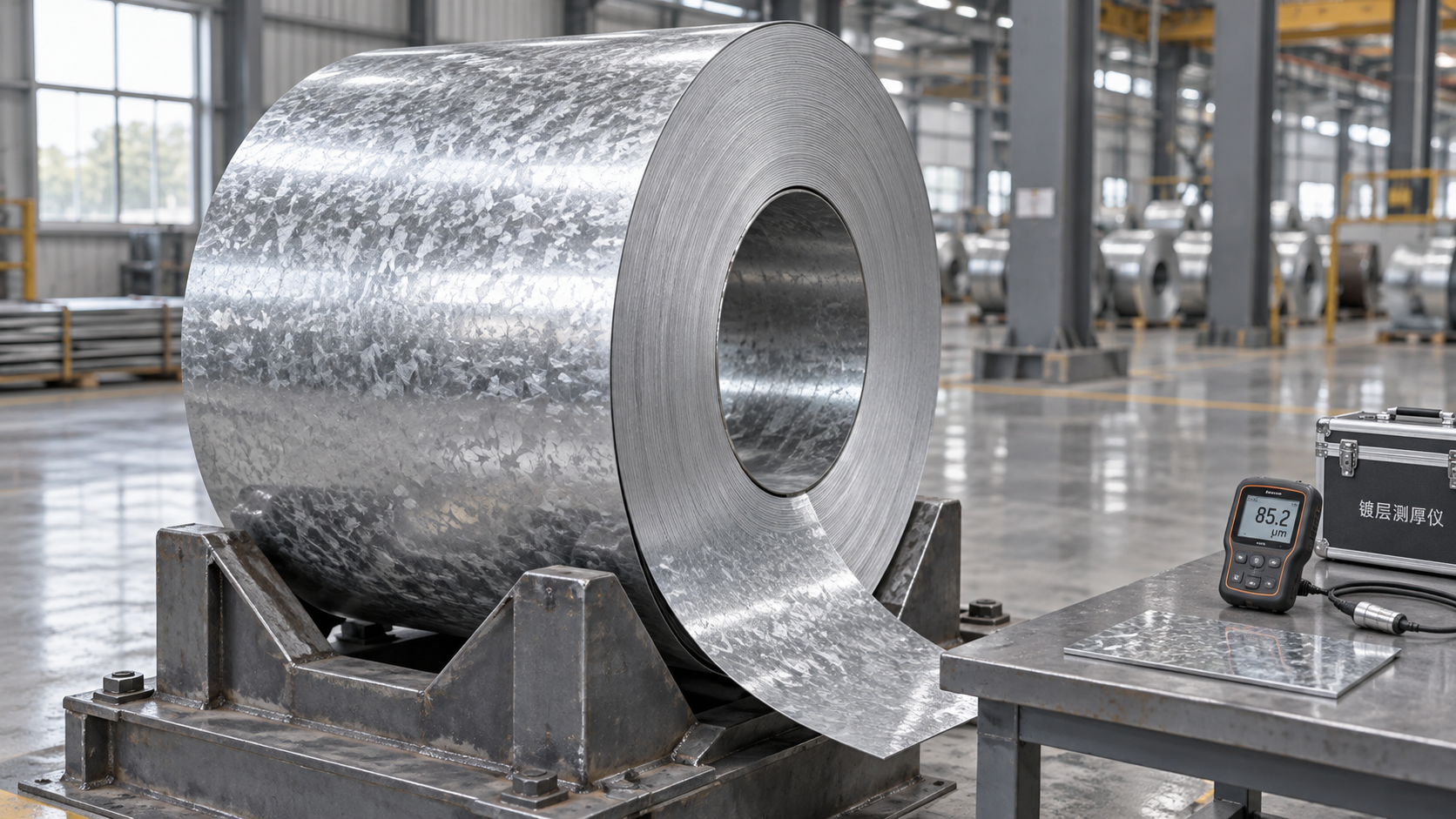
A Z275 designation on gi steel coil indicates a minimum total zinc coating mass of 275 g/m² over both sides of the sheet, measured according to the applicable product standard. It describes the amount of zinc applied; it does not promise a fixed number of years before red rust appears.
For a technical evaluation, that distinction matters. Corrosion resistance depends on the coating mass, the exposure environment, the condition of the surface after forming and cutting, the design of the finished part, and whether moisture can drain away. Z275 is therefore a useful material specification, but it must be interpreted together with the intended service conditions.
What the Z275 designation measures
The letter “Z” identifies a zinc coating, while “275” refers to the minimum total coating mass on both surfaces, expressed in grams per square metre. The value is not normally a guaranteed 275 g/m² on each side. A coating may have different masses on the top and bottom faces, provided that the measured result complies with the relevant product standard and its sampling rules.
Dividing the total designation equally gives a simple reference value of approximately 137.5 g/m² per side. This is useful for visualizing the specification, but it should not replace the actual test method used for acceptance. Local coating distribution, measurement location and the standard’s permitted tolerances all affect the result.
Coating mass and coating thickness are related, but they are not interchangeable terms. Using zinc density for a rough calculation, 275 g/m² corresponds to approximately 38 micrometres of zinc in total, or about 19 micrometres per side if the coating were evenly distributed. This conversion is only an engineering estimate. A certificate or inspection report should be evaluated using the units and test procedure stated in the purchase specification.
How zinc protects the steel substrate
Zinc protects galvanized steel through two mechanisms. First, it forms a physical barrier between the steel and the surrounding atmosphere. In dry or moderately humid conditions, corrosion products can develop on the zinc surface and slow further attack. Second, zinc is electrochemically more active than steel. When a small area of bare steel is exposed, nearby zinc can corrode preferentially and provide sacrificial protection.
This sacrificial effect explains why a scratch in galvanized sheet does not immediately behave like an unprotected steel surface. The surrounding zinc can reduce the rate at which the exposed steel area rusts, especially when the damaged area is small and the surrounding coating remains continuous.
The protection has a practical limit. As zinc is consumed, the distance between the exposed steel and the remaining zinc becomes more significant. A narrow scratch, a punched hole or a cut edge may remain relatively stable in one atmosphere but show red rust quickly in a wet, salty or chemically contaminated location. The size and geometry of the exposed area also influence the result.
Z275 therefore offers a larger zinc reserve than a lighter coating designation, all other conditions being equal. It does not create an impermeable surface that stops corrosion indefinitely, and it cannot compensate for a design that traps water or concentrates contaminants.
Why exposure conditions change the result
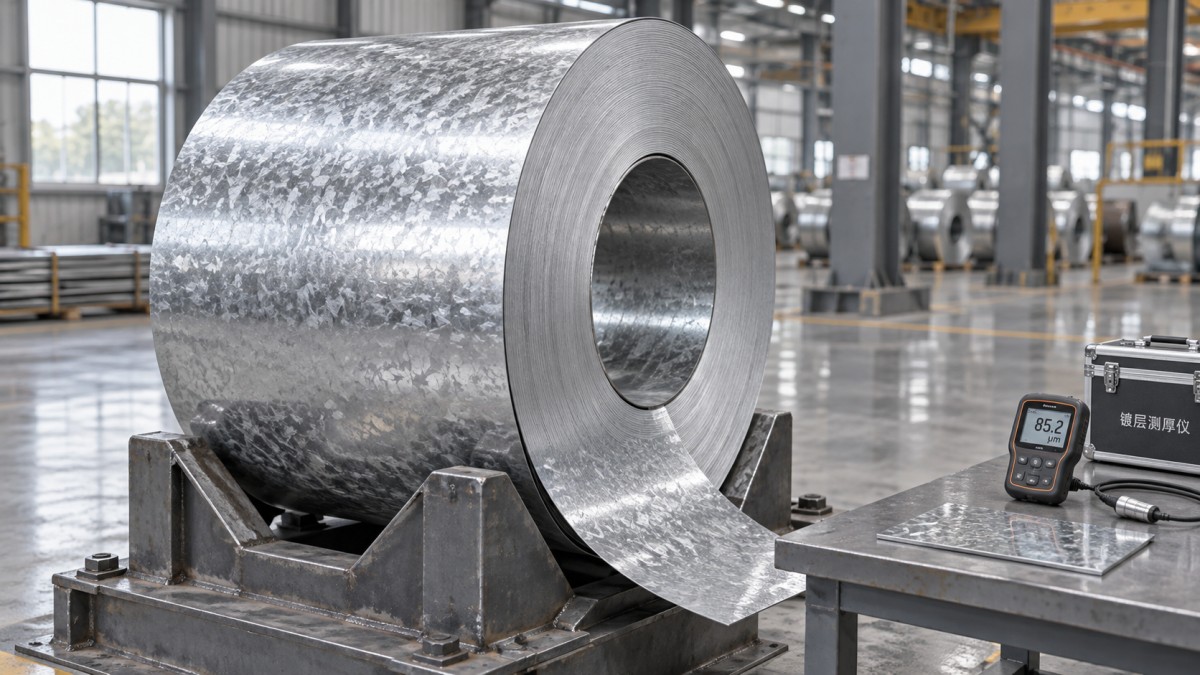
The same Z275 coil can perform very differently in different service environments. Atmospheric exposure with regular drying is generally less aggressive than constant condensation, salt deposition or immersion. A sheltered component may last longer than an exposed component even when both use identical galvanized material.
Several environmental variables deserve attention:
- Moisture duration: repeated condensation or water retention keeps the zinc surface active for longer periods than short, intermittent wetting.
- Chlorides: coastal spray, de-icing salts and industrial deposits can accelerate zinc consumption and make cut edges more vulnerable.
- Acidity and alkalinity: strong chemical exposure can attack zinc faster than a relatively neutral atmosphere.
- Temperature: heat can increase reaction rates, while thermal cycling may create condensation inside enclosed assemblies.
- Contamination: dust, flux residues, process chemicals and dissimilar metal deposits can retain moisture or form local corrosion cells.
Rain exposure alone does not fully describe a location. A component that is washed clean and dries quickly may experience less zinc loss than one positioned under a ledge where rain cannot wash away deposits but humid air remains trapped. The drainage path, ventilation and orientation of the finished part are part of the corrosion assessment.
Surface appearance and wet storage stain
Fresh galvanized coil may develop white or gray powdery staining when moisture is trapped between closely packed surfaces during storage or transport. This condition is often called wet storage stain. It is associated with the reaction of zinc in a poorly ventilated, continuously damp space.
Wet storage stain should not automatically be treated as structural steel corrosion. Its significance depends on the severity of the deposit, whether the coating remains attached, and the exposure expected after installation. Light staining may have limited effect on the remaining zinc reserve, while heavy or prolonged attack can reduce local protection and affect appearance.
Storage practices influence this risk. Coils and cut sheets should be protected from direct rain, condensation and contact with standing water. When galvanized material becomes wet, separation and air circulation are more useful than tightly wrapping the damp product. The receiving inspection should record the condition before further processing, because later forming may make the original cause difficult to identify.
Processing effects: cutting, punching and forming
The Z275 value applies to the supplied galvanized surface. Fabrication can create new conditions that the original coating designation does not describe. Shearing and slitting expose steel at the edge. Punching creates a hole perimeter with exposed metal. Drilling, grinding and welding remove or damage zinc around the work area.
For thin edges and small punched features, the surrounding zinc may provide some sacrificial protection. That effect should not be treated as a substitute for edge treatment where the part will face persistent wetness or salt exposure. Burrs, rough edges and heat tint can also hold contaminants and make local attack more severe.
Forming creates a different issue. A bend radius that is too tight for the selected grade and coating condition may produce cracking, powdering or flaking of the zinc layer. The steel substrate may remain mechanically sound while the damaged surface loses part of its corrosion protection. The forming operation should therefore be evaluated using the actual grade, thickness, bend geometry, tooling condition and coating type.
After welding, zinc removal around the weld zone is normally required for process control and worker protection. The exposed area then needs a compatible repair or coating procedure specified for the finished application. A galvanized component should not be judged by its original Z275 designation alone after extensive welding, grinding or site modification.
Design details often control local corrosion
Corrosion frequently begins at locations where water, dirt or residues remain longer than on the open surface. Horizontal pockets, overlapping sheets, unsealed seams and blocked drain holes can create a more aggressive microenvironment than the surrounding air. Fastener interfaces may also collect moisture, particularly where the joint is exposed to salt or condensation.
Good detailing gives water a path out and allows air movement around the galvanized surface. Avoiding narrow crevices, providing drainage at low points and preventing direct contact with incompatible metals can preserve the zinc layer more effectively than selecting a heavier coating without changing the design.
Mixed-metal assemblies need particular care. If galvanized steel is connected to another conductive metal in the presence of an electrolyte, galvanic effects may alter the corrosion pattern. The actual risk depends on the metals, their exposed areas, the joint geometry and the wetting conditions. For example, a project may also contain copper alloy components such as C22000/H90 Brass Pipe; the connection details and isolation requirements should be reviewed rather than assuming that all metallic contact is equivalent.
How to evaluate Z275 in a material specification
A sound assessment begins with the finished component rather than the coil designation alone. Establish whether the part will be indoors, outdoors, sheltered, frequently washed, exposed to chlorides, or subject to condensation. Then identify how much of the supplied surface will remain intact after slitting, bending, punching, welding and installation.
The purchase and inspection documents should make the coating requirement unambiguous. Useful information includes the applicable product standard, coating designation, test basis, sheet thickness, steel grade, surface condition and any restrictions on forming or subsequent coating. If one side has a special appearance or processing requirement, the expected coating distribution should also be clear.
Coating mass verification is generally more meaningful than judging performance by visual brightness. A bright surface does not prove a heavy coating, and a dull or uneven appearance does not automatically indicate inadequate protection. Sampling should follow the relevant standard, with attention to whether the reported value is a single-side result, a total two-side result or an average derived from several measurements.
When the part will be painted, the paint system becomes part of the corrosion design. Surface cleanliness, pretreatment, drying and coating compatibility affect adhesion and durability. A paint layer can reduce direct exposure of zinc, but poor preparation may cause early delamination that leaves the galvanized surface vulnerable at edges and defects.
Z275 is a meaningful protection level for many construction, structural and fabricated applications, provided the exposure and fabrication conditions are consistent with the specification. Its value lies in the zinc reserve supplied over the two faces of the coil. The final corrosion performance comes from the interaction between that reserve, the environment, the finished geometry and the care taken during processing and installation.
Please give us a message