


News center
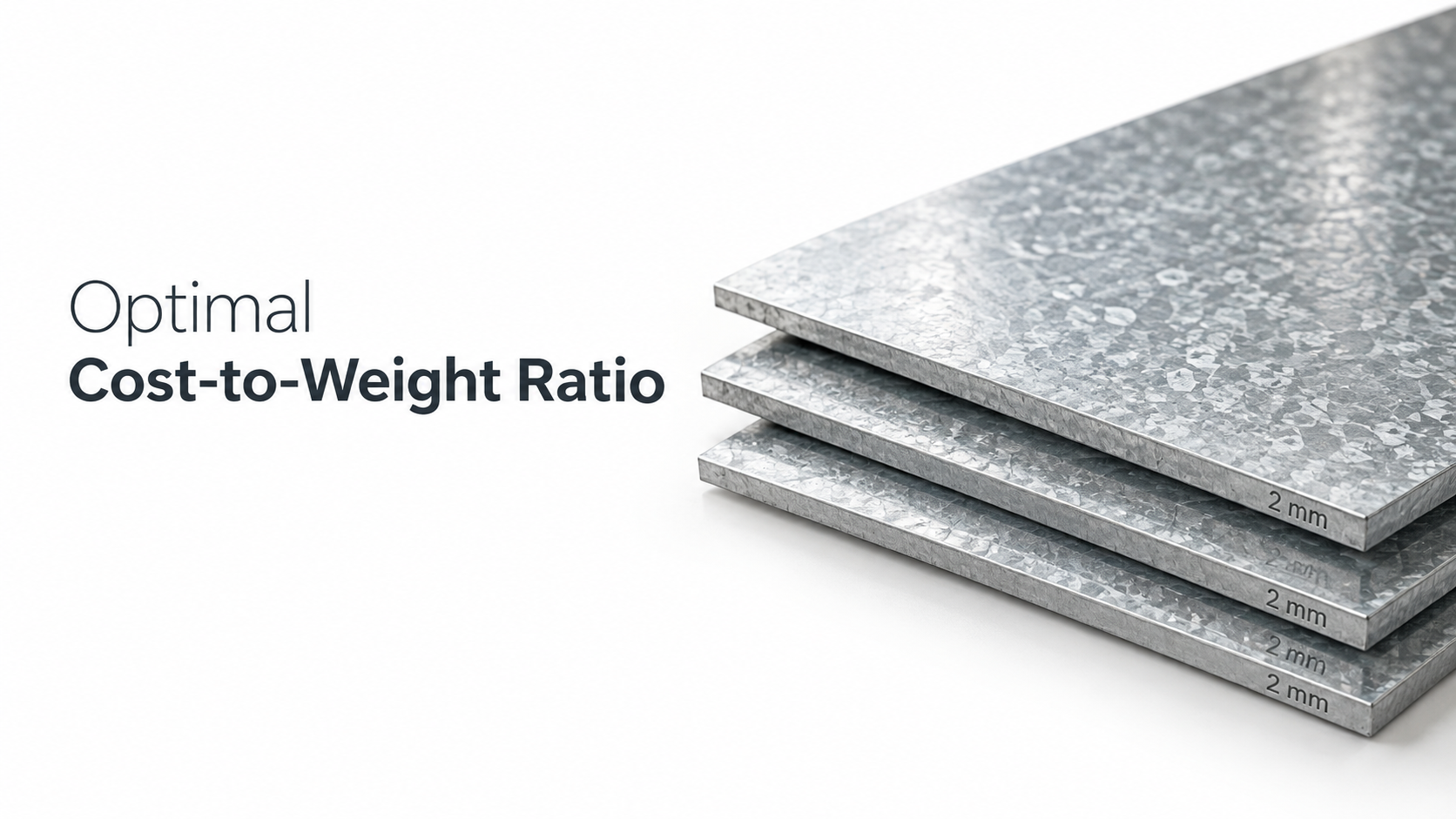
Financial approvers evaluating large-scale construction projects face a persistent challenge: balancing upfront material costs with long-term structural durability. The question of whether the 2 mm gi sheet provides the best cost-to-weight ratio for roofing requires looking beyond the simple price per ton. The direct answer is yes. For the majority of industrial, commercial, and agricultural roofing applications, a 2 mm galvanized iron sheet delivers the optimal financial and structural equilibrium. It achieves this not by offering the lowest raw material price, but by minimizing the total system cost, which includes secondary steel requirements, transportation logistics, and on-site installation labor.
To understand why this specific thickness is the financial sweet spot, we must redefine what the cost-to-weight ratio means in a roofing context. It is not merely the cost of the metal divided by its physical mass. Instead, it is the total installed cost of the roof envelope divided by the performance, span capability, and lifespan it delivers. Weight influences every other line item in a project budget. A heavier roof requires thicker main structural frames, deeper foundations, and higher freight charges. A lighter roof requires more frequent purlin supports to prevent deflection. The 2 mm thickness sits precisely at the intersection where material expenditure and secondary structural costs are both minimized.
The Structural Economics of Alternative Thicknesses
Procurement teams often consider thinner gauges, such as 0.8 mm or 1.2 mm, because the initial invoice for the steel coils or sheets is significantly lower. However, this creates a hidden cost trap. Thinner sheets lack the rigidity to span standard purlin distances, which are typically set between 1.2 and 1.5 meters in commercial construction. To prevent oil-canning, structural sagging, and water pooling under wind or snow loads, engineers must reduce the purlin spacing to 0.6 or 0.8 meters. This dramatically increases the tonnage of secondary steel required, along with the welding, bolting, and labor hours needed to install it. The savings realized on the roof sheet are almost entirely erased by the excess structural steel and extended installation time.
Conversely, specifying 3 mm or thicker plates for standard roofing introduces a different set of financial inefficiencies. The raw material cost per square meter jumps significantly due to the sheer volume of steel used. More importantly, the extreme weight multiplies logistics expenses. Transporting heavy steel sheets requires more trucks per square meter of covered area before hitting legal highway weight limits, driving up freight costs. On-site, handling 3 mm sheets requires heavier lifting equipment, more rigging personnel, and slows down the installation sequence. The primary structural frame must also be over-engineered to support the increased dead load, adding unnecessary capital expenditure to the project's foundation and main steelwork.
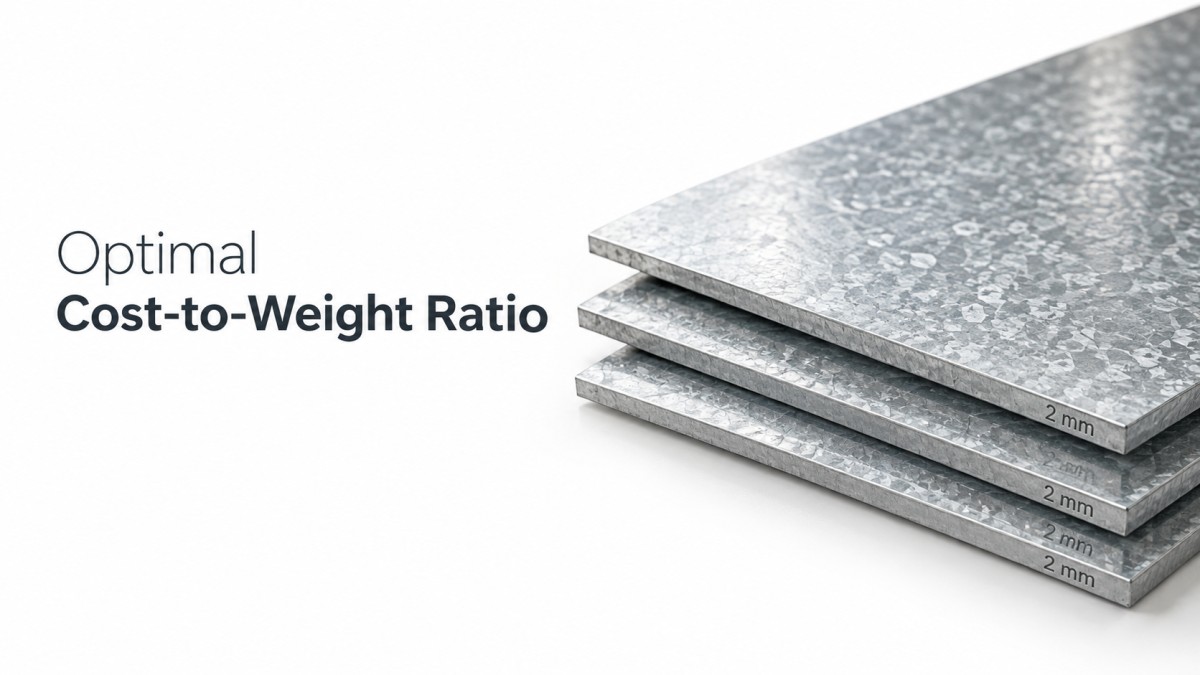
The 2 mm gi sheet avoids these extremes. It possesses sufficient inherent stiffness to span standard purlin intervals without excessive deflection, allowing engineers to optimize the secondary steel layout and maintain wider spacing. At the same time, its weight remains manageable for standard transport and manual or light-mechanical handling on-site. This dual advantage compresses the overall project schedule and reduces the cumulative cost of auxiliary materials, making it the most mathematically sound choice for total project budgeting.
Logistics and Installation: The Weight Factor
Weight directly dictates logistics efficiency, a factor often overlooked in initial material comparisons. When calculating the true cost-to-weight ratio, financial approvers must factor in the transport cost per square meter of covered area. A 2 mm sheet provides an excellent coverage-to-weight ratio. A standard transport truck can carry a significantly larger square-meterage of 2 mm sheets compared to 3 mm sheets before reaching its maximum legal payload. This reduces the total number of truckloads required, lowering freight invoices and minimizing the carbon footprint associated with material delivery.
On-site installation dynamics also heavily favor the 2 mm specification. The manageable weight of these sheets allows installation crews to work faster and safer. It reduces the need for continuous heavy crane rental hours, as bundles can be moved efficiently with lighter forklifts or manual handling techniques. Faster installation directly translates to lower daily labor costs and reduces the window of time during which the building interior is exposed to weather risks. Furthermore, lighter sheets minimize the physical strain on workers, reducing the risk of on-site handling injuries, which carry severe indirect financial liabilities and project delay penalties.
Material Integrity and Long-Term Financial Risk
The cost side of the ratio is also heavily influenced by material integrity and corrosion resistance. A 2 mm sheet is only a sound financial investment if the galvanization process meets the required environmental standards. If a supplier provides a 2 mm sheet with a substandard zinc coating, the initial procurement cost is lower, but the lifecycle cost skyrockets. Premature corrosion leads to roof leaks, interior asset damage, and early roof replacement. Financial approvers must ensure that the quoted material includes the correct zinc mass for the specific project environment, such as Z275 for standard industrial environments or higher coatings for coastal or high-pollution areas.
This is where the manufacturing capability and quality control of the supplier become a financial risk mitigation tool. Companies like Jiangsu Zhongersheng Metal Products Co., Ltd. emphasize standardized production workshops and strict quality control in their galvanized steel systems. Ensuring the zinc coating is uniform, properly bonded, and meets specification prevents the hidden costs of premature degradation. By securing a reliable supply of high-quality galvanized steel, financial approvers protect the long-term cost-to-weight ratio against unexpected maintenance and replacement expenditures.
Optimizing Costs Through Custom Processing
Another critical factor in the true cost of roofing materials is off-site processing. Raw sheets require cutting, bending, and punching on-site, which generates material waste and consumes high-cost field labor hours. When procuring 2 mm gi sheet, it is highly cost-effective to utilize suppliers that offer comprehensive custom processing services. By having the sheets cut to exact dimensions, pre-punched for fasteners, and bent for flashings, ridges, or eaves before they arrive at the site, projects can reduce material waste by up to 10 to 15 percent.
Precision processing transforms the raw material cost into a highly efficient installed cost. It eliminates the need for on-site cutting tools, reduces scrap disposal fees, and accelerates the weather-tightening phase of the project. Modern enterprises equipped with professional processing equipment for cutting, bending, punching, and welding can deliver these pre-fabricated components directly to the construction site. This level of preparation ensures that every square meter of purchased steel is utilized effectively, maximizing the financial return on the material investment.
Procurement Evaluation Criteria for Financial Approvers
When reviewing supplier quotes for 2 mm roofing sheets, the evaluation must extend beyond the base price per ton. To ensure the projected cost-to-weight ratio is maintained in reality, financial approvers should mandate strict adherence to the following procurement criteria:
- Dimensional Tolerances: Verify that the supplier guarantees strict thickness tolerances. A supplier delivering sheets with poor tolerance might be providing 1.8 mm material while charging for 2.0 mm, which compromises the structural span and forces costly mid-project engineering redesigns.
- Flatness and Surface Quality: Poorly leveled sheets will require excessive sealants and fasteners to install correctly, adding hidden consumable costs to the project. The surface must be free of uncoated spots, dross, or severe roll marks that could compromise the weather-tight seal.
- Zinc Coating Verification: Require mill test certificates that explicitly state the zinc coating mass per square meter. Do not accept vague terms like "standard galvanized"; demand specific Z-coating designations that match the project's environmental exposure requirements.
- Processing Capabilities: Evaluate the supplier's ability to provide custom cutting and profiling. A supplier that can deliver ready-to-install, pre-punched 2 mm sheets will significantly lower your on-site labor budget, offsetting any slight premium in the initial material quote.
Ultimately, the 2 mm gi sheet provides the best cost-to-weight ratio for roofing because it acts as a financial stabilizer across the entire construction supply chain. It prevents the over-engineering of secondary structures required by thinner gauges and avoids the logistics, handling, and material penalties of thicker plates. By focusing on the total system cost—including transport efficiency, installation labor, secondary steel optimization, and long-term durability—financial approvers can confidently justify the specification of 2 mm galvanized steel as the most economically sound and structurally reliable choice for large-scale roofing projects.
Please give us a message