


News center
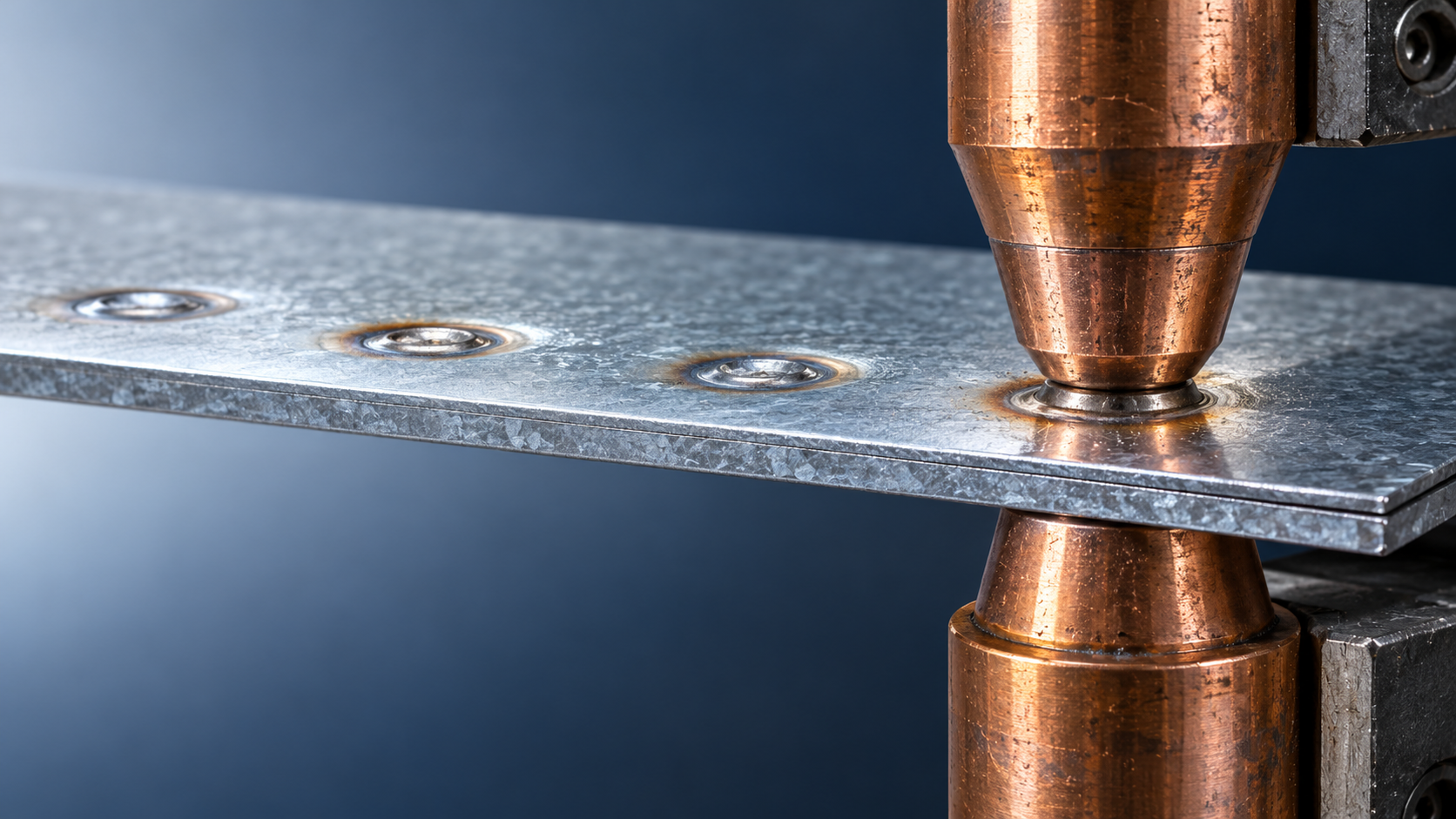
A spot-welding schedule that works on bare steel can become unreliable when zinc enters the joint. Small nuggets, sudden expulsion or electrodes that begin sticking halfway through a production run are familiar signs. With electro galvanized steel coil, the coating is not simply a protective layer outside the weld: it changes electrical contact, heat distribution and electrode behavior throughout the welding cycle.
Reliable results depend on understanding those changes before increasing current or extending weld time. The practical goal is to form a sound steel weld nugget while controlling zinc displacement, electrode wear and damage to the surrounding corrosion protection.
What happens to zinc before the steel nugget forms?
Resistance spot welding generates heat as current passes through a clamped sheet stack. The familiar relationship, Q = I²Rt, explains why current, resistance and time matter. In a real weld, however, resistance changes continuously as surface films break down, contact areas expand and the sheets heat up.
Zinc melts at approximately 420°C and boils at approximately 907°C at atmospheric pressure, both well below the melting range of steel. These temperatures provide useful context, although pressure and confinement affect zinc behavior inside an actual joint.
During welding, the coating softens and melts before the steel forms a nugget. Electrode force displaces some liquid zinc from the highest-pressure contact regions. As heating continues, the steel-to-steel interface develops sufficiently concentrated heat for fusion. Zinc remaining near the hot zone may vaporize, while displaced zinc can accumulate around the weld perimeter.
This sequence explains why an apparently minor coating change can disturb a previously stable process. The machine must establish reliable contact, manage a moving liquid coating and create a steel nugget within the same short cycle.
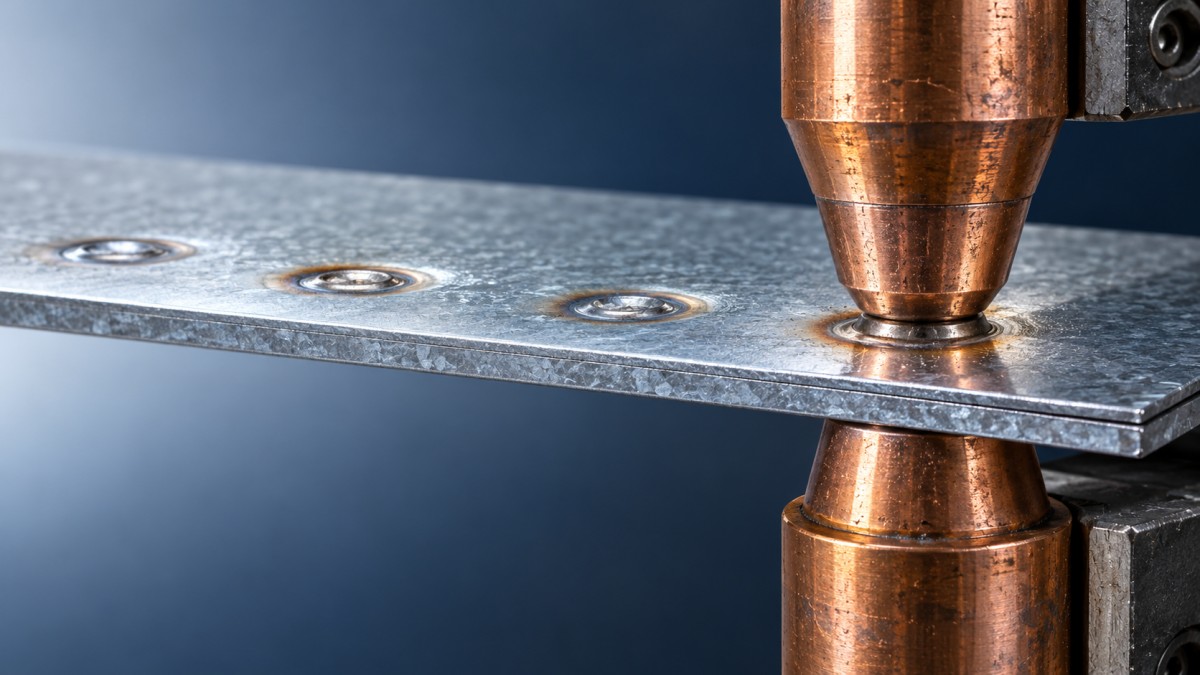
Why electro galvanized steel coil needs a different welding window
Electrogalvanizing deposits zinc electrolytically. Compared with many conventional hot-dip galvanized products, electro galvanized material commonly has a thinner, smoother coating. That can support more consistent surface contact, but it does not make the material behave like uncoated steel.
Coating thickness, coating on each face, oil, passivation and other surface treatments all influence weldability. The steel grade and sheet thickness remain equally important. Two coils described only as “electro galvanized” should not automatically share the same approved welding schedule.
Contact resistance changes during the weld
Zinc-coated interfaces often develop a different resistance profile from bare steel. Soft zinc can increase the effective contact area under force, reducing current density and changing where heat is generated. Oxides, lubricants and surface treatments may add resistance, so the net effect cannot be predicted from coating type alone.
For many coated-steel combinations, a higher welding current is needed than for a comparable uncoated stack. This is a starting expectation, not a universal setting rule. Excessive current can push the process directly into expulsion without producing a more reliable joint.
The useful current range can move or narrow
A welding lobe identifies combinations of current and time that meet the required weld criteria without unacceptable expulsion or other defects. Zinc can shift this operating window. Electrode wear, contamination and coating variation can then reduce the margin available during production.
The best production setting is not the highest current that avoids visible spatter. It is a qualified setting with enough margin to tolerate normal variation while meeting the specified mechanical and dimensional requirements.
Adjust the schedule as a system, not as four separate numbers
Operators naturally reach for the current control when nuggets are small. Before doing so, check fit-up, electrode condition, actual force and cooling. A schedule cannot compensate reliably for badly worn tips or sheets that do not sit together.
Squeeze time deserves attention. The electrodes must establish the intended force before current begins. A pressure regulator reading alone does not confirm that the required force reaches the sheets, especially with gun deflection, friction or difficult access.
Hold time also matters. Maintaining force after current stops allows the nugget to solidify under restraint. Releasing too early can compromise consistency, particularly where the assembly tends to spring apart.
Some equipment supports conditioning pulses, multiple pulses or controlled current ramps. These may help manage surface conditions and heat development in particular stacks. They are not automatic improvements: a preliminary pulse changes the interface seen by the main pulse and must be qualified with the complete schedule.
Electrode wear is often the reason a good setup stops working
Zinc interacts with copper-alloy electrode surfaces, producing alloyed layers and pickup that change contact behavior. Repeated pressure and heat also deform the tip. Over time, the electrode face may enlarge, pit or become uneven.
When the contact face grows, current density falls at the same total current. Operators may respond by increasing current, temporarily restoring nugget size while accelerating wear. Eventually, the line becomes dependent on frequent adjustments and starts producing alternating weak welds and expulsion.
A more controlled approach combines:
- Suitable electrode material and geometry: select caps for the steel stack and equipment rather than assuming one cap suits every galvanized product.
- Verified cooling: check coolant flow, temperature and delivery near the tip according to equipment requirements.
- Repeatable dressing: restore the intended face shape instead of merely removing visible buildup.
- Defined replacement limits: replace caps when dressing can no longer maintain the required geometry and condition.
Current stepping can compensate for predictable electrode wear within a validated range. It should not hide blocked cooling, irregular dressing or severe zinc pickup. Electrode-life trials are more informative than evaluating only the first few welds made with fresh caps.
Read the defect before changing the current
The same visible symptom can have several causes. Inspect both electrode contact marks and the joint interface, then use destructive testing where required to establish what the weld actually contains.
Small or inconsistent nuggets
Check tip diameter, alignment, actual current delivery, force, sheet gaps and surface condition. Nearby existing welds can divert current through alternative paths, a condition known as shunting. A schedule established on isolated coupons may therefore perform differently in a closely spaced production weld sequence.
Expulsion and heavy indentation
Possible causes include excessive heat input, insufficient force, poor fit-up or a current concentration created by misalignment. Expulsion is not proof of a large, strong nugget; expelled metal may leave an unacceptable joint. Identify whether the event occurs between sheets or at the electrode contact before choosing a correction.
Electrode sticking or rapid pickup
Inspect cap condition, cooling, alignment and heat input. Check whether oil or surface treatment differs from the qualified material. Simply adding force may change heating enough to create another problem, so verify nugget performance after any adjustment.
Cracking near the weld
For some susceptible high-strength steel grades, liquid zinc can contribute to liquid metal embrittlement under particular thermal and stress conditions. This is not inevitable in electro galvanized steel, and it should not be assumed to explain every crack. Suspected cases need metallographic assessment and review of the steel grade, electrode alignment and welding schedule.
What should be measured during qualification?
A clean-looking surface is not an acceptance test. Qualification should use the actual steel grades, thickness combination, coating condition, electrode arrangement and representative assembly conditions.
Start with controlled trials that establish the acceptable current-time range at the intended force. Evaluate nugget or weld size using the method required by the applicable specification, alongside mechanical performance, indentation, expulsion and any cracking. For unequal-thickness stacks, also examine whether fusion develops appropriately through the joint.
Useful standards include ISO 18278-2 for spot-welding weldability evaluation procedures, ISO 10447 for peel and chisel testing, and ISO 14273 for tensile shear testing of resistance spot welds. For automotive steel assemblies, AWS D8.1M may apply when specified by the customer. Confirm the current edition, material scope and contractual acceptance criteria before use.
A commonly quoted weld-size rule should not replace the drawing or governing specification. Likewise, a button pulled during a peel test is useful evidence, but button size, fusion-zone size and joint strength are not interchangeable measurements.
Record actual welding current, force, timing, cap geometry, cooling conditions and weld count between dressing operations. Where available, dynamic resistance or electrode-displacement monitoring can help detect process changes, but signals need correlation with tested weld quality.
Control incoming material and the coating left around the weld
Stable welding starts with a clear material specification. For electro galvanized steel coil, confirm the base steel grade, thickness tolerance, coating designation, coating distribution on each face, surface treatment and oil condition. Do not assume a quoted coating mass is a per-side value; confirm how the supplier reports it.
When sourcing coil or processed blanks through Jiangsu Zhongersheng Metal Products Co., Ltd., these details should form part of the purchasing and processing discussion. Cutting, bending and punching can affect fit-up or introduce surface contamination, so representative processed parts—not only pristine coil samples—belong in welding trials.
Keep incoming material clean and dry, and investigate unexpected changes in oil or surface appearance. Avoid uncontrolled grinding of the coating as a routine welding fix: it changes corrosion protection and creates a surface condition different from the qualified process.
Local coating damage around a spot weld is unavoidable. For exposed or corrosion-critical assemblies, specify the required post-weld protection, such as an approved coating repair system, sealer or downstream finishing process. Inspect accessible outer surfaces as well as moisture-trapping overlaps.
Zinc-containing fumes can form during welding, particularly during overheating or expulsion. Use appropriate local exhaust ventilation and the workplace exposure controls established by the site's risk assessment. The small size of a spot weld does not eliminate the need for fume control.
Repeatable spot welding of electro galvanized steel coil comes from controlling the whole contact system: coating, steel stack, force, current, electrode condition and cooling. Once that system is qualified, routine checks and disciplined tip maintenance are usually more valuable than chasing every change with another increase in current.
Please give us a message