


News center
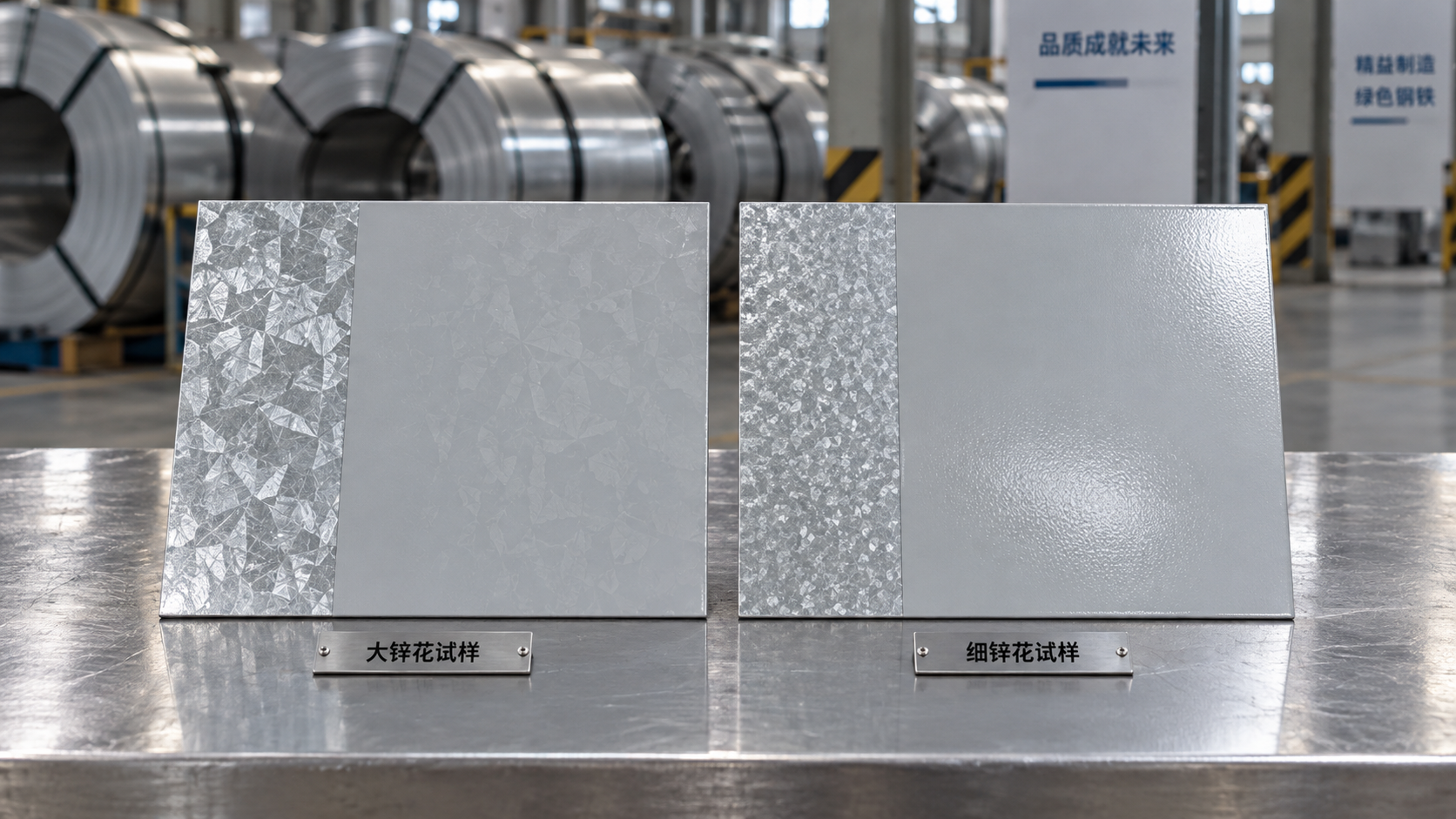
Yes, spangle size can influence the visual uniformity of painted galvanized steel, but it does not independently determine final finish quality.
For technical evaluators, the more important question is how zinc crystal structure interacts with roughness, skin passing, pretreatment, paint thickness, and curing.
Large visible spangles may remain slightly noticeable beneath thin or glossy coatings, while minimized spangles usually support a smoother, more consistent appearance.
However, paint adhesion and corrosion resistance depend more strongly on surface cleanliness, coating compatibility, substrate preparation, and process control than on spangle appearance alone.
What does spangle size actually change?
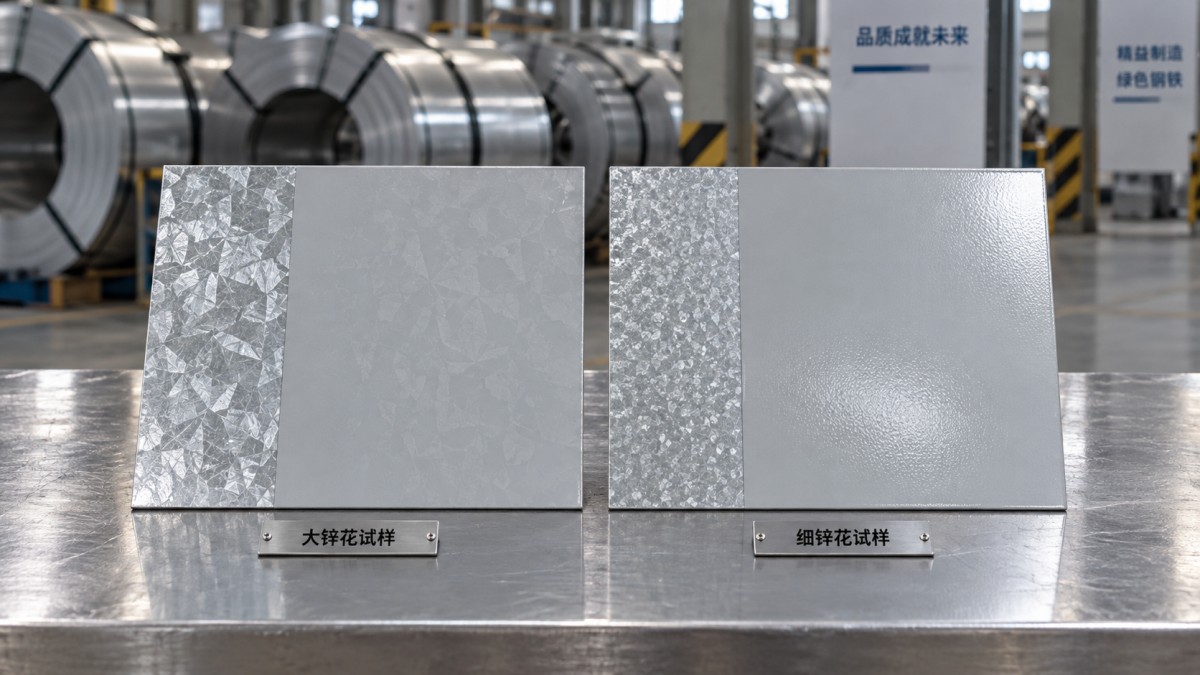
Spangle is the visible pattern formed when molten zinc solidifies on the steel surface during continuous hot-dip galvanizing.
It results from zinc crystal growth, influenced by cooling conditions, bath chemistry, steel composition, and production-line control.
A larger spangle creates a more apparent crystalline pattern, while minimized or zero-spangle material presents a finer and less obvious surface texture.
This difference mainly affects visual appearance and local surface morphology, rather than automatically changing the steel’s basic mechanical performance.
When a galvanized sheet coil receives a thin organic coating, the zinc pattern can remain partly visible through the painted surface.
The effect is more noticeable with light colors, high-gloss finishes, narrow coating thickness tolerances, and surfaces inspected under strong directional lighting.
With thicker, matte, or textured coatings, the underlying pattern is often masked sufficiently for normal industrial applications.
Therefore, spangle size should be treated as one appearance-related specification within a larger painted-coil evaluation process.
When can spangle become visible after painting?
Spangle visibility depends on the relationship between crystal relief and the paint film’s ability to level across the galvanized surface.
If the coating is thin, the paint may follow small variations instead of creating a completely flat visual layer.
The painted surface can then show subtle mottling, reflected light variation, or a faint crystalline impression.
Glossy finishes reveal these differences more readily because reflected light emphasizes small changes in surface angle and texture.
Dark colors can also make uneven reflection easier to notice, although color, gloss level, and viewing distance all influence perception.
Large spangles do not always produce a defective appearance, especially when the customer accepts a decorative crystalline pattern.
They may be suitable for concealed components, roofing applications, general fabrication, or products where uniform high-gloss appearance is not critical.
For exposed architectural panels, appliance surfaces, or precision-painted components, a finer spangle pattern may reduce appearance-related complaints.
Does spangle size affect paint adhesion?
Spangle size alone does not provide a reliable prediction of paint adhesion on a galvanized sheet coil.
Adhesion depends more directly on surface contamination, zinc oxidation, pretreatment chemistry, roughness, coating formulation, drying, and curing conditions.
A large-spangle surface can achieve strong adhesion when properly cleaned and pretreated for the selected paint system.
Conversely, minimized-spangle material can perform poorly if oil, storage stains, white rust, or incompatible passivation remains on the surface.
Technical evaluation should therefore separate appearance requirements from functional coating requirements during material approval.
For painted applications, suppliers should identify whether the galvanized surface is passivated, oiled, untreated, or prepared for immediate coating.
The pretreatment supplier should also confirm compatibility with the zinc surface and the intended primer or topcoat system.
Peel testing, cross-cut testing, or other agreed adhesion methods can verify performance more effectively than visual spangle inspection.
Why skin passing matters to painted finish quality
Skin passing is a light rolling operation that can improve flatness, surface uniformity, and the consistency of galvanized sheet coil.
It may reduce visible roughness and moderate the appearance of zinc crystal relief before painting.
For customers seeking a smoother painted surface, skin-passed material can offer better process consistency than untreated galvanized material.
Its effect depends on reduction level, roll condition, line control, and the original zinc surface condition.
Skin passing does not erase every characteristic of the zinc coating, and it should not be treated as a substitute for pretreatment.
Excessive or poorly controlled rolling may influence dimensional tolerances, residual stress, or surface defects that become visible after coating.
Technical buyers should request the supplier’s skin-pass condition, surface designation, and inspection standard when appearance is commercially important.
Comparing representative coated samples remains the most practical way to judge whether the selected finish meets customer expectations.
Which factors matter more than spangle size?
Surface cleanliness is fundamental because oil, dust, salts, and storage residues can interfere with pretreatment and reduce coating reliability.
White rust is another concern, especially when galvanized coils experience condensation, poor ventilation, or prolonged exposure during storage.
The zinc coating mass also matters because it influences corrosion protection, forming behavior, and the surface available for chemical conversion.
However, a higher zinc coating mass does not automatically create a smoother painted finish or better paint adhesion.
Surface roughness should be assessed together with spangle, because roughness describes physical texture more directly than visible crystal size.
Coil shape, flatness, edge quality, and local defects can also affect coating appearance during roll forming or panel production.
Pretreatment type, primer selection, coating viscosity, application speed, and curing temperature determine how well the paint covers the substrate.
For this reason, a complete specification is more useful than requesting a spangle category without defining the final painted application.
How should technical evaluators compare galvanized coils?
Start by defining the final product, viewing distance, gloss level, color range, forming process, and acceptable visual variation.
These conditions determine whether minimized spangle is essential or whether standard spangle can meet the commercial requirement.
Next, request samples from the actual production route, including the intended zinc coating mass and surface treatment condition.
Laboratory panels should use the proposed pretreatment, primer, topcoat, curing schedule, and film thickness.
Testing a different paint system can produce misleading conclusions because coating chemistry strongly influences leveling and appearance.
Inspect samples under consistent lighting, viewing angles, and distances instead of relying only on photographs or isolated gloss readings.
Record color uniformity, visible pattern, orange peel, pinholes, scratches, adhesion, and edge coverage during the evaluation.
Where possible, compare several coils or production lots to identify normal variation rather than judging a single sample.
The approval document should state whether the requirement concerns spangle appearance, painted smoothness, adhesion, corrosion resistance, or all four.
Recommended tests before approving a painted GI sheet coil
A visual comparison panel is useful for identifying whether spangle remains visible after the complete coating process.
Prepare panels using the same substrate thickness, pretreatment, paint products, application method, and curing conditions expected in production.
Cross-cut adhesion testing can indicate whether the coating bonds sufficiently to the prepared galvanized surface.
Gloss measurement helps compare surface reflection, but gloss alone cannot prove that the finish is visually uniform.
Surface roughness measurements can support process comparison, particularly when two materials appear similar under ordinary inspection.
Coating thickness should be measured because insufficient film build may expose substrate texture and increase visual variation.
For outdoor products, cyclic corrosion or salt-spray testing may help assess the complete coating system under agreed conditions.
Forming tests are also important because bending or roll forming can damage weakly bonded paint or expose zinc surface defects.
These tests should be linked to the customer’s actual use case rather than selected as isolated laboratory exercises.
Common mistakes during material selection
One common mistake is assuming that zero spangle automatically means superior paint adhesion, corrosion resistance, or overall product quality.
Spangle refinement improves appearance potential, but it cannot correct poor cleaning, unsuitable pretreatment, incorrect curing, or defective paint.
Another mistake is evaluating bare galvanized samples while ignoring the visual behavior of the final coated product.
The zinc surface may appear acceptable before painting but reveal uneven leveling after primer and topcoat application.
Buyers sometimes specify an appearance term without defining inspection distance, lighting, gloss, color, or allowable variation.
This creates disagreements because a pattern considered acceptable by one party may be unacceptable to another.
Storage conditions are also overlooked, even though condensation and contamination can affect later coating performance.
Finally, buyers may compare materials from different suppliers without controlling thickness, zinc mass, pretreatment, and coating parameters.
Such comparisons make it difficult to identify whether spangle, roughness, paint, or processing caused the observed difference.
How suppliers can support a reliable decision
A capable supplier should provide clear information about substrate grade, dimensions, zinc coating mass, surface condition, and spangle classification.
They should also explain whether the coil has been skin passed, chemically passivated, lightly oiled, or supplied for direct painting.
Mill test certificates and inspection records help confirm chemical composition, mechanical properties, dimensional tolerances, and coating-related requirements.
For large projects, production samples should be evaluated before the full order is released to reduce appearance and processing risk.
Suppliers with cutting, bending, punching, welding, and surface-treatment capabilities can also help customers assess downstream fabrication behavior.
This is valuable when the galvanized material will become formed panels, structural components, equipment housings, or custom fabricated parts.
Material selection may occur alongside other metal purchases, such as carbon steel, stainless steel, or copper components.
For heat-transfer or plumbing assemblies requiring copper tubing, buyers may separately review the C12200/TP2 Copper Pipe specification.
Keeping each material’s performance criteria separate prevents unrelated product properties from influencing the galvanized coil decision.
When should minimized spangle be specified?
Minimized spangle is particularly useful when the finished product has a visible exterior surface and a smooth, consistent appearance is commercially important.
Typical examples include architectural panels, appliance components, office equipment, lighting housings, and exposed fabricated enclosures.
It can also reduce the risk of visible pattern variation when thin, light-colored, or high-gloss coatings are required.
However, the specification should still define coating system, pretreatment, surface quality, and inspection criteria.
For concealed structures, general roofing, internal components, and industrial parts, standard spangle may provide a more economical solution.
The correct choice depends on customer expectations, production capability, total coating cost, and the consequences of appearance defects.
Technical evaluators should avoid paying for a premium surface condition when the final application cannot reveal or justify the difference.
They should also avoid selecting standard spangle when rework, rejection, or customer complaints would cost more than the initial material premium.
How to write a practical purchase specification
A useful purchase specification should identify steel grade, thickness, width, coil weight, zinc coating mass, and required mechanical properties.
It should state the preferred spangle condition using recognized supplier terminology and explain the intended painted application.
Include surface treatment details, such as passivation, oiling, or suitability for conversion coating and organic paint.
Define visual inspection conditions, including lighting, viewing distance, acceptable marks, and the approval sample procedure.
Where paint performance is critical, specify the complete coating system and the required adhesion, thickness, gloss, and corrosion tests.
Clarify whether the supplier must provide trial coils, coated panels, production certificates, or third-party inspection support.
These details convert a vague preference for smoothness into measurable requirements that production and quality teams can follow.
They also create a clearer basis for resolving disputes if painted appearance varies between batches.
Final decision for technical evaluators
Spangle size can influence how a painted galvanized surface looks, especially when the coating is thin, glossy, or lightly pigmented.
It does not, by itself, determine paint adhesion, corrosion resistance, coating durability, or total finish quality.
For a reliable decision, evaluate spangle together with roughness, skin passing, zinc coating mass, surface cleanliness, pretreatment, and paint parameters.
Use coated sample panels and agreed tests to confirm appearance and performance under the real manufacturing conditions.
Choose minimized spangle when visual uniformity carries meaningful commercial value, and use standard spangle when the application can accept its appearance.
The strongest procurement decision comes from matching surface requirements to the finished product, rather than treating one galvanized feature as the complete quality indicator.
Please give us a message